

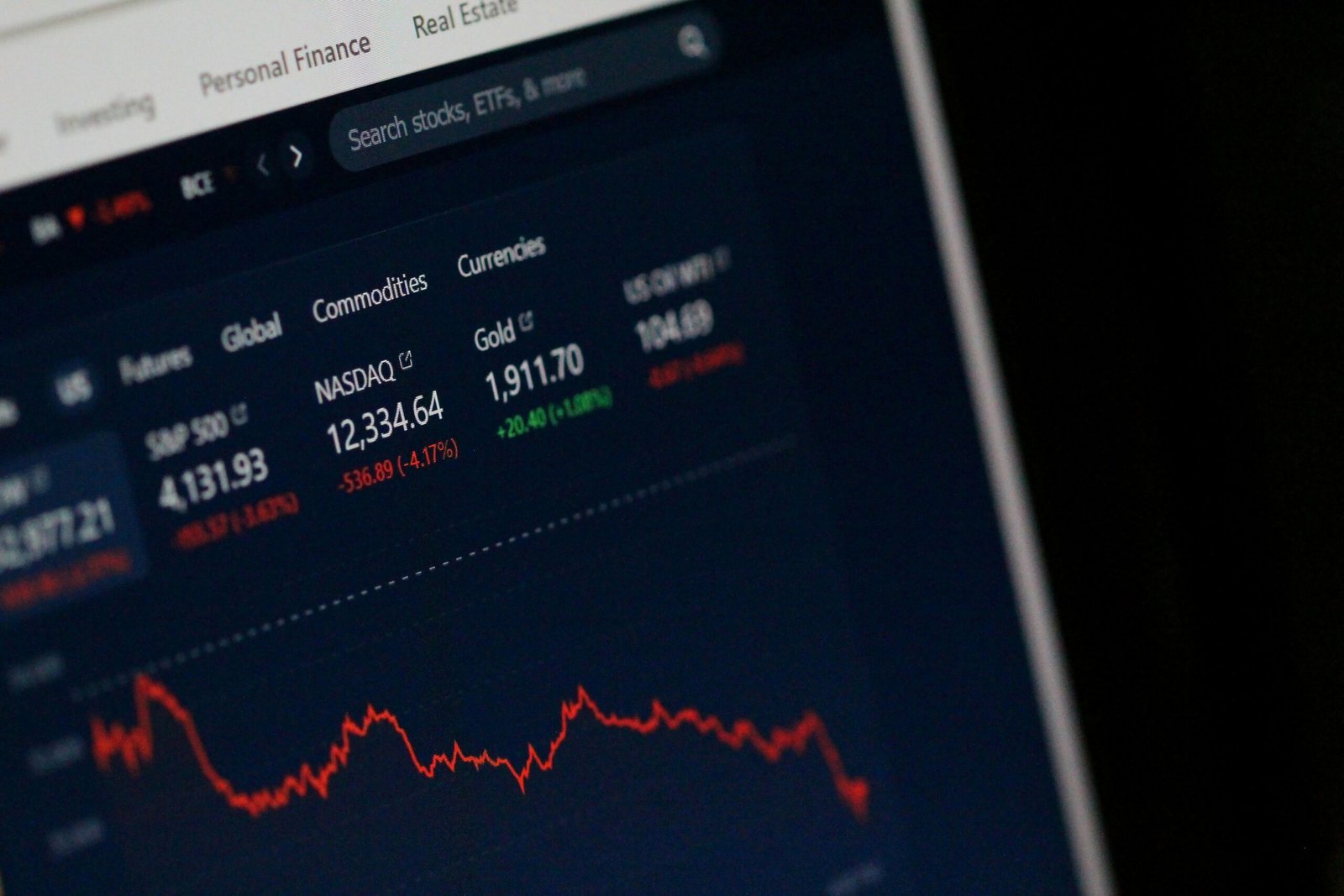
Photo by Anne Nygård on Unsplash
Why Misconceptions Persist Around Global Currency Trading
The currency market functions as a decentralized global financial network where national legal tenders are constantly exchanged without a central physical trading floor.
Often called the foreign exchange or forex market, this massive liquidity pool allows multinational corporations, central banks, and individual retail participants to convert one currency into another continuously. Because transactions flow electronically across borders through an over-the-counter framework, everyday observers often develop misunderstandings regarding pricing mechanics and participant access. These persistent myths can easily intimidate newcomers or obscure how currency exchange actually operates on a daily basis. Exploring the factual realities behind foreign exchange helps separate speculative fiction from practical financial knowledge.
Is Forex Trading Just an Automated Form of Gambling?
Currency exchange relies on disciplined risk analysis and probabilistic planning rather than arbitrary luck or casino-style chance.
While both financial speculation and gambling involve uncertain outcomes, their underlying frameworks are entirely distinct. Games of chance rely on negative mathematical expectations where outcomes cannot be analyzed or predicted in advance. In contrast, currency exchange participants evaluate macroeconomic data, interest rate differentials, geopolitical shifts, and historical price action to guide their decisions. Professional market operators deploy technical charts alongside fundamental economic indicators to locate high-probability setups. They also enforce strict risk-to-reward ratios to protect capital, transforming currency trading into a calculated professional discipline.
Do Only Large Banks Have Access to Currency Markets?
Modern online brokerages and electronic communication networks give individual retail participants direct connectivity to global liquidity pools.
Historically, foreign exchange transactions were restricted strictly to major commercial banks, sovereign wealth funds, and large multinational corporations. The rapid evolution of electronic execution technology has fundamentally dismantled these exclusive institutional barriers. Today’s retail brokerage firms offer streamlined digital platforms that provide private investors with instant order routing and real-time pricing data. This technological shift has successfully transformed currency trading into an accessible arena for everyday individuals worldwide.
Does High Financial Leverage Always Lead to Disaster?
Financial leverage serves as a dual-edged operational tool that magnifies both potential trading outcomes and potential capital drawdowns.
A widespread misconception suggests that utilizing leverage automatically guarantees catastrophic financial ruin for market participants. Leverage simply enables traders to control larger nominal positions with a smaller amount of actual deposited margin. The primary danger stems from overexposure and poor position sizing rather than the leverage mechanism itself. Prudent traders combine conservative leverage tiers with automated stop-loss orders to defend their accounts against sudden market turbulence.
Is Technical Analysis the Only Way to Trade Currencies?
Comprehensive market analysis requires synthesizing historical price action with broader underlying economic indicators and central bank policies.
Relying exclusively on technical chart indicators while ignoring macro conditions frequently leads to costly miscalculations. Fundamental factors such as inflation metrics, employment reports, and interest rate announcements dictate long-term currency valuations. Experienced market participants blend technical entry triggers with deep macroeconomic awareness to construct resilient trading frameworks. Understanding these broader economic drivers helps insulate portfolios from unexpected volatility shocks.
Does Starting to Trade Forex Require Thousands of Dollars?
Micro lots and fractional account tiers allow individual traders to enter the currency market with minimal initial financial outlays.
Many aspiring traders assume that currency exchange requires thousands of dollars in startup capital to be practically viable. Modern retail brokers offer micro, mini, and nano lot sizes that divide standard currency units into tiny fractions. These fractional sizing options permit participants to risk very small monetary amounts per pip movement. While larger starting capital provides greater operational flexibility, modest deposits are completely sufficient for learning proper mechanics and building real-world experience.
Are Currency Markets Unregulated and Heavily Manipulated?
Global financial authorities supervise decentralized currency exchange networks using advanced automated surveillance technology and strict compliance mandates.
Because the forex market operates over-the-counter without a centralized physical exchange floor, some observers assume it lacks legal oversight. In reality, major financial jurisdictions enforce stringent compliance standards through regulatory agencies like the Commodity Futures Trading Commission and the Financial Conduct Authority. Regulated brokers must adhere to strict capital adequacy rules, segregated client funds, and transparent execution reporting. These institutional safeguards significantly minimize illicit behavior and protect market participants.
Is Consistent Profitability in Forex Trading Impossible?
Consistent long-term profitability in currency trading stems from rigorous discipline, continuous skill development, and structured risk management.
Skeptics often claim that making steady gains in the forex market is entirely impossible due to constant price fluctuations. While many retail participants fail because of poor preparation and emotional decision-making, disciplined professionals do achieve sustainable results. Consistency does not mean winning every single trade, but rather maintaining a positive mathematical expectancy over hundreds of executed positions. Effective risk mitigation, emotional control, and continuous strategy refinement separate successful traders from casual speculators. To deepen your understanding of portfolio allocation principles beyond single instruments, consider exploring the importance of currency market diversification to protect your overall capital exposure.
Frequently Asked Questions
What is the currency market?
The currency market is a decentralized global marketplace where national currencies are exchanged for commercial, investment, and speculative purposes.
Is forex trading legal for retail investors?
Yes, retail forex trading is entirely legal, provided individuals use licensed and regulated brokerage firms operating within their home jurisdiction.
How much money do I need to start trading forex?
Many online brokers allow retail accounts to be opened with very small initial deposits thanks to micro lot sizing and fractional trading options.
Can leverage wipe out a trading account?
Excessive leverage combined with poor risk management can quickly deplete an account, which is why proper stop-loss orders and position sizing are essential.
What is the difference between technical and fundamental analysis?
Technical analysis studies historical price charts and market patterns, whereas fundamental analysis examines macroeconomic indicators, interest rates, and geopolitical news.
Is the forex market open twenty-four hours a day?
Yes, the global currency market operates continuously from Sunday evening through Friday afternoon, shifting across major financial hubs worldwide.
Disclaimer: This article is for informational and educational purposes only and does not constitute financial advice. Currency trading involves significant risk of loss and is not suitable for every investor. Readers should verify final information from official regulatory sources before making financial commitments.

Daniel J. Morgan is the founder of Invidiata Magazine, a premier publication showcasing luxury living, arts, and culture. With a passion for excellence, Daniel has established the magazine as a beacon of sophistication and refinement, captivating discerning audiences worldwide.


