

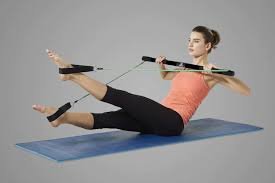
Transforming your living room into an efficient strength-training space does not require bulky metal weight racks or expensive cable machines. Pilates bar exercises provide a clever, portable alternative that combines the muscle-sculpting benefits of traditional resistance bands with the stability mechanics of a weighted barbell. By tethering high-tensile elastic cords to a lightweight steel or fiberglass rod, practitioners create continuous, fluid resistance that challenges major muscle groups without placing excessive shearing stress on vulnerable joints.
Maximizing the value of these movements requires careful attention to equipment geometry, anchor security, and postural alignment. This guide explores the mechanical principles of resistance bar training, details six essential full-body movements with precise execution cues, and provides a structured training template to integrate these techniques into a weekly fitness regimen.
Decoding Resistance Dynamics and Equipment Setup
Proper band tension management and precise foot placement prevent equipment slippage and ensure safe, productive execution.
A standard Pilates bar kit consists of a padded sectional rod attached to heavy-duty latex or TPE resistance bands featuring integrated foot loops or handles. Before starting any movement, inspect the rubber tubing for microscopic tears, abrasions, or weakened seams that could compromise integrity under load. When anchoring the bands, center your feet securely underneath the loops so the rubber cannot slip upward or snap toward your face. Adjusting the resistance level is straightforward: simply wrap the elastic bands around the bar additional times to shorten the working length and increase tension, or leave them unspooled for a lighter, more forgiving stretch.
Maintaining a neutral spinal alignment and bracing your abdominal wall through every exercise protects your lumbar vertebrae from unnecessary strain. Avoid locking your knees during standing actions, and prioritize slow, deliberate contractions over fast, momentum-driven repetitions.
Compound Lower Body Conditioning via the Squat Press
The squat press merges a functional lower-body squat with an overhead press to engage your legs, glutes, shoulders, and core simultaneously.
Stand with both feet placed firmly on the center of the resistance bands, holding the Pilates bar across your upper chest with your palms facing inward. Lower your hips backward into a deep squat while keeping your chest lifted and your knees tracking directly over your toes. As you push back up to a standing position, press the bar straight up toward the ceiling until your arms are fully extended. Lower the bar smoothly back to your chest as you prepare for the next repetition. This compound movement acts as an efficient primer and builds foundational lower-body power.
Beginners can perform this move without wrapping the bands around the bar to reduce initial resistance, while advanced users can wrap the bands multiple times to increase the workload.
Upper Body Sculpting Through Standing Bicep Curls
Bicep curls with a Pilates bar isolate the upper arms and sculpt the biceps while requiring core stability to keep your torso upright.
Stand with one or both feet planted firmly on the bands, holding the bar with an underhand grip at shoulder-width distance. Keep your elbows tucked closely into the sides of your body throughout the entire exercise duration. Slowly curl the bar upward toward your chest, actively squeezing your bicep muscles at the peak of the movement. Lower the bar back down in a controlled, four-second descent to maximize muscle time-under-tension. Avoid swinging your torso or using body momentum to lift the resistance.
Incorporating targeted arm movements helps balance muscle tone throughout your upper body without placing heavy, compressive stress on your wrists or elbows.
Targeting Lateral Stability With Standing Leg Raises
Standing leg raises challenge your balance and target the outer thighs, hip abductors, and deep core stabilizers.
Place one foot securely inside the band’s foot loop and hold the Pilates bar across your chest or let it rest against your thighs for added balance support. Stand tall with a slight bend in your supporting leg, then lift your banded leg straight out to the side or backward. Keep your torso completely upright rather than leaning away from the working leg. Return your foot slowly to the starting floor position to complete one full repetition.
This exercise is particularly effective for developing lateral hip strength and improving overall athletic coordination.
Improving Posture With Overhead Shoulder Presses
The overhead shoulder press strengthens your deltoids and upper back while actively counteracting the postural strain of desk work.
Stand with both feet centered on the resistance bands, holding the Pilates bar at shoulder height with your palms facing forward or facing each other. Brace your abdominal muscles firmly and press the bar straight up toward the ceiling until your arms lock out gently overhead. Lower the bar back down slowly to shoulder level with complete control. Make sure your lower back does not arch excessively as you push upward.
Regularly practicing overhead pressing movements enhances upper-body endurance and supports healthy shoulder joint mechanics.
Engaging Abdominal Obliques With Seated Core Twists
Core twists target your obliques and build rotational stability in your torso, helping to define your waistline.
Sit comfortably on the floor with your legs extended or slightly bent, and loop the bands around your feet while holding the bar across your chest. Alternatively, you can perform this move from a standing position with a wide stance. Twist your torso slowly to the right, pause for a moment to feel the contraction in your side abs, and then rotate back through the center to the left side. Keep your hips facing forward so the twisting motion originates entirely from your midsection.
Slow, deliberate movements are essential here to prevent lower back strain and maximize oblique engagement.
Posterior Chain Activation via Weighted Glute Bridges
The glute bridge is a classic Pilates floor exercise that strengthens your glutes, hamstrings, and lower back while keeping tension on the resistance bar.
Lie flat on your back on an exercise mat with your knees bent and your feet flat on the floor. Place the Pilates bar directly across your hip bones, holding both ends firmly with your hands to keep it stable. Press through your heels to lift your hips toward the ceiling until your body forms a straight line from your shoulders to your knees. Squeeze your glutes tightly at the top position for two seconds, then lower your hips back down with steady control.
Adding resistance directly across the hips makes this standard bridge significantly more challenging for your lower posterior chain.
Sequencing a Complete Full-Body Home Circuit
Combining these six movements into a structured circuit creates a balanced, time-efficient workout session.
Perform each exercise for ten to twelve repetitions, moving smoothly from one movement to the next with minimal rest in between. Complete a total of three full rounds for an effective full-body endurance challenge. For individuals interested in expanding their overall physical regimen, pairing these resistance sessions with practices like learning how to balance strength and cardio in your gym workout schedule can yield even better long-term physical conditioning and cardiovascular health.
| Exercise Name | Primary Target Muscles | Difficulty Level |
|---|---|---|
| Squat Press | Legs, Glutes, Shoulders, Core | Intermediate |
| Bicep Curls | Biceps, Upper Arms, Core | Beginner |
| Standing Leg Raises | Hips, Outer Thighs, Balance | Beginner to Intermediate |
| Shoulder Press | Shoulders, Upper Back, Posture | Intermediate |
| Core Twist | Obliques, Abdominals, Spine | Intermediate |
| Glute Bridge | Glutes, Hamstrings, Lower Back | Beginner |
Frequently Asked Questions
Are Pilates bar exercises suitable for complete beginners?
Yes, beginners can easily adapt these movements by reducing band tension and focusing entirely on form rather than speed.
How do I increase or decrease resistance on a Pilates bar?
You can adjust the resistance by wrapping the rubber bands around the bar multiple times to shorten them, or unspooling them for an easier stretch.
Can a Pilates bar replace traditional heavy weights?
While a Pilates bar is fantastic for toning, flexibility, and endurance, it provides variable resistance rather than heavy progressive overload, making it complementary to heavy lifting rather than a direct replacement.
How often should I do a Pilates bar workout?
Doing a full-body Pilates bar routine two to four times per week allows adequate time for muscle recovery while maintaining consistent fitness progress.
What should I look for when buying a Pilates bar?
Look for a sturdy bar with comfortable foam padding, secure band attachment points, and durable latex or TPE resistance bands that offer adjustable lengths.
Can men benefit from using a Pilates bar?
Pilates bar exercises provide an effective, joint-friendly strength and mobility workout for individuals of all genders and fitness backgrounds.
Disclaimer: This article is for informational and educational purposes only. Always consult with a qualified healthcare or fitness professional before starting any new exercise routine, especially if you have pre-existing injuries or health conditions. Details and product specifications may vary.


[…] Mobility and incorporating light pilates movements […]