

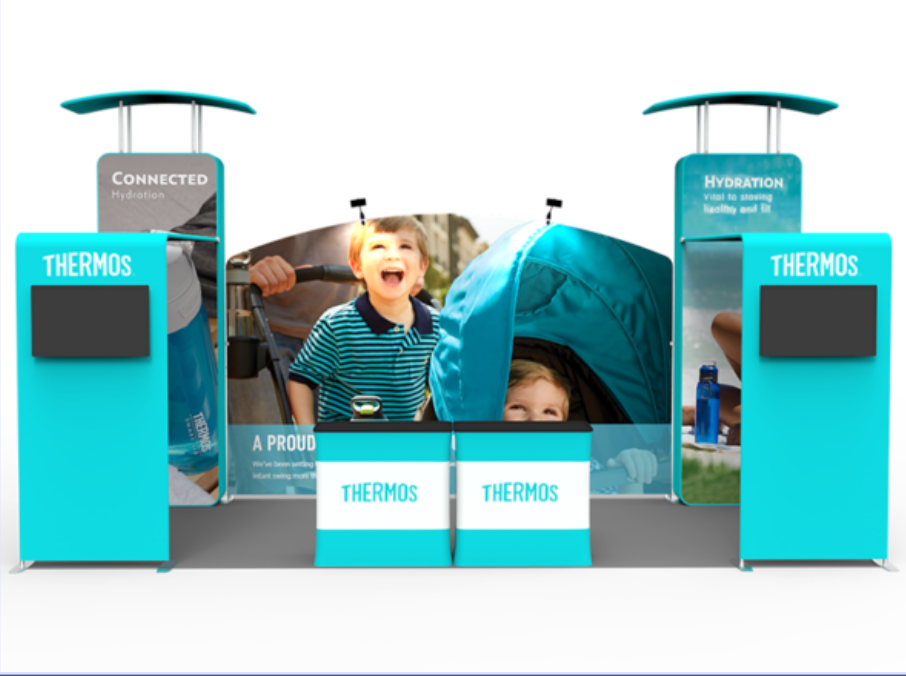
Participating in an industry exhibition gives companies a unique physical platform to present new products, explain technical services, and meet prospective clients face-to-face. Because attendees walk past hundreds of competitive exhibits within minutes, your trade show booth displays must immediately capture attention and communicate clear value. A successful booth relies on more than simple visual decoration; it requires careful spatial planning, high-contrast branding, and dedicated interaction areas like a modern trade show counter. In this guide, we examine how to structure your exhibit space effectively to draw steady foot traffic and foster meaningful business relationships.
Why Trade Show Booth Displays Matter on a Crowded Floor
Trade show booth displays serve as your primary visual anchor in a bustling convention hall where competing brands vie for the same limited attention span. When attendees navigate narrow aisles, they rely on instant visual cues to decide which exhibits warrant a closer look. A well-designed booth eliminates guesswork by communicating your core message within seconds of approach.
First impressions directly dictate whether a potential client stops to talk or continues walking toward a competitor. Furthermore, consistent booth displays reinforce your corporate identity through unified color schemes, prominent logos, and concise taglines that remain memorable long after the event ends. Beyond aesthetics, thoughtful layouts encourage attendees to test products and speak directly with your representatives, turning casual passersby into qualified business leads.
Core Visual Elements That Draw Attendees In
Core visual elements combine high-contrast branding, large-format graphics, and legible typography to command attention from across a busy exhibition hall. High-resolution imagery replaces walls of heavy text, ensuring that your core offerings are easily digested by hurried visitors. Large fabric backdrops, hanging banners, and vertical signage project professionalism while establishing clear visual boundaries for your rented square footage.
Color psychology also plays an influential role in attracting initial interest. Selecting bold, saturated hues that align with your official brand guidelines helps your structure pop against neutral convention center walls. However, balance is vital; pairing vibrant background graphics with clean negative space prevents visual fatigue and ensures your main product message remains the focal point.
Strategic Lighting and Spatial Flow for Better Engagement
Strategic lighting and open floor planning guide visitor traffic naturally through your exhibit without creating frustrating physical bottlenecks. Adjustable track spotlights direct attention toward newly launched products or special promotional graphics, while integrated LED strip lighting adds a clean, modern glow to counter perimeters and shelving units.
Physical navigation is just as crucial as illumination. Designing wide entrance paths and pushing interactive display tables further back into your booth footprint encourages attendees to step inside rather than lingering in the main aisleway. Careful spatial zoning ensures your team members have enough physical room to conduct live demonstrations and hold private conversations simultaneously.

Incorporating Modern Interactive Technology and Digital Displays
Modern interactive technology transforms static displays into dynamic digital hubs where visitors can explore product specifications independently. Self-service touchscreen kiosks, tablet product configurators, and brief video loops give hands-on learners an engaging way to interact with your portfolio at their own pace.
Connecting these digital touchpoints directly to cloud-based lead capture apps streamlines your post-event follow-up workflow. When prospective clients enter their contact information or sign up for a product demo on a tablet, those records sync instantly with your customer relationship management software. For additional planning guidance on hardware selection, you can explore tips to choose the right trade show booth display to match your specific corporate goals.
Maximizing the Utility of Your Trade Show Counter
A trade show counter functions as the central operational hub for greeting guests, distributing literature, and managing attendee inquiries. Positioning this furniture piece near the front or center of your layout creates a natural welcome station where visitors feel comfortable stopping to ask questions.
Beyond acting as a greeting desk, a well-chosen counter provides essential internal storage for extra business cards, product brochures, and staff personal items, keeping the surface clean and professional. Many modular counters also feature customizable magnetic graphics or fabric wraps, allowing you to update your brand messaging easily between different industry events.
Common Trade Show Booth Design Mistakes to Avoid
Avoiding frequent structural and aesthetic errors ensures that your exhibition investment yields strong engagement and tangible business returns.
The table below summarizes common booth design mistakes, their operational impacts, and recommended corrective actions:
| Design Mistake | Negative Impact | Recommended Solution |
|---|---|---|
| Overcrowded Text | Attendees cannot digest dense paragraphs while walking past. | Rely on bold, minimal headlines and let staff explain details. |
| Blocked Pathways | Restricts visitor movement and causes frustrating aisle bottlenecks. | Keep entry points wide and position counters toward the rear. |
| Poor Lighting | Makes the display look dim and hides key product features. | Combine overhead spotlights with even LED strip illumination. |
Frequently Asked Questions
What is the most critical element of a trade show booth display?
Clear, concise messaging combined with high-impact visual branding is essential because it conveys your core value proposition within seconds.
How can I make a compact trade show booth feel larger?
Using light color palettes, vertical banner signage, and open-frame furniture helps create an illusion of greater space in small footprints.
Are digital touchscreens necessary for every exhibition booth?
Digital screens are not mandatory, but they significantly boost visitor engagement by allowing self-guided product exploration.
What items should be stored inside a trade show counter?
Use interior counter storage for extra brochures, promotional giveaways, business cards, and staff bags to maintain a tidy surface.
How far in advance should I begin planning my booth design?
It is best to start planning several months ahead to secure favorable floor space and allow ample time for custom graphic printing.
Should I hire professional designers for my exhibit space?
Hiring professional designers is recommended if your budget permits, as they bring expertise in spatial layout and structural engineering.
Disclaimer
The trade show design strategies discussed in this article are provided for general informational purposes. Exhibition guidelines, venue fire safety regulations, and structural height limits vary by convention center and event organizer. Always verify specific venue rules and official exhibitor manuals before finalizing your physical booth construction or layout plans.


