

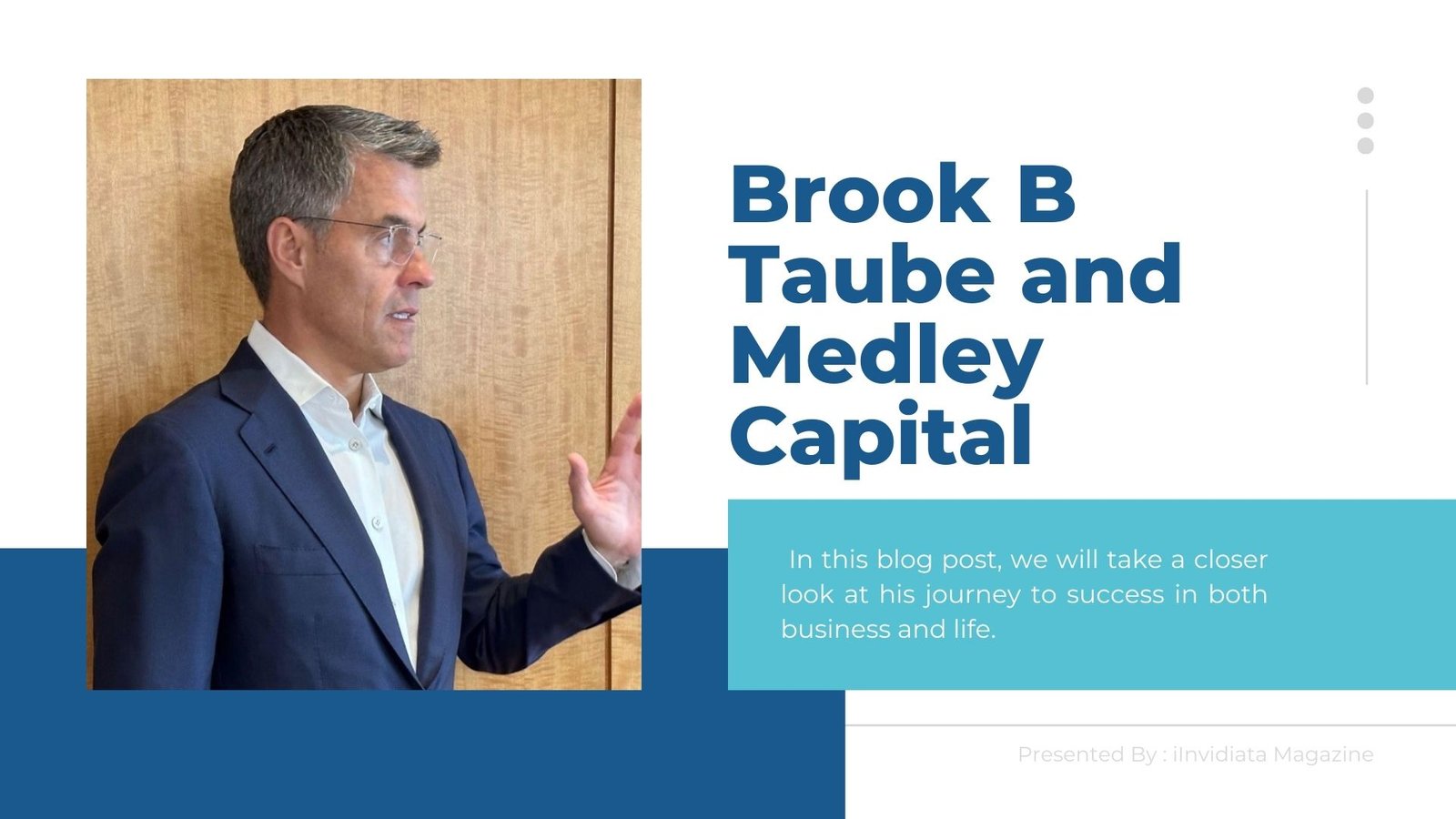
The modern commercial lending landscape relies heavily on private credit vehicles that bridge the gap between institutional asset pools and expanding operating enterprises. Within this sector, the trajectory of Brook B Taube and the operational history of Medley Capital offer an illustrative look at how specialized non-bank lenders scaled their portfolios across changing economic cycles. Tracing this corporate journey requires examining formative banking foundations, direct lending mechanics, regulatory milestones, portfolio restructurings, and subsequent executive initiatives.
Formative Banking Roots and Institutional Training
Brook B Taube developed his foundational expertise in capital markets through early leadership roles within premier Wall Street banking institutions. After completing his studies at Harvard University, Brook B Taube entered the financial sector during the 1990s, securing operational and analytical positions at prominent organizations such as Bankers Trust. During this period, he gained firsthand experience in debt syndication, corporate credit analysis, and large-scale capital deployment before transitioning to independent asset management.
For additional details regarding his professional background and career trajectory, readers can review insights found in this overview of Brook B Taube career milestones.
Establishing Medley Capital in the Middle Market
Medley Capital was officially launched in 2006 by Brook B Taube and his brother Seth Taube to target underserved financing segments within domestic commerce. Operating as an alternative asset management platform, the firm focused primarily on middle-market enterprises that required customized debt capital but frequently lacked access to traditional commercial banking credit lines or public bond markets.
Under the executive direction of Brook B Taube as Chief Executive Officer, the organization scaled rapidly by managing several specialized investment vehicles, including business development companies. These registered entities allowed retail and institutional investors to pool funds, which Medley Capital then deployed into senior secured loans, unitranche financing, and mezzanine debt structures tailored to growing operating companies.
Direct Lending Portfolio Strategy and Risk Management
Medley Capital executed a disciplined underwriting approach designed to balance attractive investment yields with rigorous capital preservation standards. Middle-market companies often represent the backbone of domestic employment, spanning manufacturing, healthcare, business services, and consumer products, yet they require specialized credit evaluation due to their varying cash flow profiles.
The firm’s investment committee evaluated each borrower through comprehensive financial modeling, asset collateralization reviews, and historical operational assessments. By maintaining diversified sector allocations across multiple credit portfolios, Medley Capital sought to insulate investors from isolated industry downturns while supplying essential liquidity for corporate acquisitions, refinancing, and organic business expansions.
SEC Regulatory Settlement and Disclosure Compliance
Navigating prolonged periods of financial market volatility brought significant regulatory scrutiny for many alternative asset managers, including Medley Capital and its executive leadership. In 2022, the Securities and Exchange Commission announced an administrative resolution involving Medley and the Taube brothers concerning historical disclosure practices tied to advisory fees, valuation reporting methodologies, and related-party transactions.
Without admitting or denying the administrative findings, the leadership group agreed to pay a financial penalty and implement enhanced compliance undertakings to resolve the proceeding. This regulatory milestone highlighted the paramount importance of transparent investor communication, precise fee disclosures, and strict adherence to governance protocols within modern private credit management.
Corporate Restructuring and Subsequent Entrepreneurial Ventures
Subsequent macroeconomic pressures and regulatory adjustments prompted extensive corporate restructuring, asset rationalization, and portfolio consolidations across Medley Capital entities. These organizational transitions involved modified external management agreements, asset sales, and strategic realignments of publicly traded debt vehicles to address shifting credit conditions.
Following these structural evolution phases, Brook B Taube redirected his entrepreneurial focus toward emerging sectors within specialty finance and healthcare investment management. This ongoing professional chapter demonstrates a continued commitment to identifying specialized capital allocation needs and building targeted operational teams to navigate contemporary financial markets.
Frequently Asked Questions
Who founded Medley Capital?
Medley Capital was founded in 2006 by industry executives Brook B Taube and Seth Taube as an alternative asset management firm focused on middle-market credit.
What was the primary focus of Medley Capital?
The firm specialized in direct lending and credit investments, providing customized debt financing solutions to middle-market businesses across various industrial sectors.
What educational background does Brook B Taube have?
Brook B Taube attended Harvard University, where he studied before embarking on a career in institutional banking and debt syndication during the 1990s.
What regulatory challenges did Medley Capital face?
In 2022, Medley and its founders settled an SEC administrative proceeding regarding historical disclosure practices and advisory fee reporting without admitting or denying findings.
How did Medley Capital operate during economic downturns?
The firm managed credit risk through portfolio diversification, rigorous underwriting standards, and structured lending agreements designed to protect investor capital.
What is Brook B Taube currently focused on?
Brook B Taube remains active as an entrepreneur, engaging in new business ventures within specialty finance, healthcare, and private investment management.
Disclaimer: This article is for informational and educational purposes only and does not constitute financial, legal, or investment advice. The details presented are based on publicly available historical reports and regulatory filings. Readers should verify official corporate records and consult licensed financial professionals before making any investment or business decisions. Information is subject to change over time.

Daniel J. Morgan is the founder of Invidiata Magazine, a premier publication showcasing luxury living, arts, and culture. With a passion for excellence, Daniel has established the magazine as a beacon of sophistication and refinement, captivating discerning audiences worldwide.


