

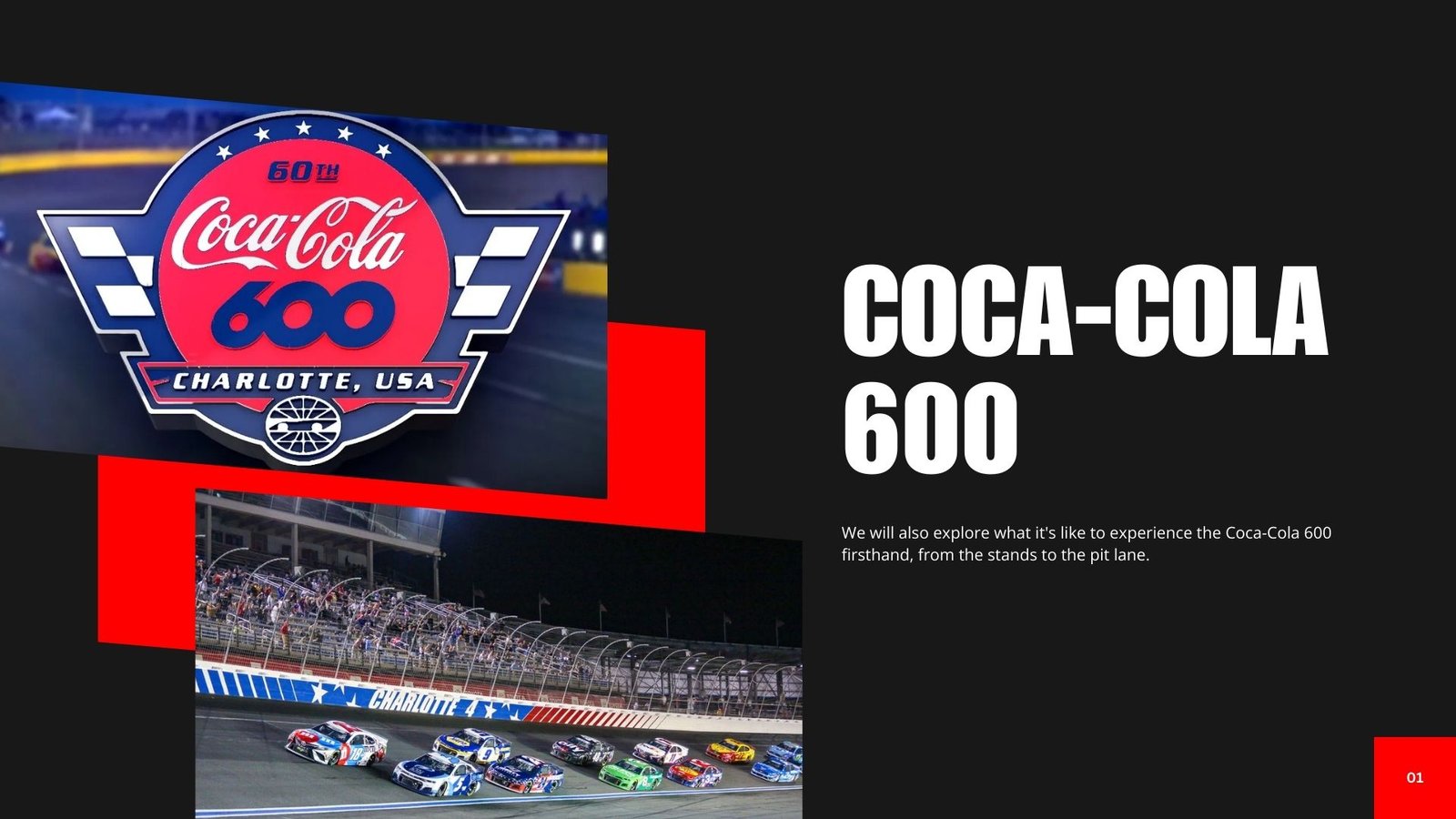
The Coca-Cola 600 stands as the single longest and most physically demanding race on the annual NASCAR Cup Series schedule. Held every spring at Charlotte Motor Speedway in Concord, North Carolina, this 600-mile endurance marathon pushes drivers, pit crews, and stock car machinery to their absolute limits over four exhausting hours. Unlike shorter races on the calendar, the event uniquely bridges two completely different environments by starting in the blistering heat of late afternoon sunshine and concluding under the intense glow of modern stadium floodlights. For over six decades, this crown jewel event has combined grueling mechanical stress with profound national traditions, creating a centerpiece of American motorsport that demands near-perfect execution from every competing organization.
Origins of the 600-Mile Marathon at Charlotte Motor Speedway
The Coca-Cola 600 was first launched in 1960 under the original title of the World 600 to challenge established open-wheel endurance races like the Indianapolis 500. Track founder Bruton Smith and legendary driver Curtis Turner envisioned a premier speedway in Concord, North Carolina, that could host an unprecedented distance testing parts that Detroit engineers never originally designed to endure such prolonged stress. In its early decades, completing all 400 laps around the 1.5-mile quad-oval was a rare feat, with mechanical failures sidelining half the starting field due to boiled-over cooling systems, shattered transmissions, and fried brake rotors. Over the years, Charlotte Motor Speedway evolved into a massive multi-purpose sports complex featuring condominiums overlooking the tri-oval and some of the earliest permanent lighting systems in major-league racing, transforming the spectator experience and setting a new standard for American speedways.
As automotive engineering advanced and reliability improved dramatically through the 1980s and 1990s, the race shifted from a simple game of mechanical survival into an intense tactical chess match. Team owners and crew chiefs circle this specific weekend on their calendars as the ultimate proving ground for chassis setups and aerodynamic balance. Surviving the distance requires an immense amount of concentration from the driver while demanding flawless pit stops from tire changers and fuelers who must maintain peak focus through more than a dozen service cycles.
Decoding the Four-Stage Structure and Changing Track Grip
The Coca-Cola 600 utilizes a distinctive four-stage race format that divides the massive 600-mile distance into four individual 100-lap segments to amplify strategic racing. This segmented structure allows teams to collect valuable championship points at regular intervals while offering crew chiefs natural windows to evaluate chassis performance and make critical adjustments. However, the most fascinating technical challenge comes from the dramatic environmental shift that occurs as daylight fades into night across the North Carolina Piedmont region. Track temperatures plummet rapidly after sunset, altering tire wear rates and traction characteristics in ways that can instantly neutralize a dominant car’s handling advantage.
A stock car that hooks up perfectly during the scorching afternoon sun can suddenly become catastrophically loose or tight once the asphalt cools down under the lights. Crew chiefs must continuously forecast these grip curves during pre-race preparation, relying on veteran driver feedback to dial in wedge and air pressure adjustments during routine green-flag pit stops. This unique atmospheric evolution rewards adaptable drivers who can sense microscopic changes in rear tire adhesion and communicate precise handling traits back to the pit box before minor handling issues turn into race-ending spins against the outside retaining wall.
| Operational Metric | Race Specification |
|---|---|
| Total Race Distance | 600 miles (400 laps around the 1.5-mile quad-oval) |
| Competitive Segments | Four individual stages (First three are 100 laps each) |
| Host Facility | Charlotte Motor Speedway in Concord, North Carolina |
| Primary Environmental Factor | Rapid asphalt cooling from afternoon heat to night racing |
Honoring Fallen Service Members Through 600 Miles of Remembrance
The Coca-Cola 600 is deeply intertwined with the Memorial Day weekend holiday, serving as a solemn and powerful platform for national tribute. Through the moving “600 Miles of Remembrance” program coordinated with the military, participating NASCAR Cup Series teams replace traditional driver names on their front windshield headers with the names of fallen United States Armed Forces members. This emotional tradition connects the high-speed intensity of stock car racing with genuine national gratitude, ensuring that the sacrifices of brave service members remain at the forefront of the massive sporting broadcast.
Pre-race ceremonies feature active-duty military personnel participating in driver introductions, dramatic flyovers by tactical aircraft, and heartfelt musical tributes that echo throughout the packed grandstands. Many drivers and race teams host Gold Star families within their pit areas and hospitality compounds, fostering personal connections that often endure long after the checkered flag waves. This unique combination of athletic competition and patriotic observance elevates the race far beyond a standard sporting event, turning race weekend into a unified national memorial.
Spectator Logistics and In-Person Attendance at Charlotte Motor Speedway
Attending the Coca-Cola 600 live at Charlotte Motor Speedway requires careful advance planning due to the immense scale of fan activities and campground festivities. Spectators regularly arrive days before the green flag drops to take full advantage of extensive RV camping areas, live pre-race concerts, driver autograph sessions, and interactive midway displays. Navigating regional traffic around Concord requires patience on race day, but experiencing the deafening roar of forty high-horsepower stock cars echoing off the grandstands under the nighttime sky provides an unforgettable sensory reward for dedicated racing enthusiasts.
First-time visitors should pack strategically to handle the dramatic temperature swings between the baking afternoon sun and cooler evening breezes once darkness takes over the facility. Bringing adequate hearing protection, comfortable footwear for exploring the sprawling midway, and plenty of hydration supplies makes the extended race day much more manageable. Exploring fan zone exhibits earlier in the weekend also helps spectators avoid peak crowd congestion right before pre-race ceremonies begin.
Frequently Asked Questions About the Coca-Cola 600
How many total miles is the Coca-Cola 600 race?
The race spans a grueling total distance of 600 miles, which equals 400 laps around the 1.5-mile quad-oval layout at Charlotte Motor Speedway.
When was the inaugural event held at the speedway?
The very first race took place in 1960 under the original name of the World 600 before later acquiring corporate title sponsorship.
Where is Charlotte Motor Speedway physically located?
The speedway is situated in Concord, North Carolina, just northeast of downtown Charlotte.
What is the 600 Miles of Remembrance initiative?
It is an annual Memorial Day weekend program where participating race teams feature the names of fallen military members on their car windshield headers.
How is the race distance divided into competitive segments?
The event is broken down into four distinct stages, with the first three covering 100 laps each and the final stage handling the remaining distance to 600 miles.
Why is this specific race classified as a crown jewel event?
It is widely regarded as one of NASCAR’s most prestigious races due to its extreme distance, demanding physical endurance, and historic significance.
Disclaimer: NASCAR schedules, race formats, and event details can occasionally change. Readers should always verify final event timings, ticket information, and track policies through official NASCAR and Charlotte Motor Speedway channels before attending in person.

Daniel J. Morgan is the founder of Invidiata Magazine, a premier publication showcasing luxury living, arts, and culture. With a passion for excellence, Daniel has established the magazine as a beacon of sophistication and refinement, captivating discerning audiences worldwide.


