

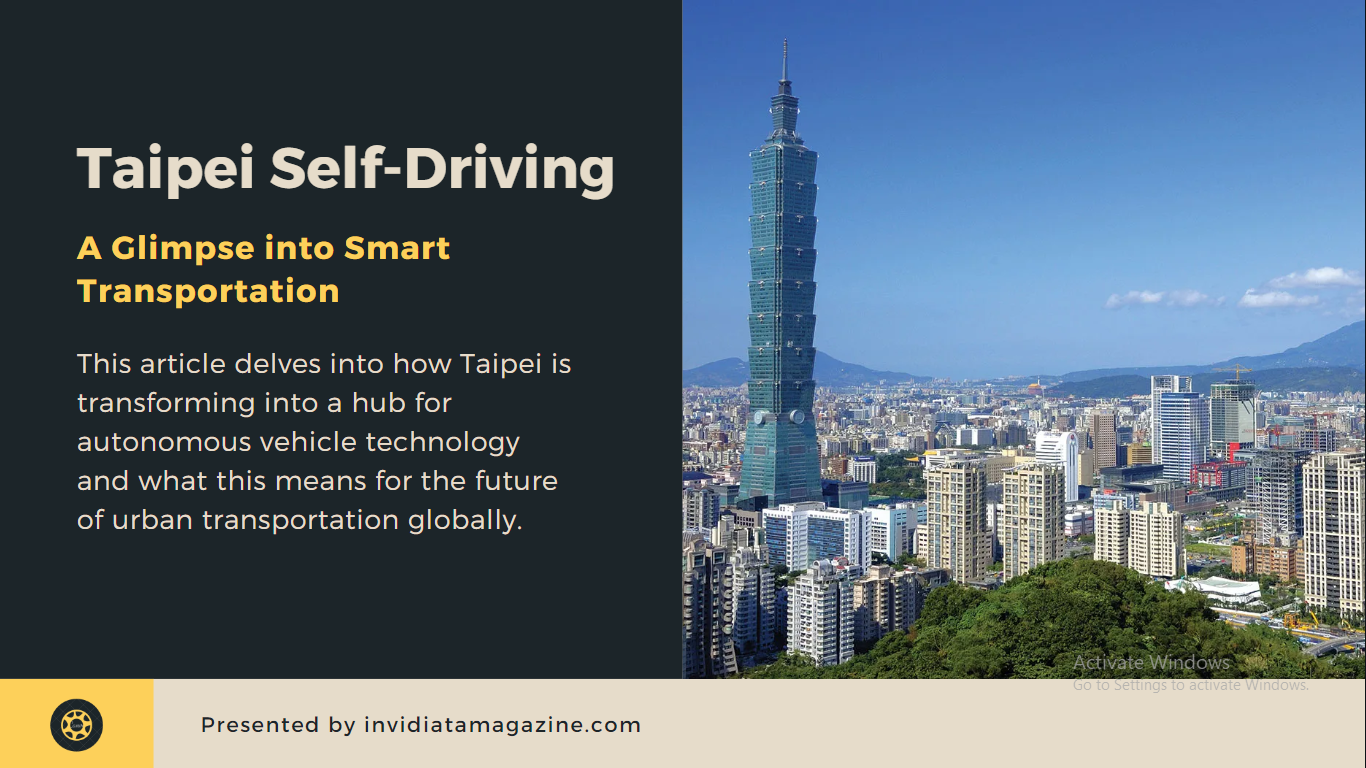
The tapestry of modern urban mobility is being interwoven with groundbreaking threads, one of the most compelling being the development and implementation of autonomous vehicles or, as commonly known, self-driving cars. Taipei, the bustling capital city of Taiwan, is not just watching from the sidelines but actively participating in and sometimes leading this vehicular evolution. The journey towards realizing Taipei’s self-driving capabilities encapsulates a vision of a smart transportation network, merging tradition with futurism to enhance city living. This article delves into how Taipei is transforming into a hub for autonomous vehicle technology and what this means for the future of urban transportation globally.
Xinyi District and Autonomous Transit Trials in Taipei
Taipei currently stands at a crucial crossroads of testing, evaluation, and gradual public integration regarding autonomous mobility systems across specific municipal testbeds. Urban planners and local technology developers work hand in hand to transition self-driving cars and buses from isolated testing grounds onto designated public corridors in high-traffic zones like Xinyi District. This progress reflects a careful balancing act between pushing technological boundaries and ensuring absolute safety for pedestrians and human drivers sharing the road. The city has steadily evolved from simple closed-course experiments to complex, real-world pilot deployments on major thoroughfares.
Unmanned Vehicles Technology Innovation Experimentation Act Framework
Legislative backing serves as the legal foundation that allows companies to test autonomous vehicles on public Taiwanese roadways without running into rigid bureaucratic dead ends. Taiwan’s national administration introduced forward-thinking regulatory frameworks, most notably the Unmanned Vehicles Technology Innovation Experimentation Act, which creates a controlled legal sandbox for innovators. This regulatory approach grants developers the flexibility to test emerging vehicle technologies under supervised conditions while protecting public safety. Government agencies actively review trial data to refine safety standards before granting permits for wider public exposure.
5G Networks and IoT Infrastructure on Xinsheng South Road
Smart infrastructure acts as the digital nervous system that connects autonomous vehicles directly to the urban traffic ecosystem of Taipei. The city has invested heavily in deploying high-speed 5G networks, Internet of Things (IoT) sensors, and intelligent traffic management systems along designated bus routes such as Xinsheng South Road. These technological upgrades allow roadside units to broadcast real-time traffic signal timings, pedestrian crossing data, and road hazard warnings directly to nearby self-driving vehicles. By bridging the gap between vehicle sensors and city infrastructure, Taipei reduces the processing burden on onboard artificial intelligence systems.
Overnight Shuttle Trials and Dedicated Bus Lane Operations
Public transit initiatives in Taipei have moved beyond theoretical discussions into active, scheduled overnight and limited-hour testing trials on exclusive lanes. Specific districts and designated transit corridors serve as primary testing laboratories where autonomous shuttle buses routinely run during off-peak hours to gather essential performance metrics without disrupting heavy daytime traffic. These trials provide invaluable operational data regarding how autonomous buses handle complex lane merging, unpredictable scooter traffic, and sudden weather shifts.
Overview of Autonomous Vehicle Testing Parameters in Taipei
To give a clearer picture of how autonomous trials are structured across the municipality, the following table summarizes key testing parameters, operational environments, and regulatory requirements enforced throughout the city.
| Testing Parameter | Operational Detail | Regulatory & Safety Requirement |
|---|---|---|
| Testing Zones | Xinyi District and designated bus lanes like Xinsheng South Road | Strict geofencing and approved municipal permit |
| Operating Hours | Primarily late-night and off-peak public transit trial windows | Mandatory reduction during heavy daytime congestion |
| Vehicle Types | Autonomous shuttle buses and experimental passenger vehicles | Trained safety drivers present behind the wheel |
| Infrastructure Support | 5G connectivity, IoT sensors, and smart traffic lights | Real-time roadside unit data broadcasting |
Community Engagement and Public Trust Initiatives
Public trust remains a central pillar of the Taipei self-driving evolution because advanced technology ultimately depends on widespread citizen acceptance. Municipal authorities and project developers regularly host community outreach programs, educational seminars, and interactive demonstration rides for local residents. These engagement efforts give everyday citizens a firsthand look at how autonomous vehicles operate, demystifying the technology and addressing safety concerns directly. Gathering structured feedback from regular passengers allows engineers to adjust acceleration profiles, braking smoothness, and in-cabin communication displays to enhance rider comfort.
Technical Hurdles in Dense Urban Traffic Environments
Navigating dense urban traffic filled with thousands of motorcycles, heavy scooters, and unpredictable pedestrians presents persistent engineering hurdles for autonomous developers in Taipei. Heavy monsoon rains and dense fog can temporarily obstruct optical cameras and LiDAR sensors, requiring vehicles to fall back on conservative operating modes or human intervention. Strict geofencing limitations and mandatory safety drivers remain standard requirements for nearly all active trials across the city. Overcoming these technical and environmental obstacles will require continued collaboration between software engineers, municipal authorities, and academic research institutions.
Frequently Asked Questions About Taipei Self-Driving Evolution
Are autonomous cars currently available for public use in Taipei?
Autonomous vehicles in Taipei operate primarily as restricted pilot programs and late-night testing trials rather than fully commercialized public taxi services.
What legal framework allows self-driving tests on public roads in Taiwan?
The Unmanned Vehicles Technology Innovation Experimentation Act provides a legal sandbox that lets technology companies test autonomous vehicles safely under regulatory supervision.
Which areas in Taipei are used for self-driving vehicle testing?
Testing activities take place in designated zones and select public transit corridors, including specific test routes within districts like Xinyi and designated bus lanes.
Do autonomous vehicles in Taipei require human safety drivers?
Current regulatory mandates and safety protocols require trained safety drivers to remain behind the wheel during the vast majority of public road trials.
How do smart traffic lights assist autonomous vehicles in Taipei?
Connected traffic infrastructure transmits real-time signal timing and roadway data directly to autonomous vehicles via 5G networks and IoT sensors.
What are the biggest technical challenges for self-driving cars in Taipei?
Dense scooter traffic, complex pedestrian movements, and heavy tropical rainstorms create difficult sensor and navigation challenges for autonomous systems.
How can citizens share feedback on Taipei self-driving trials?
Municipal authorities and project operators collect rider feedback through structured surveys and public engagement forums following demonstration rides.
Disclaimer: Autonomous vehicle trials, testing routes, and municipal regulations in Taipei are subject to frequent updates and changes. Readers should verify official project timelines and safety guidelines directly through authorized municipal transport announcements.

Daniel J. Morgan is the founder of Invidiata Magazine, a premier publication showcasing luxury living, arts, and culture. With a passion for excellence, Daniel has established the magazine as a beacon of sophistication and refinement, captivating discerning audiences worldwide.


