

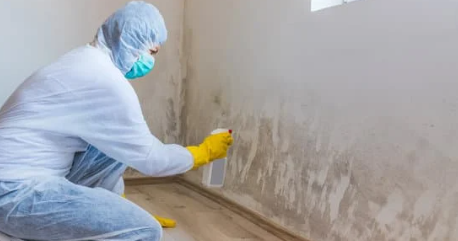
Dealing with fungal outbreaks inside a residence is often a stressful ordeal that disrupts daily living and creates genuine health concerns. Property owners traditionally face invasive reconstruction, heavy chemical scrubbing, and weeks of messy drywall demolition whenever spores take root out of sight. Fortunately, advanced dry fog mold removal provides a modern alternative that bypasses the need for destructive tearing while treating the entire indoor environment simultaneously.
Understanding how this specialized technology operates helps clarify why many homeowners prefer it over old-fashioned manual remediation. Instead of manually wiping down every exposed surface or throwing away contaminated furniture, specialized atomizers convert safe sterilizing agents into an ultra-fine vapor. This microscopic mist fills every corner of a house like a gas, reaching deep inside wall voids and HVAC systems without leaving surfaces soaking wet or damaged.
What Is Dry Fog Mold Removal and How Does It Work?
Dry fog mold removal is an innovative sterilization process that uses atomizing equipment to suspend micro-sized disinfectant particles in the air so they can travel freely through indoor spaces.
Conventional liquid sprays create heavy droplets that pool on surfaces and fail to reach closed-off cavities or overhead ducts. In contrast, dry fog particles measure just a few microns across, allowing them to remain airborne and navigate through rooms via natural air currents and Brownian motion. This scientific behavior enables the sanitizing mist to penetrate porous building materials, insulation layers, and complex ductwork where physical cleaning tools cannot fit.
Once these microscopic particles contact biological contaminants throughout the house, they neutralize viable spores instantly without requiring excess moisture or liquid saturation. Homeowners can therefore decontaminate timber, drywall, carpets, and personal belongings safely without worrying about water damage or warping during the treatment cycle.
Reaching Hidden Cavities Without Destructive Demolition
Dry fog mold removal reaches deep inside enclosed wall spaces, flooring assemblies, and ventilation networks without requiring any destructive tearing of building materials.
Standard remediation protocols usually mandate cutting away large sections of drywall whenever colonies hide behind surfaces or inside framing. This invasive process generates substantial dust, hazardous debris, and expensive reconstruction bills that can overwhelm a household. Conversely, aerosolized sterilizing agents move effortlessly through standard building assemblies, tracking down hidden mold colonies wherever air circulates naturally.
Utilizing Safe, Non-Toxic, and Biodegradable Solutions
Dry fog home mold removal utilizes specialized formulations derived from safe, biodegradable, and plant-based active ingredients that pose no long-term hazard to residents.
Traditional cleaning agents often rely on harsh, volatile chemicals that release potent fumes and irritate sensitive skin or respiratory tracts. Professional dry fog systems typically employ advanced formulations such as modified peracetic acid or hydrogen peroxide derivatives that break down naturally into harmless compounds like water and oxygen after fulfilling their purpose. This means households with small children, allergy sufferers, or sensitive pets can safely re-enter the treated premises shortly after the fog collapses and settles, leaving behind no dangerous chemical residues.
Achieving Rapid Turnaround Times With Minimal Household Disruption
Dry fog mold removal takes a fraction of the time required for traditional scrubbing and allows families to resume normal daily routines almost immediately.
Manual remediation can drag on for weeks as workers quarantine individual rooms, set up heavy containment barriers, and scrub every square inch by hand. Conversely, an entire residential property can often be completely treated using dry fog technology in just a few hours. The process requires very little prep work from the homeowner, sparing families from weeks of displacement, loud industrial fans, and construction dust settling across every room.
Establishing Comprehensive Spore Elimination and Long-Term Prevention
Dry fog mold removal eliminates existing airborne spores and establishes a protective barrier that prevents future colonies from re-establishing in the treated space.
Killing visible surface growth is only half the battle; microscopic airborne spores can easily trigger secondary outbreaks if left unchecked. The dry fog method sanitizes both the physical surfaces and the breathable air volume simultaneously. Many professional treatments also include a specialized antimicrobial surface protectant that bonds to materials at a microscopic level, creating a resilient defense against future mold development.
Evaluating Alternative Remediation Approaches
Comparing dry fog technology against standard demolition-heavy methods highlights why many homeowners choose the fogging approach for whole-house sanitization.
| Feature | Traditional Remediation | Dry Fog Mold Removal |
|---|---|---|
| Demolition Required | Often requires tearing out drywall and flooring | None required; preserves existing building materials |
| Treatment Time | Several days to multiple weeks | Usually completed in just a few hours |
| Chemical Exposure | Heavy, harsh chemicals and bleach | Non-toxic, biodegradable, plant-derived formulas |
| HVAC Treatment | Difficult or impossible without duct replacement | Treats entire ductwork and air handler automatically |
| Overall Cost | High due to labor and structural rebuilding | Significantly lower due to reduced labor and zero rebuilding |
Navigating Professional Treatment Protocols and Air Quality Verification
Professional dry fog mold removal follows a structured protocol that begins with initial air quality testing and concludes with verification to ensure total spore reduction.
Qualified remediation specialists typically start by conducting pre-treatment air sampling, such as spore trap testing or ERMI analysis, to identify specific spore types and concentration levels. On the day of service, occupants and pets must vacate the property while technicians seal exterior doors and activate the atomizing equipment. The dry fog fills every room for a designated dwell time, allowing the micron-sized particles to neutralize all biological contaminants. Once the fog naturally collapses back into microscopic residue, post-treatment air testing is performed to scientifically verify that airborne spore counts have returned to safe, normal baseline levels.
Maintaining a healthy indoor environment involves addressing both biological growth and overall household hygiene. For those looking to keep their living spaces fresh and protected year-round, looking into regular house deep cleaning for your health and home provides additional peace of mind.
Frequently Asked Questions
Is dry fog mold removal safe for pets and children?
Yes, professional dry fog systems use non-toxic, biodegradable solutions that break down into harmless elements, making them completely safe for families and pets after the mandatory dwell and settling time.
Do I need to move out of my house during the treatment?
Residents and pets must step outside during the active fogging cycle and the brief settling period, but you can safely return to your home the very same day once the treatment concludes.
Will dry fog kill toxic black mold?
Yes, the specialized antimicrobial agents used in dry fog technology effectively target and neutralize all common indoor fungal strains, including Stachybotrys chartarum, commonly known as toxic black mold.
Does dry fog remove stubborn musty odors?
Because the dry fog neutralizes mold spores at their root source throughout the entire home and HVAC system, it permanently eliminates the musty odors associated with hidden dampness.
How do I know the treatment actually worked?
Reputable dry fog companies perform both pre-treatment and post-treatment air quality testing to provide scientific verification that airborne spore counts have dropped significantly.
Will my insurance cover dry fog mold remediation?
Insurance coverage depends entirely on your specific homeowner policy and whether the mold resulted from a sudden, covered plumbing failure rather than long-term neglect.
Disclaimer: Mold remediation results can vary depending on the underlying source of moisture and the specific layout of your property. Details regarding products and treatment protocols may change over time, so homeowners should always verify final specifications and certifications directly with licensed local professionals.


