

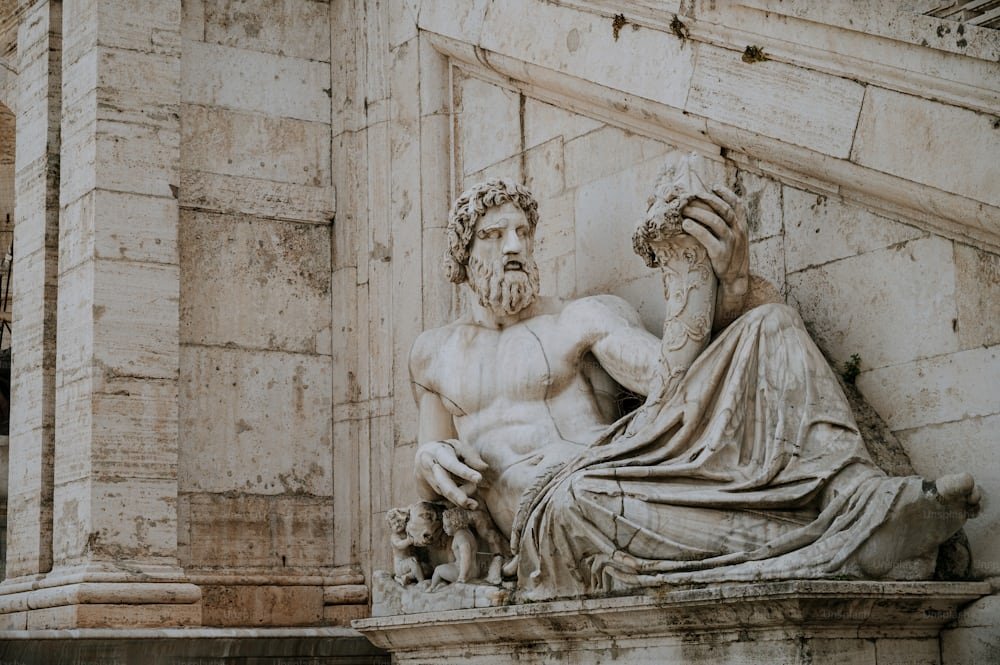
The ancient hero Hercules, renowned for his unmatched physical prowess and courage, has been immortalized throughout history in various forms of art and literature. Among these representations, the classical Hercules statue stands as an enduring testament to his mythological significance and cultural power. These figures were carved with great care and skill, and they not only show how strong Hercules was physically, but they also capture the complex myths and symbols that surround this famous figure in both Greek and Roman traditions.
Translating Mythical Trials Into Carved Stone Masterpieces
Sculptors transformed the torturous trials of the hero into frozen moments of muscular strain and quiet exhaustion.
The Greeks originally called the hero Heracles, born as the divine son of Zeus and the mortal woman Alcmene. Hera’s relentless jealousy drove him through the legendary Twelve Labors mandated by King Eurystheus. Master carvers chose specific milestones from these trials, such as wrestling the Nemean lion or capturing the golden apples of the Hesperides, to demonstrate his supernatural endurance in solid rock. Instead of depicting every chaotic battle, stone carvers preferred moments of heavy contemplation, turning grueling physical labor into dignified artistic monuments.
Mastering Proportion And Exhaustion Through The Farnese Design
The famous Farnese type redefined classical proportions by showing an exhausted demigod leaning heavily on his club.
Attributed originally to the fourth-century BC Greek master Lysippus, the famous Farnese design portrays a massive, heavily muscled figure resting after his exhaustive trials. The surviving marble version in Italy was signed by the Athenian sculptor Glykon, who meticulously scaled up the bronze proportions for Roman patrons. Viewers walk around the heavy stone block to observe bulging veins, exhausted facial expressions, and shoulders resting against the lion skin draped over his wooden club. This specific stance humanized an otherwise terrifying demigod, showing the physical toll of immortality.
Projecting Imperial Authority Across Roman Public Spaces
Roman emperors and military generals commissioned aggressive marble likenesses to legitimize their own political authority.
During the height of the Roman Empire, civic leaders adopted Hercules as a personal patron deity and political mascot. The Ludovisi Hercules, carved during the late second century AD, captures a much more dynamic and confrontational aura than earlier Greek interpretations. Rulers placed these statues in public bathhouses, imperial villas, and victory temples to suggest that current political leaders shared the hero’s divine mandate. Just as modern athletes maintain rigorous fitness routines to conquer physical hurdles, these historical depictions celebrated the ultimate ideal of physical conditioning, a concept explored further in guides on balancing strength training and cardiovascular health.
Decoding The Symbolic Iconography Of Pelts And Clubs
Every piece of gear carved into the marble communicates a specific victory over monstrous threats.
Ancient viewers immediately recognized the demigod through two permanent accessories carved seamlessly into the stone blocks. The Nemean lion pelt draped over his shoulder or resting beneath his elbow signified invulnerability against conventional weapons. Beside this pelt, his heavy knotted wooden club represented raw earthly force used to clear the ancient world of bandits and beasts. Carvers polished these attributes with different surface textures to contrast soft fur against hard wood and muscular skin.
Locating Surviving Classical Sculptures In Modern Collections
Art enthusiasts can examine these ancient treasures firsthand within major international exhibition halls and archaeological archives.
Finding these monumental works requires traveling to specialized cultural institutions across Europe. The towering Farnese sculpture dominates a primary gallery inside the National Archaeological Museum of Naples. Other prominent marble fragments and Roman copies remain securely preserved within the Vatican Museums and the Louvre, where conservation scientists carefully monitor ambient humidity to protect the ancient stone.
Conclusion
The marble likenesses of Hercules bridge the gap between ancient mythology and timeless human perseverance through exceptional stonecraft. These sculptures preserve the physical ideals of classical antiquity while reminding modern observers of the enduring struggle against impossible odds.
What was the real name of Hercules in Greek mythology?
In Greek mythology, Hercules was originally known as Heracles before the Romans adapted his name and stories into their own cultural tradition.
Who carved the famous Farnese Hercules?
The surviving Farnese Hercules is a Roman marble copy sculpted by Glykon, though the original bronze statue was attributed to the classical Greek artist Lysippus.
What does the lion skin on a Hercules statue represent?
The Nemean lion skin symbolizes Hercules’s victory over an invincible beast during his first labor, representing his supreme courage and invulnerability.
Where is the Farnese Hercules currently located?
The Farnese Hercules is permanently housed in the National Archaeological Museum of Naples, Italy.
Why did Roman emperors commission statues of Hercules?
Roman leaders commissioned these sculptures to project divine favor, political strength, and a direct association with the hero’s legendary resilience.
Are original Greek bronze statues of Hercules still common?
Most original Greek bronze statues of Hercules did not survive antiquity, meaning modern scholars typically study them through later Roman marble copies.
How do museums protect ancient marble Hercules statues?
Museums use climate-controlled display cases, careful lighting, and specialized conservation techniques to protect fragile marble artifacts from environmental damage.
Disclaimer: Historical attributions, museum exhibition locations, and conservation statuses can occasionally change. Readers should verify final visitor details, ticket policies, and exhibition hours directly from official museum sources before planning a trip.


