

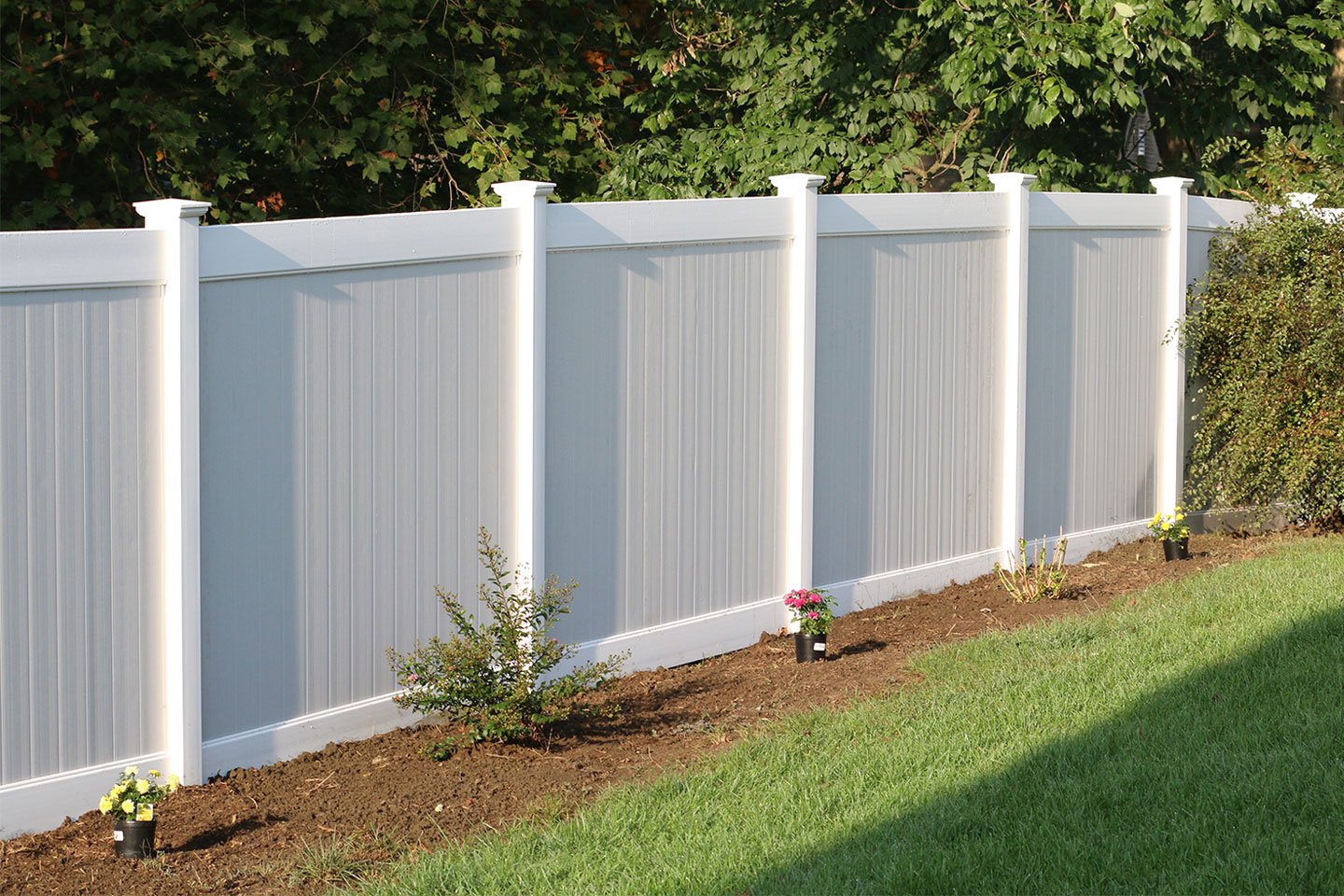
Vinyl fencing remains a dependable choice for property owners who want a durable boundary without the constant upkeep of wood. Modern manufacturing methods produce resilient polymer panels that resist moisture, insects, and harsh sunlight. If you are planning an upcoming outdoor project, evaluating popular vinyl fence designs will help you find a configuration that fits your property layout and architectural goals.
This guide breaks down traditional and contemporary fence configurations, examines current color and texture choices, and reviews important structural considerations before you purchase materials.
Tongue-and-Groove Full Privacy Polymeric Panels
Tongue-and-groove full privacy polymeric panels create an uninterrupted visual barrier that completely shields backyard spaces from neighboring views and street traffic.
These tall barriers typically stand six to eight feet high and feature interlocking pickets that fit tightly together to prevent gaps. Because solid panels block wind currents completely, installation requires sturdy structural posts set deep in concrete to prevent leaning. Homeowners often customize the top edge of these privacy walls using decorative lattice inserts or scalloped rails to soften the stark vertical appearance.
Continuous Horizontal Polyvinyl Chloride Ranch Rails
Continuous horizontal polyvinyl chloride ranch rails provide a classic farm aesthetic that marks large property boundaries without obstructing scenic landscape views.
Ranch rail systems usually consist of two to four horizontal rails running between sturdy vertical posts, standing roughly four feet high. This open design works exceptionally well for large suburban lots, rural acreage, or pastures where livestock containment and boundary definition are primary goals. Unlike traditional timber rails that rot or require annual painting, polyvinyl chloride rails maintain their structural integrity through seasonal temperature shifts.
Spaced Picket Semi-Private Polymeric Barriers
Spaced picket semi-private polymeric barriers offer a balanced compromise by providing boundary separation while allowing light and wind to pass through.
These layouts feature narrow spacing between individual vertical pickets, reducing the wind load pressure that fully solid panels experience during storms. Property owners frequently select semi-private layouts for side yards, swimming pool enclosures, or garden perimeters where complete seclusion is not necessary but distinct property lines are desired.
Alternating Board Polyvinyl Chloride Shadowbox Fences
Alternating board polyvinyl chloride shadowbox fences utilize staggered picket placement on opposite sides of the rail to create a dimensional appearance that looks identical from both perspectives.
This alternating style offers substantial privacy while leaving small gaps for airflow and filtered sunlight between the overlapping boards. It serves as a neighbor-friendly option along shared property lines because neither household has to look at the flat, unfinished back side of the structure.
Extruded Polymer Lattice-Topped Garden Enclosures
Extruded polymer lattice-topped garden enclosures combine a solid lower privacy barrier with an open crisscross lattice grid across the upper section.
This architectural detail adds visual interest and allows climbing vines or flowering plants to weave through the openings. Gardeners frequently install lattice-topped borders to protect vegetable patches from wildlife while maintaining an open, airy feel overhead.
Matte Dark Colors and Embossed Wood-Grain Textures
Contemporary manufacturing techniques have moved far beyond bright white pickets to introduce sophisticated dark tones and realistic timber finishes.
While traditional white vinyl remains a popular choice for its clean appearance, manufacturers now offer dark bronze, charcoal gray, clay, and black options that complement modern exterior siding. Additionally, embossed wood-grain textures replicate the rich visual warmth of natural cedar or redwood without the ongoing sanding, staining, and sealing maintenance required by organic timber.
Reinforced Post Installation and Local Zoning Standards
Evaluating local zoning laws, wind load ratings, and post reinforcement methods ensures your fence remains safe and compliant for decades.
Before buying materials, property owners should review municipal building codes and homeowner association rules regarding maximum allowable fence heights and setback limits. Furthermore, because solid privacy panels act like sails during heavy gales, professional installers often place internal aluminum or galvanized steel reinforcement channels inside corner and gate posts to prevent structural bending.
Frequently Asked Questions About Polymer Barrier Systems
How long do vinyl fences typically last?
A high-quality vinyl fence can easily endure twenty to thirty years or longer because the durable polymer material does not rot, rust, or attract wood-boring insects.
Does vinyl fencing cost more than wood?
The initial material and installation cost of vinyl is generally higher than pressure-treated wood, but vinyl eliminates ongoing expenses like staining, painting, and board replacement.
How should you clean a vinyl fence?
Routine cleaning requires only a garden hose, mild dish soap, and a soft-bristle brush to wash away accumulated dirt, pollen, and grass clippings.
Can vinyl fences handle strong winds?
Vinyl fences withstand normal weather conditions well, though solid privacy styles benefit greatly from internal metal post inserts to handle heavy wind gusts.
Will sunlight cause vinyl fences to fade?
Manufacturers incorporate titanium dioxide and ultraviolet inhibitors into the polymer compound to prevent sun damage and severe color fading over time.
Is it possible to paint a vinyl fence?
Painting a vinyl fence is discouraged because standard exterior paint fails to bond securely to smooth plastic surfaces, though factory-tinted color options are readily available.
For homeowners mapping out comprehensive home upgrades, comparing project expenses and material selections is critical, much like reviewing structural elements or exploring guidelines when what should my roof estimate include for structural repairs. Careful planning ensures your property improvement investment delivers lasting durability and curb appeal.
Disclaimer: Fencing material availability, installation labor rates, and municipal zoning regulations vary by region. Property owners should verify local building codes and manufacturer warranty details with official sources before purchasing or installing fencing materials.

Passionate content writer and savvy blog publisher, Aamir crafts compelling stories and insightful articles that captivate and inform. With a knack for blending creativity and strategy, they bring fresh perspectives to every piece. Dive into their world of words and discover content that resonates.


