
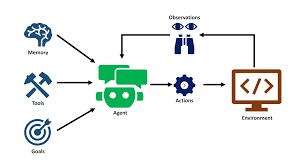
Autonomous agents are fundamentally altering how modern enterprises execute complex workflows, transition from reactive automation to proactive problem-solving, and manage customer experiences at scale. For business leaders eager to stay competitive, mastering the intricacies of designing autonomous agents goes far beyond choosing a software vendor. It requires a deliberate operational philosophy that balances creative task execution with rigorous organizational controls, ensuring that automation delivers tangible economic value without introducing unpredictable operational risks.
Agentic artificial intelligence sits at the very core of this operational transformation, moving past the rigid boundaries of traditional chatbots and script-based robotic process automation. Unlike older tools that follow brittle, hardcoded decision trees, modern agentic systems evaluate dynamic operational contexts, plan multi-step execution paths, and invoke external software tools autonomously to reach specific strategic goals. This capability allows organizations to delegate multi-layered responsibilities—such as resolving complex customer disputes or coordinating multi-tier supply chain exceptions—to intelligent software layers. For executive leadership, designing these systems successfully means shifting focus from simple programming tasks toward structuring precise operational boundaries, reliable data environments, and clear accountability frameworks.
Moving Beyond Chatbots: What Defines Modern Autonomous Agents
Modern autonomous agents represent a mechanical shift from static prompt-response bots to stateful, tool-using execution loops that handle multi-step reasoning.
Traditional software bots break down immediately when faced with unstructured inputs, missing data fields, or unexpected operational exceptions. In sharp contrast, contemporary agentic architectures maintain internal memory states, dynamically formulate execution plans, and leverage structured application programming interfaces to query databases or update enterprise records. Understanding this underlying mechanical difference prevents technical and operational teams from treating sophisticated enterprise agents like simple conversational chat wrappers.
Defining Enterprise Boundaries: Scoping High-Value Workflows
An autonomous agent succeeds or fails based on how precisely leaders bound its operational scope to prevent uncontrolled wandering or hazardous mission creep.
Leadership teams must carefully evaluate internal operations to pinpoint functional areas where human-like judgment provides genuine economic leverage, such as initial vendor vetting, invoice reconciliation, or multi-channel customer support triage. Establishing narrow, well-defined operational guardrails ensures the system cannot drift into unauthorized domains or execute high-stakes financial transactions without appropriate authorization. Thoughtful scoping safeguards the broader organization while driving immediate, measurable efficiency gains.
Architecting Data Context and Secure API Tool Integration
Autonomous agents must connect safely with core customer relationship management software, enterprise resource planning platforms, and dynamic knowledge bases via secure APIs and vector stores.
Deploying intelligent automation without rich contextual data inevitably results in flawed operational execution and misguided decisions. For instance, customer service agents require continuous grounding in verified company policies, product catalogues, and historical support records using retrieval-augmented generation frameworks. Similarly, supply chain agents need instant visibility into inventory thresholds and internal approval hierarchies before executing external purchase orders. Building these integrations correctly eliminates operational data silos and reduces manual overhead across departments.
For organizations looking to scale these automated workflows, exploring modern enterprise architecture patterns can offer valuable context. Many executives also find it helpful to examine the benefits of implementing an enterprise AI platform in your business to streamline cross-departmental operations and ensure smooth system-wide integration.
Establishing Runtime Guardrails and Deterministic Safety Protocols
Deterministic runtime guardrails and rigorous output validation layers are mandatory before autonomous agents execute direct write actions in production enterprise software.
Because generative reasoning models can occasionally produce hallucinations or misinterpret nuanced instructions, protective validation code must sit directly between the agent loop and the final application programming interface call. This structural separation involves validating tool call arguments against strict JSON schemas, sanitizing user inputs, and enforcing programmatic limits on transaction volumes. Implementing these defensive barriers protects core financial ledgers and brand reputation from unverified or erratic operations.
Designing Human-in-the-Loop Oversight and Clear Escalation Paths
Even the most advanced agentic systems require structured human approval gates and transparent escalation protocols for operational anomalies they cannot resolve independently.
Organizations should never let autonomous agents operate entirely inside an opaque black box when managing critical business outcomes or customer relationships. For example, an agent tasked with supplier negotiations can draft contract amendments, but it must automatically route agreements exceeding specific financial thresholds to a human procurement manager for final sign-off. This hybrid governance model ensures that while artificial intelligence accelerates execution speed, experienced professionals retain ultimate authority over high-risk decisions.
Tracking Observability, Token Costs, and Continuous Performance Evaluation
Business leaders must monitor agent reasoning traces, operational latency, application programming interface token expenditures, and task success rates right alongside traditional software metrics.
Reviewing detailed execution logs allows engineering teams to identify recurring failure patterns, refine prompt contexts, and optimize overall system reliability. Furthermore, because multi-step reasoning loops can consume significant computing resources, tracking token expenditures prevents unexpected cloud infrastructure bills from eroding automation ROI. Continuous evaluation ensures that the deployed system improves steadily as business needs and market environments evolve.
Conclusion
Designing autonomous agents requires a careful balance between goal-driven flexibility, strict runtime safety, and robust human oversight. By scoping workflows clearly, integrating tools securely, and monitoring performance continuously, business leaders can capture the benefits of modern automation while maintaining full operational control.
Frequently Asked Questions
What is the main difference between traditional bots and autonomous agents?
Traditional bots follow rigid, pre-programmed decision trees and struggle with unexpected inputs. Autonomous agents use reasoning loops to pursue broad goals, make multi-step plans, and invoke external tools dynamically.
Why are runtime guardrails important for enterprise agents?
Runtime guardrails validate tool calls and sanitize outputs before an agent executes direct actions, protecting business software from unverified operations or unintended data changes.
How do autonomous agents connect with existing business software?
Agents connect to CRMs, ERPs, and messaging platforms using secure APIs, structured schema definitions, and retrieval-augmented generation to pull real-time company data.
What role does human oversight play in agent design?
Human oversight provides necessary safety checks by establishing approval gates, threshold limits, and escalation paths for complex or high-stakes business decisions.
How can businesses monitor autonomous agent performance?
Companies track agent performance through observability tools that log reasoning traces, measure task success rates, track latency, and monitor API token costs.
What are good starting use cases for autonomous agents?
High-volume, repeatable multi-step tasks like initial customer support triage, invoice reconciliation, and routine data gathering are ideal starting points.
Disclaimer: Enterprise agent frameworks, tool standards, and security protocols evolve rapidly. Business leaders should verify current technical capabilities and consult official software documentation before deploying autonomous systems into production environments.

Daniel J. Morgan is the founder of Invidiata Magazine, a premier publication showcasing luxury living, arts, and culture. With a passion for excellence, Daniel has established the magazine as a beacon of sophistication and refinement, captivating discerning audiences worldwide.


[…] workflow strategies can yield substantial returns. For instance, many enterprises look toward automated workflow management strategies for modern enterprises to remove administrative friction alongside physical logistics […]
[…] how physical infrastructure updates fit into broader operational shifts, they often reference automated workflow management strategies for modern enterprises to streamline […]
[…] frameworks that enable these capabilities, business leaders can explore structured insights on designing autonomous enterprise systems for modern […]