

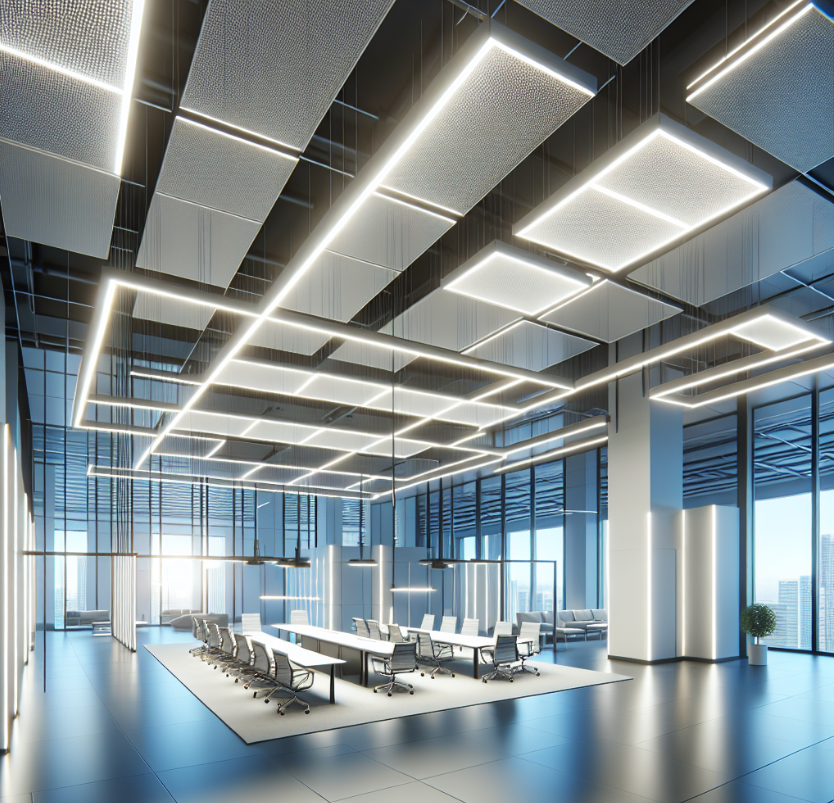
Commercial facility managers constantly seek effective methods to lower overhead expenses while maintaining a bright, productive workspace for employees. Lighting represents a substantial share of total commercial energy consumption, which makes modernizing overhead fixtures a top priority for facility renovations. LED troffer lights deliver a reliable, long-lasting illumination standard that significantly cuts power usage and improves overall visual comfort across offices, schools, and healthcare facilities.
Recessed Ceiling Integration and Panel Diffusion Design
LED troffer lights are specialized rectangular or square fixtures engineered to fit directly into standard T-grid suspended ceilings. These fixtures use solid-state light-emitting diodes paired with prismatic or frosted acrylic diffusers to spread illumination evenly across a room without creating harsh glare. Unlike older legacy fixtures that produced uneven brightness gradients, modern troffer units project light uniformly to eliminate dark ceiling pockets and support daily operational tasks.
The Shift From Fluorescent Troffers to Solid-State Efficiency
The history of troffer lighting is rooted in legacy fluorescent tube technology, which served as the primary choice for large indoor spaces for decades. However, those older fluorescent systems brought persistent challenges, including slow startup times, annoying ballast hum, noticeable flickering, and hazardous mercury content. Transitioning to LED troffer lights eliminates these maintenance burdens and environmental safety concerns while offering instant-on capability and superior color rendering.
Operational Cost Savings and Efficacy Metrics
Upgrading commercial interiors yields immediate financial relief through lower monthly electricity bills and reduced hardware maintenance overhead. Because light-emitting diodes convert electrical energy directly into visible light rather than wasting power as excess heat, these fixtures achieve high luminous efficacy measured in lumens per watt. Facility maintenance teams spend far fewer hours replacing burned-out tubes or failing magnetic ballasts, allowing staff to focus on higher-priority facility management tasks.
Smart Building Integration and Advanced Control Protocols
Modern office environments require sophisticated lighting control strategies that adapt dynamically to room occupancy and available natural daylight. Facility engineers can connect these fixtures to advanced building automation networks using 0-10V dimming drivers, DALI-2 protocols, or Power over Ethernet solutions. Integrating daylight harvesting sensors enables indoor fixtures to dim automatically when sunlight floods through perimeter windows, maximizing energy conservation without requiring manual wall switches.
Key Technical Criteria for Selecting Commercial Troffers
Choosing the correct fixtures requires a careful review of lumen packages, wattage levels, color temperature options, and recognized safety certifications. Buyers should verify that prospective products carry DesignLights Consortium qualifications and Underwriters Laboratories safety listings to ensure strict compliance with local building energy codes and eligibility for utility rebates. Color choices typically span from neutral 3500K options to crisp 5000K daylight settings suited for commercial workspaces.
Evaluating Complete Fixture Swaps Versus Retrofit Solutions
Facility upgrade strategies generally depend on whether a project involves full fixture replacement or utilizes dedicated troffer retrofit kits. Complete fixture swaps require removing old housings entirely, which works well during major interior remodels or structural ceiling updates. Alternatively, magnetic or mechanical retrofit kits allow maintenance crews to slide new LED light engines directly into existing fluorescent troffer shells, saving substantial labor time and keeping upfront capital investments low.
Beyond upgrading overhead illumination, facility operators frequently pursue broader facility improvements, such as maximizing productivity through efficient business operations, to ensure every square foot of commercial real estate runs at peak performance.
Frequently Asked Questions
What is the typical lifespan of commercial LED troffer lights?
Most commercial-grade LED troffers are rated to operate between 50,000 and 100,000 hours, which frequently translates to over a decade of continuous service in standard office buildings.
Do LED troffers require external ballasts to operate?
No, LED troffers operate using specialized internal electronic drivers rather than traditional magnetic or electronic ballasts, completely eliminating ballast buzzing and reducing points of failure.
Can LED troffer lights connect to building automation systems?
Yes, many commercial troffer models support 0-10V dimming and smart communication protocols, allowing them to interface directly with centralized automation networks and occupancy sensors.
What color temperature is best suited for corporate offices?
A color temperature between 4000K and 4100K is commonly recommended for office environments because it provides a clean, neutral white light that promotes alertness and visual clarity.
Are LED troffer fixtures eligible for electric utility rebates?
Many electric utility providers offer financial incentives for commercial properties that upgrade outdated fluorescent fixtures to high-efficiency LED alternatives carrying DesignLights Consortium certification.
How do recessed troffers impact indoor cooling loads?
Because light-emitting diodes emit very little thermal radiation compared to legacy incandescent or fluorescent lamps, they help decrease interior cooling demands and lower air conditioning expenses.
What routine maintenance do LED troffers require?
These fixtures require almost no routine maintenance other than an occasional exterior wipe-down to clear dust accumulation and ensure maximum light transmission through the diffuser panel.
Disclaimer: Electrical codes and energy efficiency regulations vary by region. Facility managers should always verify local compliance standards, consult licensed electricians, and review manufacturer data sheets prior to purchasing or installing commercial lighting equipment.

Daniel J. Morgan is the founder of Invidiata Magazine, a premier publication showcasing luxury living, arts, and culture. With a passion for excellence, Daniel has established the magazine as a beacon of sophistication and refinement, captivating discerning audiences worldwide.


