

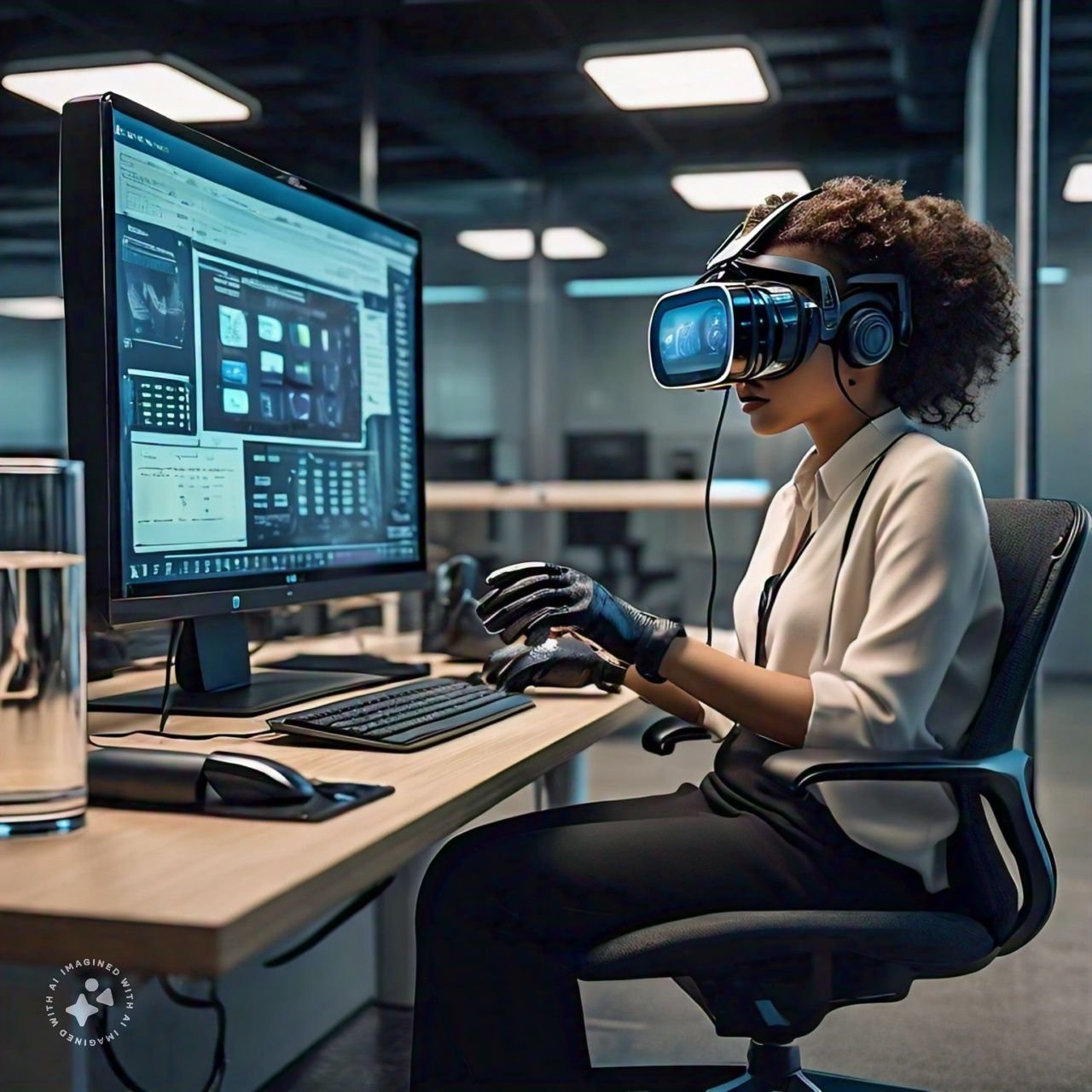
Virtual reality is stepping far beyond gaming rooms and entertainment arcades to reshape how organizations evaluate job applicants. As corporate human resources teams and specialized staffing agencies search for deeper insight into practical skills, immersive candidate evaluation has matured into a reliable corporate tool. Standard video interviews and written resumes often leave hiring managers guessing about an applicant’s actual capability under pressure. Placing candidates inside simulated digital workspaces changes that dynamic by allowing recruiters to observe real-world performance firsthand before making a final job offer.
How Immersive Workplace Simulations Evaluate Practical Skills
Modern virtual reality assessment platforms place job seekers directly into interactive 3D replicas of offices, retail floors, or manufacturing environments to test job readiness.
Instead of answering traditional interview questions about past behavior, applicants actively manage simulated scenarios such as troubleshooting network hardware, resolving customer conflicts, or managing complex inventory systems. Software platforms record every action, decision path, and reaction time, giving evaluation panels objective performance metrics. This hands-on testing environment allows hiring teams to gauge technical proficiency and communication style simultaneously without relying on subjective impressions.
Why Standardized Testing Environments Reduce Hiring Bias
Standardized virtual scenarios ensure every single applicant experiences the identical set of challenges, parameters, and environmental distractions.
Traditional unstructured interviews often suffer from unconscious human bias, where interviewers might unconsciously favor candidates who share similar personal backgrounds or communication styles. Immersive assessment tools eliminate these variables by focusing entirely on objective problem-solving behaviors and task execution. Every participant receives the same digital prompt and operates within identical constraints, creating a level playing field that promotes diversity and fairness across the entire hiring pipeline.
Financial Investments and Hardware Deployment Considerations
Adopting immersive hiring technology requires a thoughtful budget covering standalone hardware headsets, specialized simulation software licensing, and internal staff training.
While modern standalone enterprise headsets have significantly reduced the setup friction and equipment costs associated with older tethered computer systems, initial capital expenditures still demand careful planning. Organizations must weigh software subscription fees against the long-term savings of reduced employee turnover and faster hiring cycles. Furthermore, information technology teams need to establish reliable device management protocols to handle firmware updates and ensure smooth connectivity for remote applicants.
Protecting Biometric Data and Maintaining Regulatory Compliance
Advanced head-mounted displays and spatial sensors capture granular behavioral telemetry, including gaze patterns, reaction speeds, and hand movement mechanics.
This extensive collection of sensitive user data places strict legal responsibilities on hiring organizations under global data protection frameworks. Human resources departments must verify that their technology vendors employ robust encryption protocols, secure cloud storage channels, and transparent data retention policies. Clear consent agreements must inform every applicant about what specific metrics are recorded during the simulation and how those insights influence hiring decisions.
Integrating Spatial Technology Into Established Hiring Pipelines
Successful deployment of virtual reality screening tools depends on clear communication, thoughtful scheduling, and accessible alternative formats for every applicant.
Hiring managers should introduce immersive assessments selectively, applying them primarily to high-volume recruitment drives or specialized technical roles where practical simulations offer clear predictive value. Providing alternative evaluation paths remains essential for candidates who experience physical constraints or motion sensitivity when wearing headset hardware. Communicating clearly about the assessment structure well in advance helps reduce candidate anxiety and prepares participants to navigate the virtual space comfortably. To build a comprehensive understanding of evolving staffing dynamics and administrative duties, leaders can also review insights on understanding the responsibilities of recruitment managers within modern enterprise structures.
Frequently Asked Questions
What hardware is required to run modern recruitment simulations?
Most contemporary enterprise assessments utilize standalone virtual reality headsets that operate independently of powerful desktop computers, making them easier to distribute among remote candidate pools.
How does virtual reality reduce hiring bias?
By placing every applicant through the exact same standardized virtual scenario, recruiters evaluate candidates purely on observed actions and problem-solving skills rather than subjective background factors.
Are virtual reality assessments accessible for all candidates?
While immersive tech is increasingly flexible, organizations must provide reasonable non-VR alternative assessment formats for candidates who cannot or prefer not to use headset hardware.
What types of roles benefit most from immersive screening?
Roles involving complex customer interactions, hands-on technical troubleshooting, spatial design, or high-risk operational procedures benefit most from practical virtual simulations.
How is candidate data protected during a VR assessment?
Enterprise platforms must comply with strict privacy regulations by encrypting telemetry data, securing cloud storage channels, and obtaining explicit informed consent from applicants before the session.
Can virtual reality replace human recruiters entirely?
Virtual reality is designed to augment and streamline the screening process by providing objective data, but human oversight remains vital for final hiring decisions and relationship building.
Disclaimer: Virtual reality hardware standards, software capabilities, and data privacy regulations evolve rapidly. Recruitment professionals should verify all technical specifications and compliance requirements directly with official technology providers before implementing hiring tools.


[…] how digital innovation and recruitment intersect in modern industries, exploring developments like virtual reality in recruitment provides additional context on immersive technology […]