

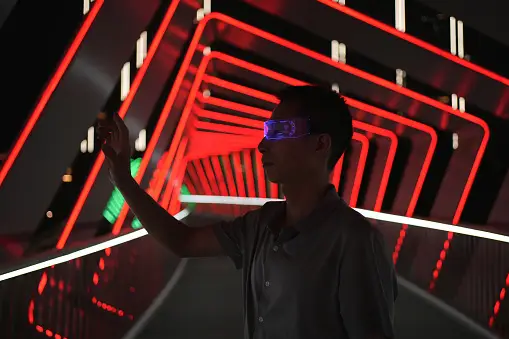
Visual technology has moved far beyond rigid rectangular cabinets, and modern custom LED displays now offer adaptable engineering solutions for unconventional architectural spaces. These specialized digital screens integrate directly with physical building structures to create immersive environments that standard flat panels cannot achieve. From sweeping curved retail facades to bespoke cylindrical lobby installations, custom LED displays redefine how physical locations communicate with their audiences. Understanding how these unique visual systems are engineered, specified, and maintained helps architects, interior designers, and business leaders make informed technology investments.
Understanding Custom LED Displays and How Modular Architecture Works
Custom LED displays are specialized digital screens engineered with flexible modules, pliable rubber substrates, and custom-shaped circuit boards to fit irregular geometries. Unlike mass-produced flat panels that force a rigid rectangular frame onto a challenging wall, custom LED solutions bend around corners, form smooth cylindrical pillars, or take on complex sculptural contours. The manufacturing process relies on precision diode placement and custom mounting frames that calculate precise load-bearing capacities and thermal dissipation rates across unconventional shapes.
Engineers utilize flexible printed circuit boards to produce convex and concave panels that wrap seamlessly around architectural columns without creating visible seams or geometric distortion in the projected content. This level of structural adaptability ensures that digital signage feels like a natural part of the building rather than an afterthought bolted onto a surface. Furthermore, specialized power distribution layouts must be integrated within these tight custom frames to prevent voltage drops and maintain uniform brightness across every section of the display.
Evaluating Pixel Pitch, Brightness, and Control Systems for Bespoke Screens
Selecting the appropriate technical specifications ensures that a custom LED display performs reliably under specific environmental lighting and viewing conditions. Pixel pitch determines the optimal viewing distance, with fine pitch options required for close-up indoor inspection and higher pitches suited for outdoor distance visibility. Brightness levels, measured in nits, must be calibrated depending on whether the installation faces intense direct sunlight or controlled indoor ambient lighting.
| Technical Parameter | Indoor Specification | Outdoor Specification |
|---|---|---|
| Pixel Pitch Range | P0.9 to P2.5 | P3 to P10+ |
| Brightness Level | 600 to 1,500 nits | 5,000 to 10,000+ nits |
| Ingress Protection (IP) | IP30 to IP54 | IP65 to IP67 |
| Servicing Access | Front service preferred | Front or rear service |
Video processing units deployed in custom configurations must be capable of remapping standard video feeds onto non-standard resolutions and irregular pixel grids. Because custom LED screens rarely conform to standard 16:9 aspect ratios, specialized video scalers and sending boxes process the signal pixel by pixel. This technical capability prevents image stretching, awkward cropping, or sync stuttering when complex creative animations play across curved or spherical surfaces.
Engineering Service Access and Long-Term Structural Maintenance
Maintaining custom LED displays requires careful planning around physical access points, module replacement workflows, and component durability. Many custom architectural installations leave zero rear clearance due to flush wall mounting or integration inside tight structural pillars. To resolve this limitation, manufacturers utilize front-service magnetic modules that allow technicians to extract faulty LED panels directly from the front using specialized suction tools.
This front-service design significantly reduces maintenance downtime by eliminating the need to dismantle surrounding architectural cladding or structural framing. Additionally, high-end custom installations feature redundant data and power pathways to ensure that a single component failure does not cascade into a larger screen blackout. Selecting robust power supplies and efficient thermal management systems further protects the investment against premature diode degradation.
Real-World Applications Across Retail, Corporate, and Public Venues
Different industries deploy bespoke screen layouts to solve specific spatial layout challenges and elevate brand engagement. Retailers install curved or ring-shaped LED structures above store entrances to capture immediate foot traffic and showcase dynamic promotional campaigns. Corporate headquarters utilize sweeping lobby tickers and angled wall displays to reinforce brand identity and display welcoming messages to arriving visitors. If you are exploring spatial transformations beyond digital screens, you might also be interested in our guide on transforming your space with RGB LED trees for alternative decorative lighting ideas.
Public transit hubs and entertainment venues rely on massive custom structures to broadcast safety notices and event schedules to thousands of daily commuters simultaneously. These large-scale deployments must balance high structural integrity with exceptional visual clarity, ensuring that information remains legible from multiple viewing angles. By tailoring screen geometry to match the natural flow of human traffic, venue operators maximize both aesthetic appeal and practical communication efficiency.
Frequently Asked Questions About Custom LED Displays
What is the difference between standard and custom LED displays?
Standard LED displays come in fixed rectangular cabinet sizes, while custom LED displays are built using flexible or bespoke modules designed to fit irregular architectural spaces.
How is pixel pitch chosen for a custom screen?
Pixel pitch is chosen based on the closest viewing distance of the audience, with smaller numbers representing tighter pixel densities for close-up indoor viewing.
Can custom LED displays be installed outdoors?
Yes, outdoor custom LED displays are built with high brightness levels and weatherproof cabinet seals to withstand rain, dust, and direct sunlight.
How are custom LED displays maintained?
Most custom LED walls utilize front-service modules that allow technicians to replace faulty components easily using magnetic tools without dismantling the entire structure.
What control systems are required for irregular screen shapes?
Custom installations require specialized video processors capable of mapping standard video signals onto non-standard pixel resolutions and geometric layouts.
How long does a custom LED display installation take?
Installation timelines vary depending on engineering complexity, structural customization, and site preparation, often ranging from several weeks to a few months.
Disclaimer: Technology specifications, manufacturing standards, and installation practices for custom LED displays can vary by manufacturer and project requirements. Readers should verify final technical details and engineering guidelines with official suppliers before making purchasing decisions.


