

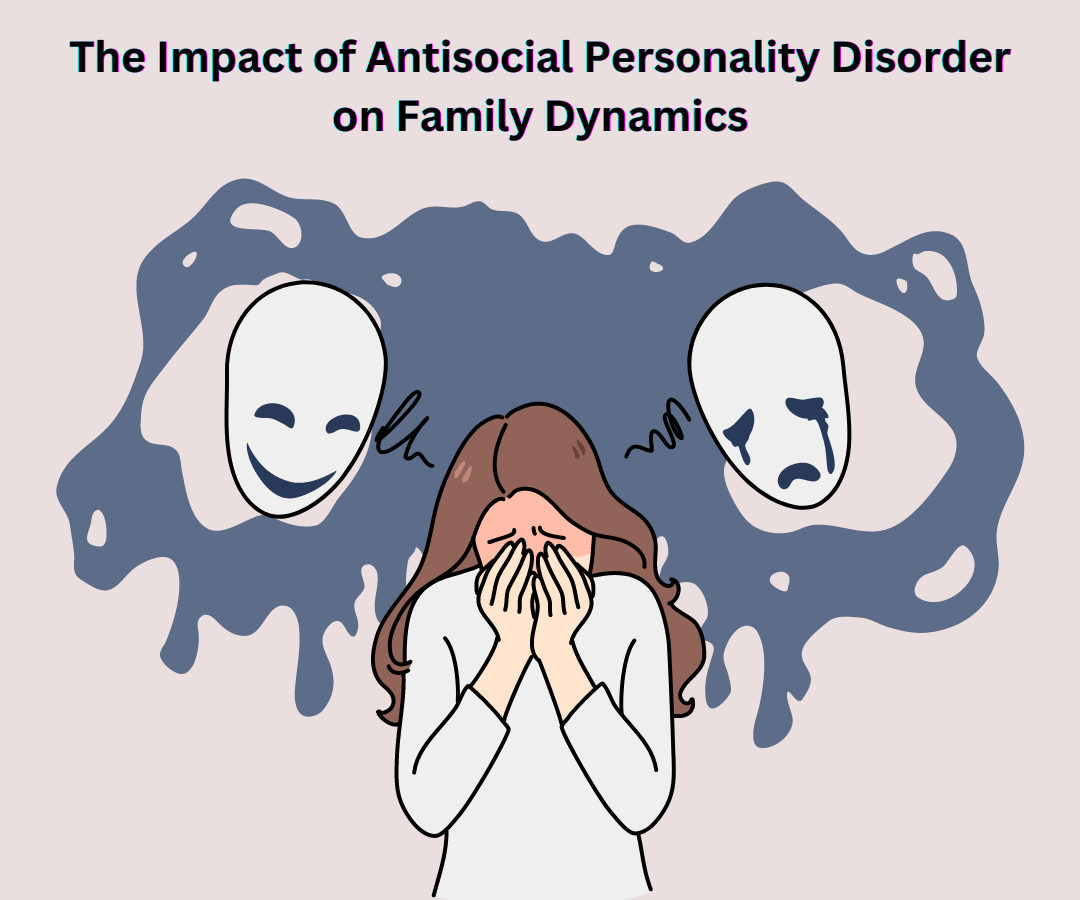
Antisocial personality disorder alters home life significantly, requiring specialized support and clear boundaries to manage complex interpersonal challenges. A family therapist can assist individuals in acquiring vital communication skills necessary to manage the intricate family dynamics linked to behavioral health struggles. Individual therapy sessions may prove advantageous for family members of individuals with antisocial personality disorder in order to address and overcome any issues pertaining to their loved one’s personality disorder.
Individuals who suffer from antisocial personality disorder frequently manipulate, inflict cruel indifference, or intentionally provoke the anger or upset of others. They typically do not feel guilt or regret for what they have done. This guide examines the several ways that antisocial personality disorder can affect family life, the difficulties that households encounter, and coping mechanisms for both the household and the individual.
Core Behavioral Traits Driving Household Disruption
Antisocial personality disorder is a mental health condition defined by a continuous pattern of disdain for the rights of others, which frequently manifests as deceptive, manipulative, and lacking in remorse.
Living with someone who exhibits these core traits creates an environment of unpredictability. Unlike conditions where individuals seek help for emotional distress, antisocial personality disorder is characterized by a fundamental lack of insight. Family members often find themselves navigating a reality where normal rules of empathy and mutual respect do not apply, leading to an atmosphere where everyday interactions feel calculated and unsafe.
Psychological Exhaustion Among Spouses, Parents, and Children
The emotional toll that antisocial personality disorder has on families is one of its most persistent and exhausting effects.
Loved ones frequently experience a heavy psychological burden that manifests in several distinct ways. Chronic tension and worry result from living with someone who engages in unpredictable and frequently harmful actions, making it overwhelming to live in continual anxiety of what might happen next. Family members may experience shame for the person’s conduct or guilt for being unable to assist their loved one, especially if actions cause public humiliation or neighborhood conflict. Furthermore, dishonesty and manipulation trigger deep anger, leaving relatives feeling consistently deceived, used, or exploited while witnessing self-destructive conduct without being able to intervene.
Domestic Role Reversals and Interpersonal Strain
A chaotic and unbalanced household dynamic often results from the disruption of typical family roles and responsibilities.
This interference manifests across different relationship structures within the home. When a parent with antisocial personality disorder cannot provide regular care and emotional support, it causes role reversals in which a child takes on adult caregiving duties. On the other hand, parents who have a family member or youth showing severe behavioral challenges may find it difficult to control conduct and uphold household authority. Parents who must devote immense time and energy to managing crisis situations or behavioral fallout may leave other children feeling neglected, giving rise to household tension and long-term sibling resentment. Living with an individual with an untreated personality disorder can significantly strain a couple’s marriage, where differing opinions among partners cause friction and, in certain situations, separation or divorce. For those navigating legal dissolution under high-conflict circumstances, expert guidance on domestic legal matters becomes an essential resource for protection.
| Family Member Role | Common Impact of Antisocial Personality Disorder | Recommended Coping Approach |
|---|---|---|
| Spouse / Partner | Financial strain, emotional isolation, marital conflict | Individual therapy, legal consultation, strict boundaries |
| Dependent Child | Role reversal, emotional neglect, anxiety | Age-appropriate counseling, stable external support systems |
| Aging Parent | Caregiver exhaustion, grief, financial exploitation | Support networks, safeguarding assets and legal protection |
Financial Exploitation and Legal Vulnerabilities
Impulsive behaviors and deceit often lead to unexpected debt, legal battles, and severe household instability.
Because individuals with antisocial personality disorder frequently disregard financial boundaries, they may run up joint debts, empty savings accounts, or engage in risky financial ventures without consulting their partners. Furthermore, disregard for legal rules can drag the entire family into legal disputes, court appearances, or crises involving law enforcement. Households often find themselves expending significant financial and emotional resources trying to mitigate legal fallout, which drains resources meant for the family’s overall well-being.
Therapeutic Barriers and Mandated Interventions
Treatment for antisocial personality disorder is rarely sought voluntarily because individuals with the condition often fail to recognize their behavior as problematic.
It is almost impossible to receive therapy for a problem that a person is unaware they have or refuses to acknowledge. For this reason, a large number of those seeking treatment are required to do so by court mandate or intense pressure from loved ones. When treatment does occur, it may incorporate several modalities. Cognitive behavioral therapy, anger management programs, talk therapy, and specialized counseling for impulsive lifestyles can sometimes assist in modifying specific destructive behaviors, though personality traits remain deeply entrenched. Insurance usually covers mental health treatment, and consulting insurance company directories can help families locate qualified specialists.
Establishing Boundaries and Emergency Safety Protocols
Establishing firm boundaries and prioritizing personal safety are vital steps for households living with antisocial personality disorder.
Family members must learn that they cannot cure or control their loved one’s behavior, and that self-preservation must come first. Setting strict financial limits, protecting personal documents, and establishing clear consequences for harmful actions help create a more stable environment. In severe cases involving threats, intimidation, or physical danger, safety planning, domestic abuse resources, and legal separation or estrangement may become necessary steps to protect vulnerable family members from ongoing harm.
Frequently Asked Questions
What is the primary characteristic of antisocial personality disorder?
The primary characteristic is a long-standing pattern of disregard for the rights, safety, and feelings of others, often marked by deceit and a lack of remorse.
Why is treatment so difficult for individuals with antisocial personality disorder?
Treatment is difficult because individuals with this condition rarely believe they have a problem, meaning they lack internal motivation to seek or accept help voluntarily.
How does antisocial personality disorder affect children in the household?
Children often experience emotional neglect, anxiety, and premature role reversals where they are forced to take on adult caregiving or protective responsibilities.
Can family therapy help resolve antisocial personality disorder?
Family therapy cannot cure the disorder, but it can help relatives establish healthy boundaries, improve communication, and learn effective safety strategies.
Are financial problems common in families dealing with antisocial personality disorder?
Yes, impulsive spending, deceitful borrowing, and unexpected legal costs frequently create severe and chronic financial instability for the entire household.
When should a family consider estrangement or legal separation?
Estrangement or legal separation should be strongly considered when manipulation, financial exploitation, or behavioral unpredictability threatens the physical or emotional safety of other family members.
Disclaimer: The information provided in this article is for educational purposes only and should not be used as a substitute for professional medical, psychological, or legal advice. Because clinical details and family circumstances vary widely, readers should consult qualified mental health professionals or legal experts for guidance tailored to their specific situation.


