
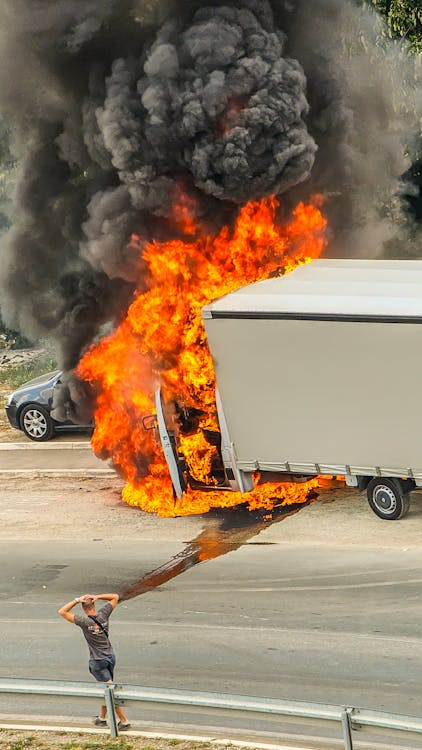
Truck-related accidents can be devastating, resulting in significant injuries, property damage, and even loss of life. Due to the sheer size and weight of commercial vehicles, the consequences of such crashes tend to be much more severe than those involving smaller passenger cars. If you find yourself involved in a collision, understanding the common types of accidents, how they occur, and what legal options are available to you is essential. This guide explores frequent commercial truck hazards and provides actionable guidance on how to properly protect your rights after an accident.
Understanding Why Truck Accidents Are Uniquely Dangerous
Commercial trucks create extreme hazards on public roadways because their massive physical dimensions require significantly greater stopping distances than standard passenger vehicles.
An 80,000-pound semi-truck traveling at highway speeds needs the length of multiple football fields to brake completely under ideal conditions. When weather turns wet or icy, that stopping distance increases drastically, leaving little margin for error if traffic ahead slows down unexpectedly. This immense mass also means that impact forces are heavily concentrated against smaller automobiles. Victims frequently sustain catastrophic physical trauma, including traumatic brain injuries, shattered vertebrae, and internal organ lacerations. Grasping these mechanical realities is vital when evaluating how commercial vehicle crashes differ from ordinary commuter fender-benders.
The Four Most Common Types of Truck Accidents
Different mechanical and operational failures lead to distinct types of commercial truck crashes on highways and city streets.
Rollovers happen when a semi-truck takes a sharp turn too quickly or shifts cargo improperly, causing the entire rig to tip onto its side. Rear-end collisions occur when a heavy transport vehicle fails to brake in time, crushing smaller cars trapped in front of it. Jackknife incidents unfold when the attached trailer swings violently toward the cab, forming a dangerous V-shape across multiple lanes. Tire blowouts at high velocity often trigger sudden loss of control, forcing commercial drivers into adjacent lanes or causing multi-vehicle pileups due to neglected tread maintenance.
Critical Immediate Steps After a Truck Accident
Taking precise steps immediately following a collision safeguards your health and preserves vital evidence for your claim.
Your absolute first priority is dialing 911 to ensure emergency medical teams and law enforcement arrive promptly to secure the scene. Accept medical evaluation immediately, as high adrenaline levels can mask severe internal bleeding or neurological trauma. While waiting for officials, document everything by photographing vehicle damage, skid marks, road debris, and visible injuries if you are physically able. Exchange contact details with the commercial driver, but strictly avoid admitting fault, guessing about crash causes, or providing recorded statements to corporate insurers without legal guidance.
Identifying All Liable Parties in a Commercial Truck Crash
Establishing accountability in a heavy truck crash frequently extends well past the person sitting behind the steering wheel.
Federal oversight rules enforced by regulatory bodies like the Federal Motor Carrier Safety Administration govern driver work hours, cargo weight limits, and routine maintenance schedules. When an accident occurs, liability might target the trucking operating company for negligent scheduling, third-party freight loaders for unbalanced weight distribution, or equipment makers for defective braking mechanisms. Uncovering these layered corporate responsibilities requires analyzing electronic logging device records, dispatch logs, and internal safety audits.
How Legal Counsel Protects Your Rights and Compensation
Experienced attorneys utilize formal legal instruments and technical data recovery to counter aggressive commercial insurance adjusters.
Commercial carriers and their insurers often deploy rapid-response investigators to accident scenes within hours to minimize corporate liability. Retaining dedicated legal counsel allows you to immediately issue formal spoliation letters that legally compel trucking companies to preserve black box data, maintenance files, and driver communications. To understand how structured legal strategies apply across different roadway incidents, you can review our insights on managing serious vehicle accidents safely. A knowledgeable attorney ensures that your financial recovery accounts for all past medical bills, projected future rehabilitation expenses, lost earning capacity, and profound emotional suffering.
Frequently Asked Questions
What should I do immediately after a truck accident?
Call 911 for emergency assistance, accept medical evaluation, photograph the crash scene, and refrain from speaking with insurance adjusters before consulting counsel.
Why are commercial truck cases more complex than car crashes?
They involve multiple corporate entities, strict federal safety regulations, large insurance policies, and specialized technical evidence like electronic logging device data.
Who can be held financially liable in a semi-truck crash?
Liability can extend beyond the driver to the motor carrier company, cargo loading teams, vehicle maintenance providers, and parts manufacturers.
What causes a truck jackknife accident to happen?
A jackknife occurs when a trailer swings outward and folds toward the cab into a V-shape, typically caused by sudden braking, speeding, or low-traction road conditions.
How do lawyers preserve critical evidence after a trucking collision?
Attorneys issue formal legal preservation letters to trucking companies to prevent the deletion or destruction of black box data, maintenance logs, and dispatch records.
What types of compensation can victims recover after a crash?
Victims can pursue compensation for medical expenses, lost wages, future rehabilitation costs, property damage, and pain and suffering.
Disclaimer: The information provided in this article is for general educational purposes only and does not constitute formal legal advice. Laws and regulations regarding commercial vehicle accidents vary by jurisdiction, and readers should consult a qualified attorney for advice specific to their situation.

Daniel J. Morgan is the founder of Invidiata Magazine, a premier publication showcasing luxury living, arts, and culture. With a passion for excellence, Daniel has established the magazine as a beacon of sophistication and refinement, captivating discerning audiences worldwide.


