

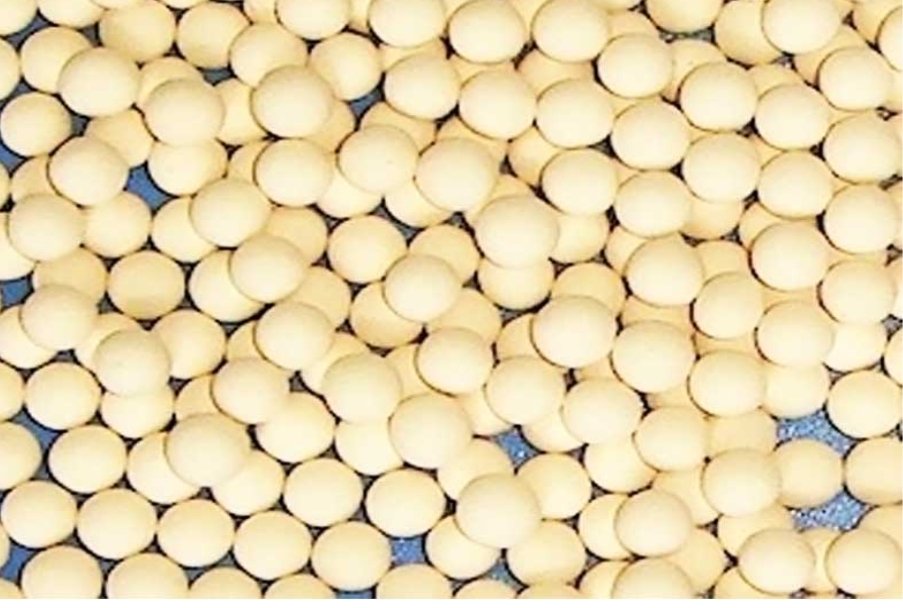
Industrial gas dehydration and air separation units depend heavily on porous solid beds to capture moisture and unwanted impurities from high-pressure fluid streams. However, harsh operating conditions inside pressure swing adsorption towers place severe physical stress on desiccant materials over thousands of operational cycles. When fragile beads or pellets break apart under continuous vibration and gas velocity surges, microscopic fines begin to accumulate throughout the system. Deploying robust molecular sieves engineered specifically for high mechanical resilience is essential for preventing this breakdown and maintaining long-term plant efficiency.
Understanding Mechanical Attrition in Molecular Sieves
Attrition is the physical degradation of desiccant pellets or spherical beads driven by continuous mechanical friction, fluid shear forces, and vessel vibration. In high-velocity industrial settings, turbulent gas streams cause individual particles to rub aggressively against one another and against internal vessel walls. Over thousands of pressure and temperature swings, this constant mechanical stress wears away the outer layers of the zeolite material. This progressive wear gradually transforms uniform spherical beads into irregular fragments and fine powdery residue.
The True Cost of Dust in Industrial Systems
The generation of fine zeolite dust triggers a cascading series of operational failures that severely impact overall plant productivity and maintenance budgets. As broken desiccant fragments migrate away from the main adsorption bed, they quickly blind downstream particulate filters and cause sharp pressure drops across the vessel. Maintenance teams must then perform frequent filter cleanings, unblock fouled valves, and manage unexpected downtime that disrupts continuous production schedules.
Beyond simple filter blockages, fine dust particles frequently bypass primary separation stages and enter sensitive petrochemical reactor zones. In high-temperature catalytic environments, foreign particulate matter can coat, foul, or permanently poison precious metal catalysts, resulting in extremely costly repair bills. Preventing dust generation at the source is therefore a major priority for plant engineers seeking to protect downstream equipment and optimize total operating expenditures.
Engineering Low-Attrition Sieves Through 4A Molecular Sieves
Advanced synthetic zeolite manufacturing techniques create exceptionally dense spherical beads capable of withstanding the most demanding industrial pressure cycles. A prime example of this engineering approach is the 4A molecular sieve, which combines uniform pore dimensions with superior mechanical crush resistance. By carefully controlling crystal growth and binder formulations during production, manufacturers ensure that physical loads distribute evenly across the entire surface area of each pellet.
These specialized molecular sieves maintain their structural framework even when subjected to heavy moisture loading and rapid thermal fluctuations. Because the internal crystalline matrix resists fracturing under cyclic pressure shifts, the rate of fine dust generation drops dramatically over the lifespan of the bed. This high structural integrity guarantees that the adsorption bed retains its permeability and purification capacity through years of continuous service.
How to Evaluate and Test Sieve Durability
Procurement teams and facility engineers rely on standardized laboratory test data to evaluate the mechanical durability of competing desiccant products before purchase. Key evaluation parameters include static crush strength ratings measured under specific force thresholds, alongside ball-pan hardness tests that simulate handling durability. Requesting certified quality documentation from a trusted desiccant manufacturer allows plant operators to compare physical resilience objectively before committing to a full-scale bed replacement.
Best Practices for Extending Molecular Sieve Lifespan
Operational adjustments during plant startup and regeneration cycles play a major role in preserving the longevity of industrial desiccant beds. Rapid vessel pressurization creates severe mechanical shock waves that can shatter fragile beads instantly, making controlled ramp rates essential during tower switching. Operators should always use gradual pressurization protocols to prevent violent bed fluidization and destructive particle collisions.
Proper initial loading techniques also prevent localized channeling and excessive particle motion inside the adsorption vessel. Ensuring that support grading layers are installed correctly stops smaller beads from migrating into bottom collection screens. To explore broader material advancements across various industrial sectors, you can read more about polyvinyl alcohol and polymer applications that also influence modern manufacturing standards.
Frequently Asked Questions
What causes mechanical attrition in molecular sieves?
Attrition is driven by continuous mechanical friction, high gas velocity, pressure surges, and vessel vibration that wear down desiccant beads over time.
How does zeolite dust impact industrial filtration systems?
Fine dust particles accumulate in downstream filters, causing severe flow restrictions, elevated pressure drops, and increased energy consumption.
Why is the 4A molecular sieve widely used in high-pressure gas drying?
The 4A molecular sieve provides uniform pore sizing, high adsorption capacity, and superior mechanical crush resistance for demanding dehydration tasks.
What engineering metrics measure desiccant physical strength?
Engineers evaluate mechanical durability using standardized crush strength ratings and ball-pan hardness testing protocols provided by certified manufacturers.
Can molecular sieve dust cause damage to downstream catalysts?
Yes, fine zeolite particles can migrate into catalytic reactor beds and foul or poison sensitive metal catalysts used in petrochemical refining.
How do rapid pressure swings increase attrition rates?
Fast tower pressurization creates violent mechanical shock waves and particle collisions that fracture brittle desiccant beads into microscopic dust.
What operational steps reduce mechanical wear in adsorption towers?
Implementing gradual vessel pressurization curves and proper support bed loading prevents violent fluidization and extends desiccant lifespan significantly.
Disclaimer: The details provided in this article serve general educational purposes regarding industrial desiccant management. Operational conditions vary across different facilities, and engineering teams should always verify technical specifications directly with certified manufacturers before making purchasing decisions.

Passionate content writer and savvy blog publisher, Aamir crafts compelling stories and insightful articles that captivate and inform. With a knack for blending creativity and strategy, they bring fresh perspectives to every piece. Dive into their world of words and discover content that resonates.


