

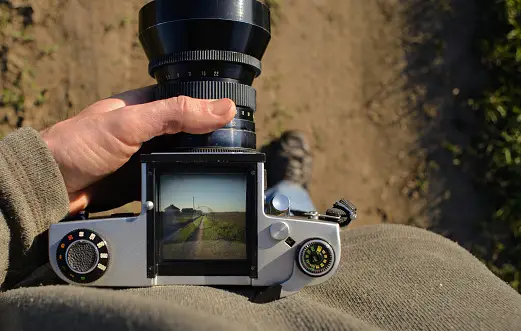
The global photography landscape underwent a permanent transformation when manufacturers began removing bulky mechanical mirror boxes in favor of electronic viewing systems. Among the legacy brands that successfully navigated this transition, Canon built an exceptionally versatile ecosystem of digital bodies that now serve everyone from casual travel vloggers to working studio professionals. Understanding how these modern imaging tools operate requires looking closely at the specific hardware advancements that set them apart from older digital single-lens reflex equipment.
How Eliminating the Mirror Box Redefined Camera Design
Canon mirrorless cameras achieve their remarkably slim profiles by replacing traditional optical pentaprisms and physical reflex mirrors with direct digital sensor feeds.
When light enters the lens of a Canon mirrorless camera, it strikes the image sensor continuously rather than bouncing upward into an optical viewfinder. This uninterrupted light path allows photographers to view exact exposure adjustments, white balance changes, and depth-of-field effects in real time through an ultra-sharp electronic viewfinder. Furthermore, abandoning the traditional mirror box allowed Canon to phase out older legacy mounts like the discontinued EF-M series, completely standardizing its modern APS-C and full-frame bodies around the high-speed RF mount architecture for superior lens communication.
Advanced Dual Pixel CMOS Autofocus and Subject Tracking
Fast and reliable subject acquisition is achieved through Canon’s proprietary Dual Pixel CMOS AF technology embedded directly across the silicon sensor.
Every single pixel on the sensor splits into two independent photodiodes, enabling phase-detection autofocus across virtually the entire frame without sacrificing image data. Modern iterations of this autofocus system integrate sophisticated deep-learning algorithms trained to recognize human eyes, faces, heads, and torsos even when subjects turn away or wear hats. Beyond human portraits, the tracking algorithms seamlessly lock onto fast-moving wildlife, domestic pets, and mechanized subjects like automobiles, trains, and airplanes to keep erratic movement consistently sharp.
Sensor Resolutions and In-Body Stabilization Performance
Image clarity and low-light handheld stability depend heavily on the matching of high-resolution sensors with coordinated mechanical stabilization systems.
Canon offers diverse sensor choices, ranging from accessible APS-C formats in lightweight models like the EOS R50 and EOS R10 to ultra-detailed full-frame architectures found in flagship bodies like the EOS R5 Mark II. These sensors capture exceptional micro-contrast and wide dynamic range, allowing digital creators to crop heavily or print massive wall-sized photographs without degrading visual fidelity. Additionally, many Canon mirrorless models feature In-Body Image Stabilization that shifts the sensor across multiple axes to counteract shaky hands during slow shutter speeds or stable video recording.
Hybrid Video Production and Professional Creator Workflows
Contemporary video production is fully integrated into Canon mirrorless cameras, offering professional broadcast capabilities alongside stills photography.
Creators benefit from oversampled 4K video recording, high-frame-rate options for smooth slow-motion sequences, and professional audio connection inputs for clean external microphones. Advanced color profiles such as Canon Log provide extended dynamic range and color grading flexibility for independent filmmakers and documentary crews. For those interested in exploring different optical tools and specialized monitoring hardware across various industries, examining high-end security cameras for property monitoring offers helpful perspective on modern digital image capture hardware.
Native RF Optics and Backward Compatibility With EF Lenses
Lens selection remains a vital part of any camera investment, and Canon provides flexible pathways for both native and legacy glass.
The native RF lens lineup delivers incredible sharpness, faster data transfer rates between lens and body, and specialized customizable control rings. For photographers transitioning from older single-lens reflex systems, Canon manufactures engineered mount adapters that allow legacy EF and EF-S lenses to attach to modern mirrorless bodies without losing autofocus speed or weather sealing. This thoughtful backward compatibility protects past financial investments while providing a clear, gradual upgrade path into advanced mirrorless technology.
Categorizing Canon Mirrorless Bodies by User Experience
Finding the right camera model involves evaluating specific budget constraints, physical handling preferences, and intended shooting scenarios.
Canon structures its mirrorless lineup into distinct tiers to ensure every photographer finds a tool matching their specific creative workflow.
| Experience Tier | Representative Models | Core Design Focus |
|---|---|---|
| Beginner & Vlogger | Canon EOS R50, EOS R10 | Lightweight APS-C chassis, simplified touch menus, and excellent content creation tools. |
| Advanced Enthusiast | Canon EOS R7, EOS R6 Mark II | High burst frame rates, robust weather resistance, and sophisticated subject tracking. |
| Studio Professional | Canon EOS R5 Mark II | Ultra-high resolution sensors, professional video codecs, and dual media card slots. |
Frequently Asked Questions
Can I attach older EF lenses to a modern Canon mirrorless body?
Yes, Canon produces official mount adapters that let you use legacy EF and EF-S lenses on modern RF-mount cameras without losing autofocus performance.
What is Dual Pixel CMOS AF technology?
Dual Pixel CMOS AF is Canon’s proprietary phase-detection system built directly into the image sensor for fast, dependable focusing.
Are Canon mirrorless cameras well-suited for professional video?
Modern Canon mirrorless models excel at video production by offering crisp 4K recording, intelligent subject tracking, and professional audio options.
What is the difference between APS-C and full-frame Canon sensors?
Full-frame sensors provide a wider field of view and superior low-light performance, whereas APS-C sensors offer a compact build with a built-in telephoto crop factor.
Do all Canon mirrorless cameras include In-Body Image Stabilization?
In-Body Image Stabilization is included in many advanced Canon mirrorless models, working alongside lens stabilization to minimize blur during handheld use.
Does Canon still provide support for the older EOS M series?
Canon has officially discontinued the EF-M mount and EOS M camera series, shifting all current mirrorless development entirely to the RF mount system.
Disclaimer: Camera specifications, pricing, and product availability are subject to change over time. Readers should verify final technical details and compatibility requirements directly through official manufacturer channels before making any purchasing decisions.


