

Key Takeaways:
- Women’s tennis necklaces derive their character from a continuous, flexible line of symmetrical gemstones set in precious metal.
- Choosing between prong, bezel, and channel settings directly impacts both the overall sparkle and the daily durability of the jewelry.
- Advanced box clasps and secondary safety latches prevent accidental loss during active wear.
- Balancing natural stones with laboratory-created diamond options offers modern buyers diverse financial and ethical pathways.
Table of Contents:
- Introduction
- The Anatomy of Continuous Gemstone Settings
- Comparing Prong, Bezel, and Channel Mounts
- Advanced Clasp Engineering and Security Mechanisms
- Evaluating Mined Versus Lab-Grown Diamonds
- Versatile Styling Strategies for Modern Wardrobes
- Professional Maintenance and Prong Inspections
- Frequently Asked Questions
Introduction
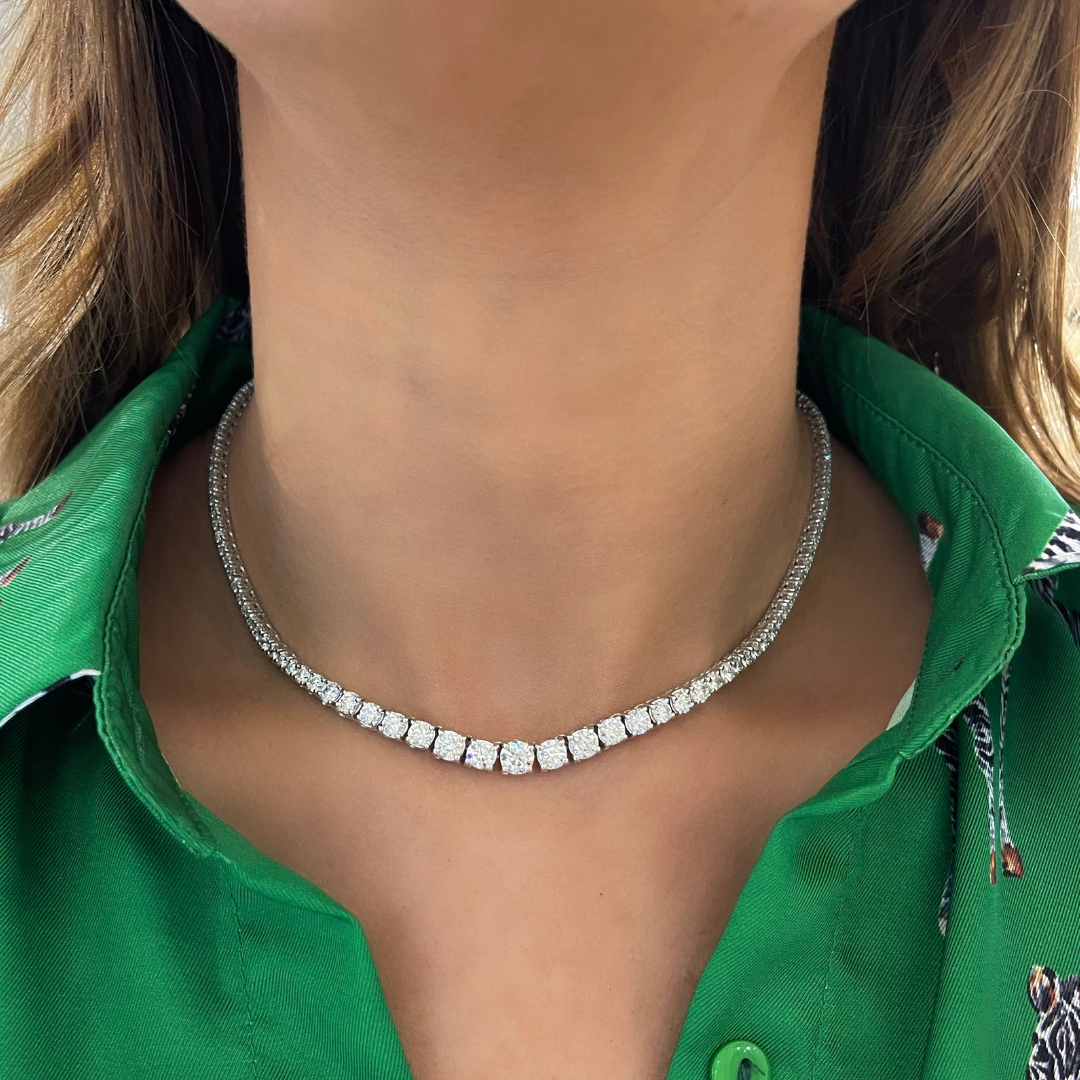
A women’s tennis necklace commands attention through an unbroken stream of brilliance that drapes gracefully around the collarbone. Unlike pendant designs that isolate a single focal stone, this continuous style distributes light and weight evenly. Understanding why jewelry connoisseurs view a tennis necklace as an indispensable cornerstone of a personal collection requires looking beyond simple aesthetics. Examining the craftsmanship, engineering, and material choices reveals the true depth of value behind this iconic accessory.
The Anatomy of Continuous Gemstone Settings
The construction of a women’s tennis necklace relies on intricate micro-hinges that allow individual gemstone mounts to pivot smoothly without twisting or pinching. This flexible framework ensures that the metalwork behaves like a delicate fabric ribbon against the skin, shifting naturally with every movement of the wearer. Master jewelers calibrate each component so that the hidden structural spine remains entirely invisible, letting the unbroken ribbon of light take center stage.
| Design Feature | Technical Function | Wearer Advantage |
|---|---|---|
| Flexible Articulation | Allows multi-directional pivoting between adjacent stone settings. | Prevents the necklace from kinking or flipping during wear. |
| Calibrated Lengths | Maintains uniform spacing across 16 to 18 inches of chain. | Ensures a balanced, symmetrical drape along the collarbone. |
| Low-Profile Bases | Keeps stone pavilions positioned close to the skin. | Minimizes snagging on sweaters, silk, and delicate fabrics. |
Comparing Prong, Bezel, and Channel Mounts
Selecting the right setting style determines how much light enters the stones and how well the piece withstands daily friction. Prong settings use tiny metal claws to hold each diamond or gemstone, maximizing light exposure from multiple angles to create exceptional fire and brilliance. In contrast, bezel settings encircle each stone entirely within a thin rim of metal, offering superior protection against bumps and making them ideal for frequent wear. Channel settings embed the stones securely between two parallel walls of precious metal with no visible metal between them, producing a sleek, streamlined surface that catches fewer stray fibers.
Advanced Clasp Engineering and Security Mechanisms
Securing a continuous line of valuable stones demands robust clasp engineering that integrates seamlessly into the final links. A standard spring ring cannot support the weight or maintain the tension required for a heavy gemstone strand, which is why fine jewelers rely on custom box clasps. These specialized closures snap shut flush with the chain, maintaining an uninterrupted visual line around the neck. To eliminate any risk of accidental detachment, reputable designers always reinforce box clasps with one or two figure-eight safety latches on either side, providing total peace of mind during social events.
Evaluating Mined Versus Lab-Grown Diamonds
Modern consumers purchasing a women’s tennis necklace face a choice between natural mined stones and laboratory-grown diamond alternatives. Laboratory-grown options possess identical physical, chemical, and optical properties to earth-mined stones while offering significantly more flexibility in carat weight and clarity grade. Meanwhile, natural diamonds continue to hold traditional appeal for collectors focused on rare geological origins and long-term heirloom value. Regardless of the stone origin, strict adherence to the 4Cs—cut, color, clarity, and carat weight—ensures that every single diamond in the necklace matches uniformly.
Versatile Styling Strategies for Modern Wardrobes
Integrating a women’s tennis necklace into daily outfits relies on its unique ability to elevate both casual daytime clothing and formal evening wear. Pairing a short platinum or white gold tennis chain with an open-collared button-down shirt adds an unexpected flash of refinement to relaxed weekend attire. For formal galas, the same necklace acts as a sophisticated anchor that frames strapless gowns or V-neck necklines without competing with other accessories. Many wearers also pair their tennis chains with a curated luxury timepiece collection, matching yellow or white gold tones to establish a polished, cohesive aesthetic.
Professional Maintenance and Prong Inspections
Preserving the structural integrity and brilliance of a tennis necklace requires a consistent routine of home cleaning and professional jeweler evaluations. Everyday lotions, natural body oils, and environmental dust inevitably settle between the micro-hinges and stone pavilions, clouding their sparkle over time. Soaking the piece in warm water mixed with a mild dish detergent, followed by gentle brushing with a soft-bristled tool, safely restores its luster. Additionally, taking the necklace to a bench jeweler every six to twelve months for a thorough prong inspection ensures that wear and tear have not loosened any precious stones.
Frequently Asked Questions
Why is it called a tennis necklace?
The moniker gained widespread popularity after tennis player Chris Evert paused a professional match to retrieve her diamond line necklace when the clasp broke.
What length is ideal for everyday wear?
A length between 16 and 18 inches rests comfortably right along the collarbone, offering optimal visibility across a wide variety of necklines.
Is it safe to sleep or swim with the necklace on?
It is strongly advised to remove the jewelry before sleeping, swimming, or exercising to avoid placing undue physical stress on the articulating metal links.
How do safety catches prevent accidental loss?
Secondary figure-eight safety latches lock over the primary box closure, acting as a backup catch if the main mechanism pops open unexpectedly.
Do bezel settings dull the sparkle of diamonds?
While bezel settings cover the outer rim of the stone, well-designed mounts allow sufficient light entry from the top and bottom to maintain radiant brilliance.
How often should a jeweler check the settings?
Scheduling an annual professional inspection allows a jeweler to tighten worn prongs and check hinge flexibility before any stone loss occurs.
Disclaimer: Jewelry specifications, gemstone certifications, and retail pricing vary across different designers and brands. Readers should verify final product details, return policies, and sourcing documentation directly with certified professionals before completing any purchase.


