

Key Takeaways:
- Pre-owned Tymco sweepers offer substantial capital relief by avoiding the steepest initial years of heavy equipment depreciation.
- Proprietary regenerative air technology delivers dependable, closed-loop dust control that outlasts conventional mechanical broom setups.
- Careful evaluation of auxiliary engine hours and blower housing integrity ensures long-term operational reliability for fleet managers.
Table of Contents:
- Introduction
- The Engineering Edge of Pre-Owned Regenerative Air Units
- Financial Math: Bypassing Heavy Initial Depreciation
- Inspecting Auxiliary Power Plants and Blower Assemblies
- Matching Sweeper Chassis Sizes to Urban Routing Demands
- Navigating Secondary Market Wear and Structural Corrosion
- Frequently Asked Questions
Introduction
Maintaining spotless municipal roadways and expansive commercial parking structures requires heavy-duty machinery built to withstand relentless daily grinding. Outfitting an entire public works fleet with brand-new specialized chassis can easily strain municipal budgets and delay other vital infrastructure projects. Opting for a used Tymco street sweeper bridges this financial gap by pairing high-performance pavement cleaning with significant acquisition savings. Rather than investing heavily in brand-new factory releases, city managers and private contractors increasingly turn to secondary market Tymco units to secure proven cleaning power without excessive capital expenditure.
Choosing secondary market heavy equipment demands a careful look at how these specialized vehicles are constructed and maintained over their service lifecycle. Unlike standard dump trucks or utility pickups, sweepers endure complex operational stresses involving high-velocity air streams, abrasive road debris, and prolonged auxiliary engine idling. Understanding what makes pre-owned Tymco units a resilient investment helps fleet directors separate dependable workhorses from worn-out mechanical liabilities.
The Engineering Edge of Pre-Owned Regenerative Air Units
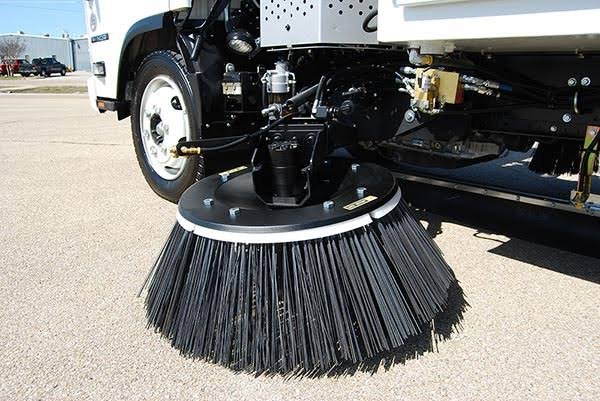
A used Tymco street sweeper retains its market viability largely because its core sweeping mechanism relies on a closed-loop regenerative air system rather than high-maintenance mechanical bristles. Traditional broom sweepers depend heavily on physical gutter brooms and main sweep brooms that experience rapid abrasive wear against asphalt, generating considerable airborne particulate dust in the process. Tymco units utilize a high-pressure centrifugal blower to force air through a blast orifice, scouring the pavement clean while immediately capturing both heavy debris and fine particulate matter inside a sealed hopper.
This closed-loop circulation means that secondary market buyers acquire a machine designed to trap PM10 and PM2.5 pollutants efficiently, even after years of active municipal service. Because the system relies on controlled air currents rather than constant mechanical friction to lift stubborn sand and road grime, the structural wear points are concentrated in robust blower housings and dust separator curtains rather than delicate sweeping linkages. Consequently, a well-cared-for pre-owned unit continues to deliver superior dust suppression long after its initial deployment window closes.
Financial Math: Bypassing Heavy Initial Depreciation
Purchasing a pre-owned sweeper vehicle allows fleet operators to dodge the steepest depreciation curve that impacts heavy municipal chassis during their first few years on the road. Brand-new specialized sweepers lose a substantial portion of their cash value immediately upon leaving the dealership lot, making new acquisitions difficult to justify for smaller municipalities or growing private sweeping contractors. Selecting a dependable second-hand unit shifts the financial burden onto the original buyer, allowing budget-conscious organizations to redirect thousands of dollars toward driver training, replacement wear items, or supplementary road maintenance equipment.
Beyond the lower purchase price, secondary market equipment often lowers ongoing overhead through reduced insurance premiums and minimal property tax assessments on older chassis models. When calculating the total cost of ownership, operators find that the reduced capital outlay offsets minor routine maintenance requirements. Savvy buyers carefully evaluate past service records to ensure that the initial savings are not subsequently swallowed by deferred mechanical repairs.
Inspecting Auxiliary Power Plants and Blower Assemblies
Evaluating a used Tymco street sweeper requires a rigorous mechanical inspection that goes far beyond standard truck chassis checks. Because these specialized vehicles rely on an auxiliary engine to power the heavy-duty blower fan independently of the main drive transmission, buyers must review both hour meters and traditional odometers. An auxiliary engine that has accumulated thousands of high-RPM operating hours while crawling along city streets requires careful evaluation of its fuel injectors, cooling systems, and turbocharger health.
Inspectors should also examine the blower fan housing for signs of pitting, blade wear, or imbalance caused by ingesting heavy gravel and abrasive road sand over extended periods. Checking the condition of the pick-up head skids, suction hoses, and dust separator panels provides a clear picture of how diligently the previous owner handled routine preventive upkeep. Ensuring that these high-wear components are structurally sound protects fleet managers from unexpected, costly overhauls shortly after purchase.
Matching Sweeper Chassis Sizes to Urban Routing Demands
The secondary market offers various chassis configurations designed to handle distinct cleaning environments, from compact commercial lots to expansive municipal highway networks. Selecting the correct pre-owned model ensures optimal fuel economy, maneuverability, and debris hopper capacity for specific local routing needs. Compact models easily navigate tight parking structures and congested pedestrian zones, whereas heavy-duty mainline units provide the necessary hopper volume and blower velocity for long arterial road sweeps.
To help fleet planners evaluate available secondary options, the following table compares common Tymco configurations and their typical municipal applications:
| Sweeper Class | Primary Operational Environment | Core Advantage for Buyers |
|---|---|---|
| Compact Regenerative Units (e.g., 210 / 435) | Parking lots, retail centers, narrow city alleyways | Exceptional maneuverability and lower gross vehicle weight ratings |
| Heavy-Duty Mainline Units (e.g., 600 series) | City arterial streets, construction cleanups, municipal roadways | Large debris capacity and powerful high-velocity air streams |
Carefully aligning daily sweeping workloads with the appropriate equipment class prevents premature mechanical strain and keeps operational efficiency high across all cleaning shifts.
Navigating Secondary Market Wear and Structural Corrosion
Navigating the pre-owned equipment market requires constant vigilance against hidden rust and deferred hydraulic maintenance. Municipal sweepers operating in regions heavily treated with winter road salts often develop corrosive pitting along the hopper floor and water tank mounts. Evaluating the frame integrity beneath the debris body prevents costly structural fabrication repairs that can quickly eliminate initial purchase savings.
Buyers must also look out for mismatched wear between the truck chassis and the mounted sweeping apparatus, such as an older, high-mileage truck paired with a rebuilt auxiliary engine. Certified diesel mechanics should inspect hydraulic lift cylinders, hopper dump hinges, and control valves to ensure smooth operation during daily debris unloading cycles. For broader insights into how mechanical engineering improvements impact commercial fleet longevity, reviewing automotive technology advancements provides helpful perspective on modern powertrain durability.
Frequently Asked Questions
What is the typical working lifespan of a used Tymco sweeper?
A well-maintained Tymco sweeper easily provides ten to twenty years of reliable service depending on annual operating hours and the quality of preventive maintenance.
Why are auxiliary engine hours critical when buying pre-owned?
Auxiliary engine hours measure the actual time the vacuum and blower systems have run, offering a much more accurate gauge of mechanical wear than truck odometer mileage alone.
Are replacement parts easy to find for older Tymco models?
Tymco supports an established dealer network that maintains reliable inventories of wear items, filtration components, and replacement parts for legacy sweeper generations.
How does regenerative air reduce ongoing maintenance costs?
By using controlled air currents to capture debris instead of relying constantly on heavy physical brooms, these machines minimize the need for frequent bristle and bearing replacements.
What are the first components to check during a physical inspection?
Inspectors should prioritize checking the blower fan blades for pitting, testing the hopper lift hydraulics, and reviewing comprehensive auxiliary engine service logs.
Can private contractors benefit from purchasing used municipal sweepers?
Private sweeping and paving contractors frequently buy pre-owned Tymco units to expand commercial route capabilities without taking on restrictive lease payments.
Disclaimer: Equipment pricing, mechanical specifications, and secondary market availability change frequently. Buyers should always verify physical maintenance records, inspect units in person, and consult authorized dealers before finalizing any purchase agreement.

Passionate content writer and savvy blog publisher, Aamir crafts compelling stories and insightful articles that captivate and inform. With a knack for blending creativity and strategy, they bring fresh perspectives to every piece. Dive into their world of words and discover content that resonates.


