

Stepping up to a grand centerpiece gemstone changes how shoppers look at fine jewelry, especially when balancing breathtaking visual impact against social responsibility. Choosing a four-carat stone means investing in a prominent piece of wearable art where ethical provenance and sustainable manufacturing matter more than ever. Modern consumers increasingly favor large laboratory-created gems because these substantial stones eliminate the ecological destruction and humanitarian risks historically linked to large-scale subterranean mining operations.
Why Scale Amplifies the Ethical Value of Lab-Grown Gems
Purchasing a massive four-carat stone multiplies the ethical advantages of laboratory creation because mining an equivalent natural diamond displaces tons of earth and consumes staggering amounts of energy. Traditional open-pit extraction requires heavy industrial machinery that alters local topography and disrupts delicate ecosystems across vast acreage. Opting for a controlled laboratory environment allows conscious buyers to secure an impressive, oversized gem without leaving a destructive physical footprint in fragile mining regions.
Furthermore, large mined diamonds carry complex chain-of-custody histories that can obscure the true origin and labor conditions behind the final product. Laboratory-grown alternatives originate in traceable, high-tech facilities where human rights safeguards and fair labor standards are strictly enforced from the initial seed crystal onward. This absolute transparency guarantees that acquiring a monumental center diamond remains entirely free from conflict financing and worker exploitation.
Engineering Brilliance: How 4-Carat Crystals Grow
Producing a flawless four-carat diamond crystal requires weeks of precise technological control using either High Pressure High Temperature or Chemical Vapor Deposition methods. Manufacturers carefully monitor these closed-loop environments to replicate the exact atomic conditions required for pure carbon atoms to bond into a diamond lattice structure. Because these processes take place inside modern facilities rather than deep subterranean shafts, energy consumption and carbon emissions remain tightly regulated and measurable.
Growing a diamond of this magnitude without structural flaws demands exceptional calibration of temperature and gas flows to prevent internal inclusions from multiplying. As technology advances, production facilities increasingly incorporate renewable energy inputs to power the high-energy chambers required for growing oversized rough crystals. This deliberate integration of green power further shrinks the carbon intensity of producing large-scale luxury gemstones compared to diesel-powered earth-moving equipment.
Visual Clarity and Color Demands at Four Carats
A four-carat surface area reveals internal characteristics much more readily than smaller stones, making meticulous grading evaluation essential for conscious buyers. Because light travels across a broader table and wider facet arrangement, any minor inclusions or subtle color tints become more prominent to the naked eye. Selecting a stone with high optical purity ensures that the diamond maintains breathtaking brilliance and dispersion without hiding behind heavy marketing claims.
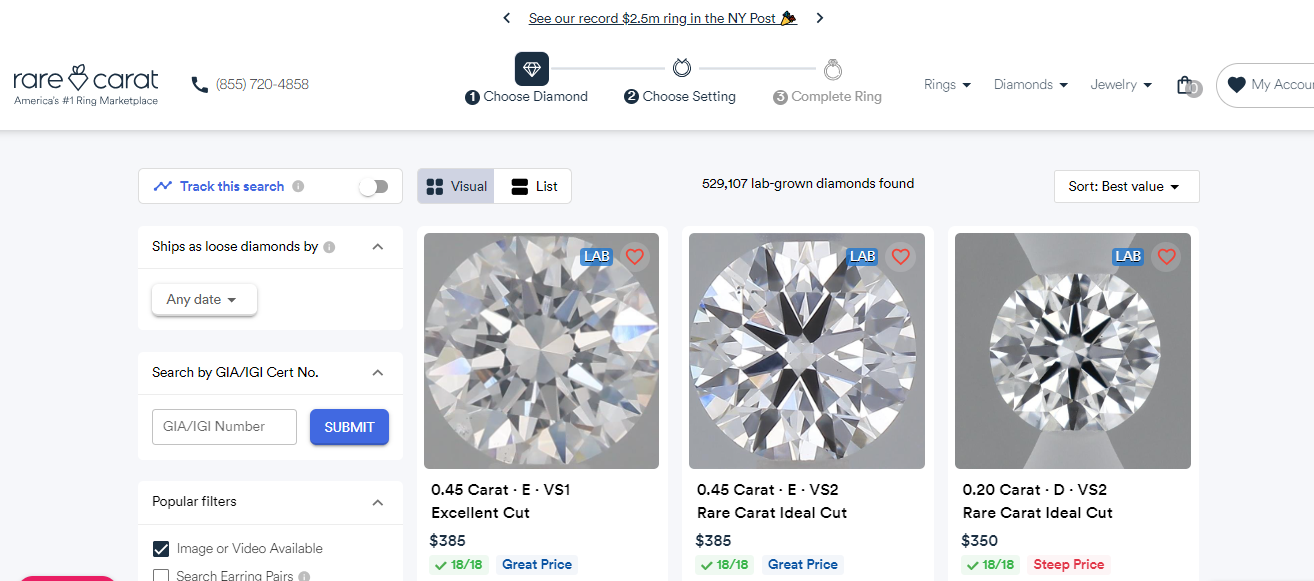
Cut precision also takes on heightened importance at this scale because a poorly proportioned large diamond leaks light and appears dull despite its impressive weight. High-resolution digital imaging and 360-degree viewing platforms allow buyers to inspect light performance across every individual facet before making a final commitment. Reviewing independent grading certificates ensures that the stone’s symmetry and polish deliver maximum fire and scintillation for its size.
Financial Accessibility and Sustainable Luxury
Acquiring a traditional mined diamond of this magnitude often involves prohibitive pricing structures driven by artificial scarcity and multi-layered wholesale markups. Lab-grown alternatives democratize high-end luxury by providing direct access to oversized centerpieces at a fraction of traditional costs. For deeper insights into market shifts and buyer preferences, you can explore our guide on why lab-grown diamonds are taking the jewelry world by storm. This economic accessibility allows individuals to invest in heirloom-quality scale without compromising personal financial goals or ethical boundaries.
The broader acceptance of large synthetic stones reflects a permanent cultural shift toward intelligent luxury and resource conservation. Buyers no longer view traditional extraction as a mandatory prerequisite for celebrating major life milestones. Instead, they embrace scientifically advanced alternatives that respect the planet while fulfilling aesthetic desires for grand, eye-catching jewelry pieces.
Conclusion
Selecting a four-carat lab-grown diamond represents a harmonious intersection of grand aesthetic scale, strict ethical sourcing, and responsible environmental stewardship. These remarkable stones deliver the identical hardness and fire of mined gems while protecting natural habitats and upholding transparent labor standards. Evaluating certified options online empowers shoppers to find a magnificent centerpiece that aligns perfectly with both personal values and modern luxury standards.
Frequently Asked Questions
Are four-carat lab-grown diamonds chemically identical to mined diamonds?
Yes, lab-grown diamonds consist of pure crystallized carbon arranged in the exact same crystal lattice as natural diamonds, making them physically identical.
Why does buying a larger stone highlight ethical differences?
Mining a massive four-carat stone causes exponentially greater land excavation and ecological disruption than extracting smaller rough diamonds, making lab-grown options a far cleaner choice at scale.
How do I inspect a four-carat diamond for inclusions online?
Buyers can use high-resolution 360-degree videos and magnified digital imaging provided by specialized online platforms to closely examine clarity characteristics across the stone’s surface.
Do large lab-grown diamonds require special insurance coverage?
Just like any high-value fine jewelry piece, insuring a four-carat ring requires a formal appraisal based on independent gemological certification.
Are carbon emissions lower for 4-carat lab-grown stones?
Controlled laboratory production generally results in a smaller carbon footprint and zero land disruption compared to heavy open-pit mining operations of equivalent scale.
Can I pair a four-carat loose diamond with a custom ring mounting?
Most specialized online retailers allow customers to select an independent four-carat loose stone and mount it in custom engagement ring designs tailored to specific precious metals.
Disclaimer: Diamond pricing, market availability, and certification metrics fluctuate over time. Readers should always verify final product specifications, grading reports, and return policies directly from official vendor sources prior to purchase.


