

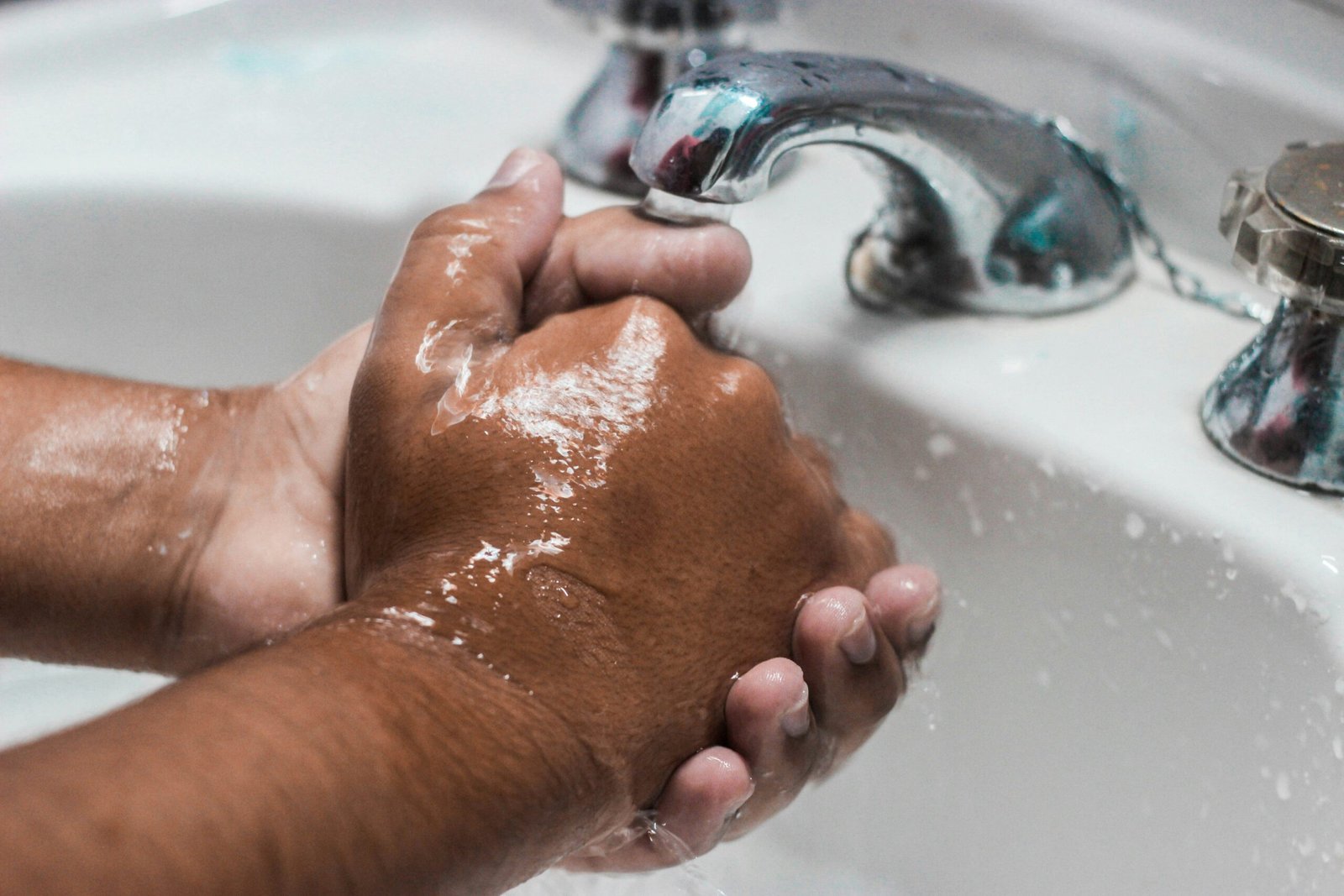
Photo by Fran Jacquier on Unsplash
Finding your sink filled with standing water can disrupt your entire morning routine, turning simple kitchen cleanup or bathroom prep into an immediate chore. Whether you are dealing with a sluggish basin or a total standstill where water refuses to budge, identifying the root mechanical failure is the fastest way to restore proper flow. Plumbing blockages develop through distinct physical mechanisms, and knowing what is happening beneath your countertop helps you choose the right tool for the job.
The P-Trap Blockage
The curved pipe section directly beneath your basin acts as a catch basin for heavy sediment, hair, and dropped jewelry while blocking foul sewer gases from entering your home.
Because water must bend upward through this U-bend, solid particles easily accumulate along the lower curve over months of daily use. When water stops moving entirely, uncoupling this accessible pipe segment is the most direct diagnostic step you can take. Place a bucket under the joint to catch residual fluid, loosen the threaded slip-nuts by hand or with slip-joint pliers, and tip the trap over to flush out any compacted sludge. Inspect the rubber slip-joint washers for cracks or flattening before tightening everything back into alignment.
Main Drainpipe Build-Up and Hair Clogs
Past the immediate U-bend, grease, soap residue, and shed hairs coat the interior walls of vertical and horizontal branch pipes until the passageway becomes dangerously narrow.
In bathroom basins, tangled hair clumps bind with sticky soap scum to form dense mats, whereas kitchen lines typically collect congealed cooking fats and microscopic food bits. A standard rubber plunger can create enough hydraulic pressure to break shallow formations apart, provided there is enough standing water to form an airtight seal around the drain opening. For tougher blockages deeper inside the wall or floor run, feeding a manual hand auger through the pipe opening safely breaks apart compacted clumps without cracking older metal or plastic junctions.
Garbage Disposal Jams and Resets
Kitchen sinks tied to an electric food waste disposer frequently fail to drain simply because the internal grinding chamber has locked up or accumulated unground debris.
When tough items like stringy celery fibers, coffee grounds, or grease get wedged against the impeller blades, the motor stalls to prevent burnout and trips its internal safety switch. Always cut power to the unit at the wall switch or circuit breaker before checking the grinding assembly with a flashlight or turning the hex socket underneath the housing. Pressing the small reset button located on the bottom of the disposal casing usually restores electrical continuity once the mechanical obstruction has been cleared.
Blocked or Damaged Vent Pipes
Drainage networks rely on uninterrupted airflow from roof vent stacks to equalize atmospheric pressure so wastewater can pull away smoothly through gravity.
When autumn leaves, bird nests, or ice formations clog these vertical rooftop openings, every rush of water creates a partial vacuum inside your household plumbing lines. This trapped air pressure manifests as slow drainage, bubbling water in nearby basins, or loud gurgling sounds as air forces its way back up through your fixtures. Clearing these overhead stacks requires safe ladder work or specialized rooftop inspection tools managed by a licensed trade professional.
Poor Plumbing Slopes and Installation Errors
Newly remodeled kitchens or fresh bathroom builds sometimes experience chronic drainage sluggishness because the underlying branch pipes lack an adequate downward angle.
Gravity dictates all residential wastewater movement, requiring horizontal drain runs to drop steadily toward the main soil stack at a specific gradient per foot. If pipes are installed too flat or warp over time due to settling structural framing, wastewater pools inside the low spots and creates recurring blockages. Correcting these pitch errors requires opening cabinet backs or drywall sections to realign the hanging brackets and PVC fittings correctly.
Severe Main Sewer Line or Tree Root Invasions
When multiple plumbing fixtures throughout your home begin backing up simultaneously, the trouble usually lies deep within the main outdoor sewer lateral rather than a single sink branch.
Fast-growing tree roots actively seek out moisture sources and can force their way through minuscule joint gaps in underground pipes, creating massive blockages that trap all household wastewater. Resolving this scale of failure demands heavy commercial gear, such as motorized cutting snakes or high-pressure hydro-jetting systems operated by certified drainage contractors. Keeping your overall property infrastructure running smoothly requires attention to every utility network, much like businesses that rely on solutions for efficient business operations to prevent unexpected workflow interruptions and costly downtime.
Smart Prevention Habits to Keep Sinks Flowing
Preventing everyday clogs is far simpler and cleaner than dismantling under-sink plumbing assemblies or paying for emergency contractor visits.
In the kitchen, never dump bacon grease, cooking oils, or starchy waste down the basin; instead, let fats solidify in a tin before tossing them into the trash bin. In bathroom sinks, install fine wire mesh strainers to capture loose hair and cosmetic residues before they reach the curved trap. Flushing your drainage lines with hot water on a weekly basis also helps dissolve minor soap accumulations and keeps wastewater moving freely.
Frequently Asked Questions
Can I use chemical drain cleaners when my sink is not draining?
Plumbing professionals strongly discourage using harsh chemical drain liquids because corrosive formulas can pit older metal pipes and degrade rubber seals over time.
Why does my sink make a gurgling noise when draining?
Gurgling sounds usually indicate trapped air trying to escape through the P-trap or a blocked roof vent pipe interrupting proper air pressure balance.
How often should I clean out my sink P-trap?
You do not need to clean out the P-trap on a strict schedule unless you notice slow drainage or foul odors coming up through the sink basin.
What should I do if plunging and snaking do not work?
If basic household tools fail to clear the blockage, contact a licensed plumber to diagnose deeper pipe alignment issues or main line obstructions.
Are garbage disposals safe for all food waste?
No, garbage disposals should never receive fibrous vegetables, bones, coffee grounds, or large amounts of grease that can jam the impeller blades.
Can tree roots really enter indoor sink pipes?
Tree roots typically invade outdoor underground sewer lines rather than indoor sink pipes, but a blocked main sewer line will cause sinks to back up.
Disclaimer: Plumbing configurations and household piping materials vary widely between properties. The troubleshooting steps and preventative tips outlined above are for general informational purposes. For complex plumbing issues or structural pipe repairs, always consult a qualified licensed professional to verify final solutions.


