
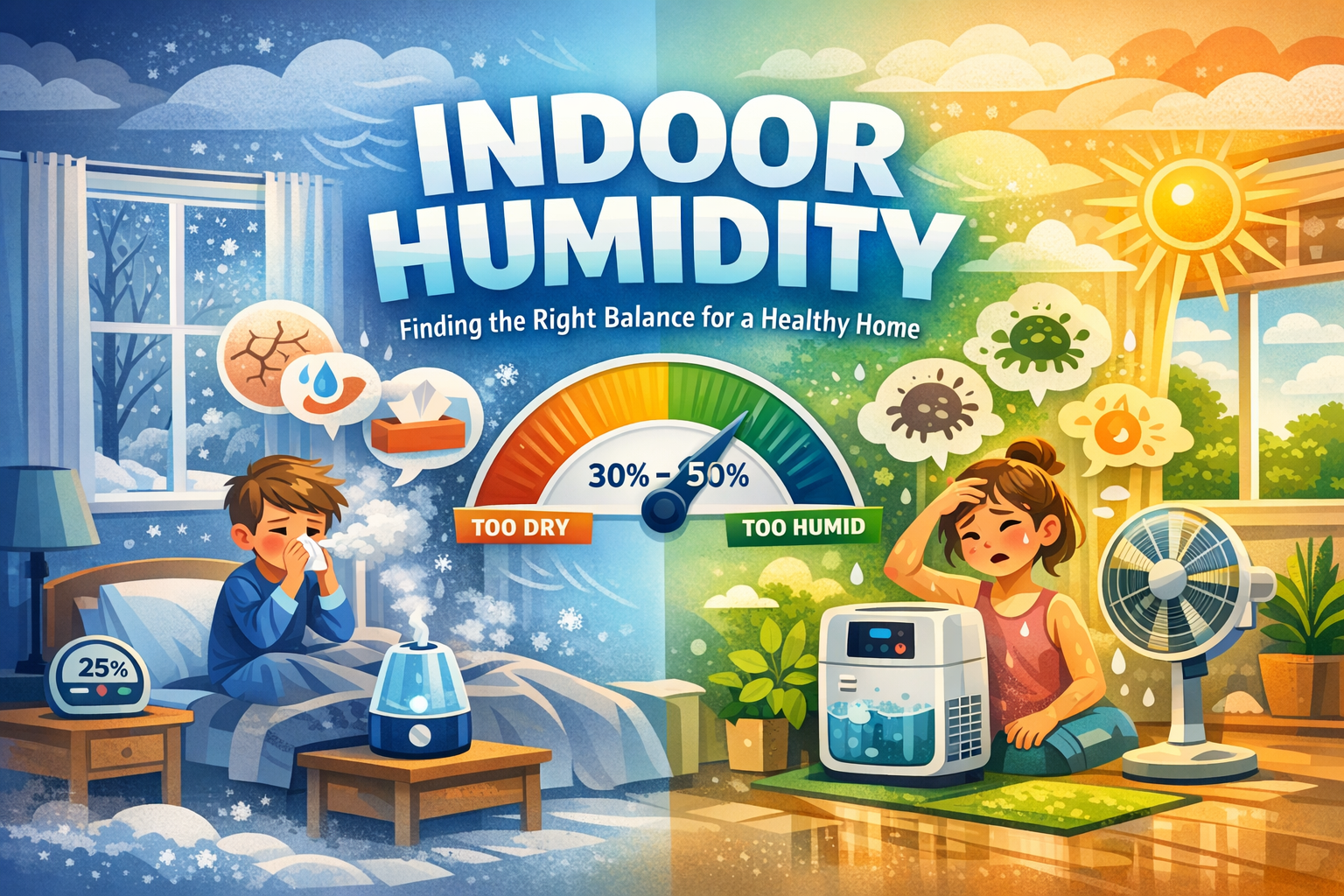
Indoor humidity refers to the invisible amount of water vapor suspended in the air inside a home. When moisture levels are properly managed, the indoor environment remains comfortable, building materials stay protected, and occupants experience fewer health issues related to dry air or excess moisture. Maintaining balanced relative humidity is a foundational element of home maintenance that directly influences respiratory wellness and overall daily comfort.
Understanding Relative Moisture Bounds and Atmospheric Balance
Indoor relative humidity represents the percentage of moisture currently held in the air compared to the maximum amount that air can hold at a specific temperature. According to environmental health guidelines, the ideal indoor relative humidity level for residential homes typically ranges between 30 percent and 50 percent, and should never exceed 60 percent. This specific range provides a comfortable breathing environment while discouraging the proliferation of mold, bacteria, and dust mites. When air holds too little moisture, it creates a dry climate inside the living space, whereas excess moisture turns a home into a breeding ground for allergens.
Tracking Vapor Density with Digital Hygrometers
Homeowners can track indoor moisture accurately by using a small, inexpensive digital device known as a hygrometer. Placing a hygrometer in main living areas or bedrooms provides real-time readings of current relative humidity percentages throughout the day. Relying on physical discomfort alone is often inaccurate, as symptoms of improper humidity can sometimes mimic other environmental irritants. Regular tracking allows residents to make informed adjustments before dry skin or musty odors become persistent household problems.
| Humidity Level | Condition | Common Household Risks |
|---|---|---|
| Below 30% | Low Humidity | Dry skin, irritated mucous membranes, static electricity, cracking wood floors and furniture. |
| 30% to 50% | Optimal Range | Balanced comfort, minimal allergen survival, healthy respiratory conditions. |
| Above 60% | High Humidity | Mold growth, dust mite proliferation, musty odors, peeling wallpaper, warped woodwork. |
Consequences of Dry Winter Air on Respiratory Tissues
Low indoor humidity occurs frequently during cold winter months when heating systems pull moisture out of the indoor air. As the air dries out, the protective mucous membranes in the nose and throat dry up, making it easier for airborne viruses and bacteria to bypass natural bodily defenses. Residents frequently report chapped lips, scratchy throats, itchy eyes, and exacerbated asthma symptoms during extended dry spells. Furthermore, low moisture levels cause wooden furniture, musical instruments, and structural framing joints to shrink, crack, and split over time.
Deploying Humidification Systems for Winter Relief
Portable humidifiers restore necessary moisture to dry rooms by dispersing a cool or warm mist into the living space. Cool-mist and ultrasonic humidifiers are popular choices for bedrooms, safely adding vapor without heating the surrounding environment. To prevent bacterial growth, portable units require regular cleaning with vinegar or manufacturer-recommended disinfecting solutions. Whole-house humidifiers integrated directly into a home’s central HVAC system offer an automated solution, injecting controlled amounts of moisture into the ductwork to maintain stable relative humidity levels across every room.
Pathogen Proliferation Caused by Excessive Moisture
High indoor humidity occurs during warm, rainy seasons or in tightly sealed homes where daily activities trap moisture indoors. Excess moisture creates an ideal environment for microscopic dust mites and mold colonies to multiply rapidly on walls, carpets, and upholstery. Inhaling mold spores and dust mite waste products frequently triggers allergic rhinitis, persistent coughing, sinus congestion, and severe asthma attacks. Additionally, prolonged exposure to damp air weakens structural integrity, causes paint to blister, and leaves a noticeable musty odor throughout the living spaces.
Mitigation Tactics for Damp Living Environments
Dehumidifiers pull moisture directly out of damp air, condensing water into an internal bucket or draining it away through a hose. Central air conditioning units also act as natural dehumidifiers by chilling indoor air and condensing moisture out before circulating it back through the house. Utilizing exhaust fans in high-moisture zones like bathrooms and kitchens during showers or cooking prevents steam from spreading into other rooms. Furthermore, addressing plumbing leaks promptly and ensuring clothes dryers vent directly to the outdoors helps keep residential moisture levels within a safe and healthy window. Managing environmental moisture carefully also ties into broader wellness habits, much like addressing indoor hazards or understanding harmful environmental impacts on wellness to safeguard your household.
Summary of Residential Vapor Maintenance
Controlling indoor humidity is an ongoing process that directly impacts physical health, respiratory comfort, and the longevity of a home. Monitoring relative humidity with a hygrometer ensures that adjustments to humidifiers and dehumidifiers are timely and precise. Keeping moisture levels between 30 percent and 50 percent prevents both the irritation of dry winter air and the health hazards of summer dampness. Through consistent monitoring and proper ventilation habits, homeowners can create a balanced indoor environment that promotes lifelong wellness for every family member.
What is the ideal indoor humidity level for a home?
The ideal indoor relative humidity level is generally between 30 percent and 50 percent for optimal health and comfort.
How can I check the humidity in my house?
You can easily check your home’s moisture levels by placing an inexpensive digital hygrometer in your main living areas.
Why does winter air feel so dry indoors?
Indoor heating systems warm up cold outside air, which naturally lowers its relative humidity and makes the indoor environment feel dry.
Can high humidity cause health problems?
Yes, excessive indoor humidity encourages mold growth and dust mite reproduction, which frequently trigger allergies, asthma flare-ups, and respiratory irritation.
How do I clean a portable humidifier safely?
You should empty the tank daily, rinse it thoroughly, and clean the interior components weekly using a mild vinegar solution to prevent bacterial buildup.
Do air conditioners help lower humidity?
Central air conditioning units naturally remove moisture from the air as they cool your home, acting as a built-in dehumidifier during warmer months.
Disclaimer: The information provided in this article is for general informational purposes only and does not constitute medical or professional structural advice. Homeowners should consult qualified HVAC professionals or healthcare providers regarding specific indoor air quality or health concerns.

Daniel J. Morgan is the founder of Invidiata Magazine, a premier publication showcasing luxury living, arts, and culture. With a passion for excellence, Daniel has established the magazine as a beacon of sophistication and refinement, captivating discerning audiences worldwide.


[…] spaces, keeping indoor environmental triggers under control is just as important as knowing how regulating household atmospheric moisture levels helps reduce secondary respiratory inflammation. Careful ingredient screening allows cautious […]
[…] The multi-stage internal assembly starts with a coarse mesh pre-filter designed to trap large household dust, pet hair, and lint. Next, air flows through the medical-grade HEPA 14 core, which stops up to 99.97% of tiny particulate matter down to 0.1 microns, including pollen, mold spores, and fine dust. An activated carbon layer then neutralizes lingering volatile organic compounds, cooking odors, and chemical fumes. Maintaining clean indoor air also involves managing indoor moisture levels, which you can read about further in our guide on regulating household atmospheric moisture levels. […]
[…] When managing your indoor space, maintaining balanced household atmospheric moisture levels through controlling indoor humidity to improve air quality and health can prevent chronic irritation. It is also wise to avoid over-the-counter redness-relief eye drops […]
[…] managing independent living arrangements must also monitor home conditions carefully, such as when regulating household atmospheric moisture levels to prevent respiratory […]