
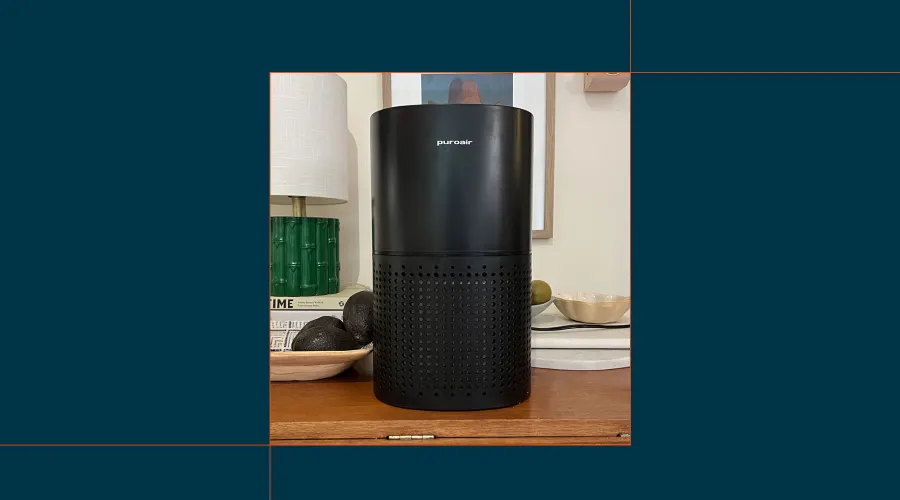
Indoor air quality has become a major talking point for households managing seasonal allergies, pet dander, and city dust. Among the numerous options available online, the PuroAir brand draws significant attention from buyers looking for hospital-grade filtration at home. This detailed review examines how PuroAir units handle everyday indoor pollution, comparing their real-world capabilities against competing filtration brands.
How PuroAir Sizing Matches Real Residential Floor Plans
Choosing the right model requires matching specific room dimensions to the manufacturer’s maximum square footage ratings.
| PuroAir Variant | Rated Square Footage | Best Suited Room Types |
|---|---|---|
| PuroAir 240 Standard Unit | Up to 1,000 square feet | Open-plan living rooms, master suites, and large apartments |
| Compact Desktop Models | Up to 300 square feet | Home offices, nurseries, and personal bedrooms |
Manufacturer square footage numbers assume continuous high-speed motor operation and unobstructed airflow around the device. Selecting a unit rated slightly larger than your actual room size allows the internal fan to run on medium settings, keeping noise low while maintaining steady air turnover.
Decoding the HEPA 14 Filtration Standard
PuroAir differentiates itself by using HEPA 14 filters capable of capturing microscopic particles that standard filters often miss.
The multi-stage internal assembly starts with a coarse mesh pre-filter designed to trap large household dust, pet hair, and lint. Next, air flows through the medical-grade HEPA 14 core, which stops up to 99.97% of tiny particulate matter down to 0.1 microns, including pollen, mold spores, and fine dust. An activated carbon layer then neutralizes lingering volatile organic compounds, cooking odors, and chemical fumes. Maintaining clean indoor air also involves managing indoor moisture levels, which you can read about further in our guide on regulating household atmospheric moisture levels.
Automated Particulate Sensors and Smartphone App Usability
Built-in optical sensors and optional digital controls allow PuroAir units to adjust cleaning performance dynamically throughout the day.
When onboard sensors detect cooking smoke or elevated dust, auto mode instantly ramps up fan speed to clear the space before scaling back down to a quiet baseline. Smartphone app pairing and voice assistant integration provide added convenience for users who prefer remote scheduling and hands-free management without touching the physical control panel.
Acoustic Profiles and Power Draw During Continuous Operation
Operating noise and electrical consumption are vital considerations for appliances running overnight in bedrooms or quiet home workspaces.
PuroAir models maintain a modest acoustic footprint, generating between 20 and 50 decibels depending on the active fan setting. On night mode, the sound output drops to a soft murmur that will not disturb light sleepers. Furthermore, Energy Star certification confirms that the internal motors draw minimal electrical current, resulting in negligible impacts on monthly utility bills.
Long-Term Maintenance Costs and Filter Replacement Cycles
Owning an air purifier involves recurring upkeep expenses that buyers should factor into their initial budget.
Replacement filters typically require swapping every three to six months, heavily influenced by local air pollution, pet dander levels, and daily run times. Running an air purifier with an exhausted filter severely restricts airflow and reduces particle capture efficiency, making timely replacements essential for maintaining healthy indoor air.
Direct Comparison With Other Leading Air Purifier Brands
PuroAir competes directly in online marketplaces against established filtration alternatives from brands like Blueair and Levoit.
While budget-friendly competitors often feature lower upfront hardware costs, PuroAir frequently includes higher-grade HEPA 14 filters and automatic particulate displays at price points where rival units might only offer basic HEPA 13 protection.
Frequently Asked Questions
How often do PuroAir filters need to be replaced?
Filters typically require replacement every three to six months depending on indoor air quality, pet dander, and daily operating hours.
Can PuroAir remove cooking odors and smoke?
Yes, models equipped with activated carbon filters effectively absorb volatile organic compounds, kitchen smells, and light smoke.
Is PuroAir loud enough to disturb sleep?
On its lowest night mode setting, the noise level drops to around 20 decibels, making it exceptionally quiet for bedrooms.
Does PuroAir require Wi-Fi to function?
No, Wi-Fi and app connectivity are optional; you can operate all core fan speeds and modes directly using the physical control panel on the unit.
Are PuroAir units Energy Star certified?
Yes, PuroAir models hold Energy Star certification, ensuring low electrical draw even when running continuously.
What size room does the standard PuroAir purifier cover?
Standard models are engineered to purify spaces up to roughly 1,000 square feet under optimal operating conditions.
Disclaimer: Product specifications, pricing, and availability details for PuroAir air purifiers may change over time. Readers are encouraged to verify final product information, warranty terms, and filter subscription details directly from official manufacturer sources before purchasing.

Daniel J. Morgan is the founder of Invidiata Magazine, a premier publication showcasing luxury living, arts, and culture. With a passion for excellence, Daniel has established the magazine as a beacon of sophistication and refinement, captivating discerning audiences worldwide.


