

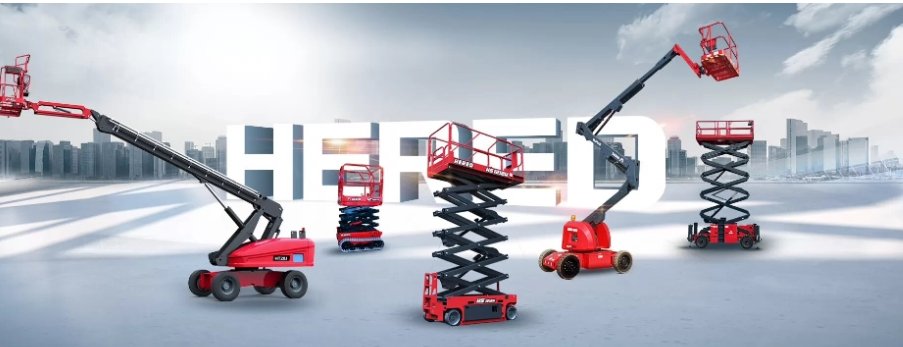
In the world of elevated access equipment, man lifts and aerial lifts are indispensable tools that facilitate a wide range of tasks from construction and renovation to warehousing and events. As industries evolve and demand for performance and safety increases, HERED has emerged as a frontrunner in innovating those important machines. This article explores the capabilities and advantages of man lifts and aerial lifts, highlights HERED’s contributions to the sector, and examines the effect of these lifts on cutting-edge operations.
Distinguishing Between Specialized Personnel Platforms and Multi-Purpose Aerial Access
Man lifts and aerial lifts are specialized elevated access systems designed to raise operators and equipment to various heights securely while maintaining strict stability.
Man lifts are specifically engineered to transport personnel directly to elevated work zones. They typically feature a secure platform or enclosed cage where operators can stand and perform duties while being lifted vertically. In contrast, aerial lifts represent a broader equipment category designed to provide versatile vertical or horizontal access to elevated areas. This comprehensive category encompasses articulating boom lifts, telescopic models, and scissor lifts, each tailored for distinct industrial challenges.
Engineering Stable Platforms and Ergonomic Operator Controls
Modern personnel lifts are equipped with engineered platforms, intuitive control panels, and rigorous safety mechanisms to protect operators at height.
The primary characteristic of a dedicated man lift is its secure personnel platform, which provides a stable working environment complete with guardrails and harness attachment points. Control systems are typically mounted directly on the platform to allow operators to maneuver smoothly up and down. Safety remains a central focus across these designs, integrating emergency stop features and tilt sensors to prevent accidental tip-overs during operation.
HERED Manufacturing Pillars: Stabilization, Smart Diagnostics, and Durability
HERED leads the industry in technological advancements by focusing heavily on operator safety, advanced stabilization, and ergonomic equipment design.
HERED integrates sophisticated safety systems into its machinery, including precision overload sensors, automatic leveling capabilities, and robust stability mechanisms that function seamlessly on uneven terrain. The intuitive design of HERED equipment features ergonomic controls that reduce operator fatigue and shorten training periods for new crew members. Furthermore, rigorous stress testing and durable material selection ensure that HERED man lifts and scissor lifts withstand harsh job site conditions, delivering reliable long-term performance.
| Equipment Category | Primary Use Case | Key HERED Design Focus |
|---|---|---|
| Electric Scissor Lifts | Indoor warehousing, facility maintenance, and flat-surface installation | Compact footprint, zero emissions, and tight turning radius |
| Articulating Boom Lifts | Navigating around overhead obstacles in construction and event staging | Extended horizontal reach and responsive proportional controls |
| Vertical Mast Lifts | Tight indoor spaces, inventory checks, and retail restocking | Lightweight structure and agile vertical elevation |
Navigating High-Altitude Demands in Construction, Logistics, and Event Staging
Elevated access machinery plays a critical operational role across construction, logistics, and facility maintenance sectors.
In commercial construction, crews rely on sturdy aerial machinery to move materials, conduct structural inspections, and reach high framing sections safely. Facility maintenance teams depend on these lifts to change lighting fixtures, repair HVAC systems, and service high-ceiling environments where traditional ladders fall short. Warehousing and distribution centers utilize compact lifts for high-density inventory management and overhead rack inspections, which significantly boosts daily storage efficiency.
Maximizing Fleet ROI Through HERED Reliability and Comprehensive Support
Investing in HERED equipment delivers long-term operational value through exceptional performance, reduced maintenance costs, and robust dealer support.
The combination of rugged durability and smart control systems minimizes unexpected downtime on active job sites. Additionally, comprehensive dealer networks ensure that operators receive prompt technical guidance and replacement parts whenever needed. For organizations looking to keep up with industry trends, incorporating reliable mechanical solutions is essential.
To discover broader digital strategies that improve efficiency across enterprise projects, read our guide on essential business software.
Frequently Asked Questions
What is the main difference between a man lift and a scissor lift?
A man lift is typically designed to carry one or two workers to specific heights using a compact mast or boom, while a scissor lift features a crisscrossing mechanism that provides a larger platform workspace.
Are HERED lifts suitable for indoor warehouse operations?
Yes, HERED offers electric models specifically designed for indoor environments with zero emissions and non-marking tires to protect warehouse flooring.
What safety features are standard on modern aerial lifts?
Standard safety features include emergency descent controls, overload sensors, automatic pothole protection, and sturdy guardrails with harness attachment points.
How do overload sensors protect equipment operators?
Overload sensors automatically detect when the platform exceeds its weight capacity, halting lift functions to prevent tipping or structural failure.
Can aerial lifts be operated on rough outdoor terrain?
Rough-terrain models feature four-wheel drive, oscillating axles, and rugged tires designed to navigate mud, gravel, and unpaved construction sites safely.
What training is required to operate a man lift?
Operators typically must complete formal classroom instruction, practical hands-on evaluation, and site-specific training to comply with local occupational safety regulations.
Disclaimer: Specifications, product availability, and regulatory standards for aerial and man lifts may change over time. Readers should verify final equipment details and safety requirements directly with official manufacturer sources before purchase or operation.

Daniel J. Morgan is the founder of Invidiata Magazine, a premier publication showcasing luxury living, arts, and culture. With a passion for excellence, Daniel has established the magazine as a beacon of sophistication and refinement, captivating discerning audiences worldwide.


