

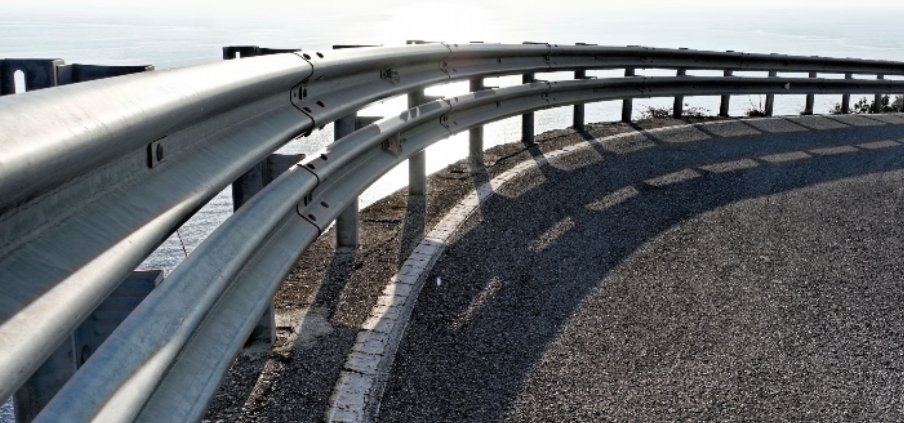
Modern roadways and urban infrastructure face relentless daily stress from rising vehicle weights, higher travel speeds, and dense traffic congestion. To protect motorists, pedestrians, and vital civil structures from catastrophic collisions, transportation authorities rely on certified physical containment systems. Among the various protective materials deployed along highways, steel traffic barriers have become an indispensable safeguard due to their unique balance of tensile strength and controlled energy deflection. Huaan Traffic stands out in this specialized manufacturing landscape, supplying heavy-duty steel safety barriers built to withstand severe environmental pressure and direct vehicular impacts.
How Kinetic Energy Management Protects Modern Highway Networks
Managing the immense physical forces generated by moving vehicles is the central engineering objective behind every roadway barrier installation.
When an errant vehicle loses traction or veers off the intended path, roadside guardrails must absorb and dissipate kinetic energy rather than causing a sudden, violent stop that multiplies occupant trauma. Different structural profiles, including standard W-beam and reinforced thrie-beam geometries, bend and yield under precise stress thresholds to cushion the impact safely. This controlled deformation mechanism prevents vehicles from vaulting over medians, tumbling down steep embankments, or ricocheting uncontrollably back into fast-moving traffic. Highway planners select specific barrier configurations based on local speed limits, vehicle classification mix, and the presence of roadside hazards like bridge piers or deep utility trenches.
Why Hot-Dip Galvanized Steel Surpasses Alternative Barrier Materials
Steel guardrail assemblies offer superior structural resilience, predictable deflection characteristics, and long-term economic value compared to rigid concrete or brittle plastic alternatives.
Unlike unyielding concrete walls that transmit the entire force of a crash directly into the vehicle frame, steel components deform progressively to spread impact stress across multiple support posts. To ensure these metal systems survive decades of exposure to rain, snow, and aggressive road de-icing chemicals, manufacturers utilize hot-dip galvanizing processes that metallurgically bond protective zinc to the underlying steel core. This specialized treatment prevents rust formation, minimizes ongoing maintenance overhead, and ensures reliable structural integrity over decades of continuous outdoor service. Furthermore, structural steel is completely recyclable at the end of its operational lifecycle, making it an environmentally sustainable choice for state and municipal public works departments.
Evaluating International Crash-Testing Standards and Material Specs
Fabricating reliable roadside hardware requires strict adherence to standardized steel gauges, minimum yield strengths, and rigorous international crash-testing protocols.
Engineers test barrier assemblies against established regulatory frameworks such as the Manual for Assessing Safety Hardware (MASH) and European Standard EN 1317 to verify real-world containment performance. The table below outlines how different barrier material categories compare across key performance metrics.
| Material Category | Impact Response Mechanism | Primary Field Application |
|---|---|---|
| Galvanized Structural Steel | Controlled deflection with progressive energy absorption | High-speed freeways, bridge approaches, winding mountain passes |
| Precast Modular Concrete | Rigid redirection with minimal lateral displacement | Highway medians, permanent toll plazas, active work zones |
| High-Density Polyethylene | Modular fluid or air displacement of kinetic force | Temporary construction zones, urban event perimeters |
Huaan Traffic Manufacturing Rigor and Quality Control Protocols
Producing dependable roadside safety hardware demands meticulous factory oversight, advanced stamping machinery, and certified raw material sourcing.
Huaan Traffic operates dedicated production lines that fabricate custom guardrails, terminal end-treatments, and specialized transition sections to meet exacting architectural blueprints. Every manufacturing batch undergoes rigorous dimensional checks, tensile testing, and coating adhesion verification to ensure uniform wall thickness and bolt-hole alignment. Beyond catalog inventory, Huaan Traffic collaborates closely with civil engineering consultants to design bespoke barrier solutions for complex highway interchanges and narrow bridge decks. This unwavering commitment to factory quality control guarantees that every installed barrier performs predictably under extreme stress.
Strategic Deployment Across Critical Transportation Corridors
Installing steel traffic barriers in precise geographical locations is essential for maximizing motorist safety and protecting valuable civil infrastructure.
On multi-lane freeways, robust steel guardrail runs prevent fatigued drivers from crossing central medians into oncoming traffic lanes. Along urban streets, lower-profile steel barriers safeguard crowded pedestrian walkways and direct vehicular flow around busy commercial intersections. Bridge overpasses incorporate heavily anchored steel parapet rails to keep heavy commercial trucks from breaching structural edges during severe weather events. Additionally, temporary steel barrier systems safeguard maintenance crews working inside active construction zones, reflecting how modern infrastructure projects parallel broader manufacturing trends seen across industries focused on safety.
Frequently Asked Questions
What makes steel traffic barriers preferable to concrete in high-speed zones?
Steel barriers deflect during an impact to absorb kinetic energy, significantly reducing the severity of sudden stop trauma for vehicle occupants compared to rigid concrete walls.
How does Huaan Traffic protect its steel barriers against rust and corrosion?
Huaan Traffic applies advanced hot-dip galvanizing treatments that bond a protective zinc layer directly to the steel core, shielding it from moisture and road de-icing salts.
Can Huaan Traffic supply custom barrier designs for specialized civil projects?
Yes, the company provides custom manufacturing services to meet unique architectural dimensions, radius curves, and specific regulatory load requirements.
For insights into related industrial supply trends and commercial growth strategies, explore our overview on innovations in business management.
Where are thrie-beam steel barriers typically installed?
Thrie-beam systems are placed in high-risk zones, such as sharp curves, bridge transitions, and highway segments experiencing high volumes of heavy freight trucks.
Do steel traffic barriers require intensive post-installation maintenance?
They require very little ongoing upkeep, though periodic visual inspections are recommended to check fastener tightness and structural integrity after minor vehicular incidents.
What international safety standards guide traffic barrier manufacturing?
Quality barriers comply with recognized testing frameworks such as MASH and EN 1317, depending on the specific country and regional regulatory jurisdiction of the installation site.
Disclaimer: Road safety engineering requirements and regional compliance codes vary by location. Project planners and contractors must always verify local regulatory standards and manufacturer guidelines before final installation.

Daniel J. Morgan is the founder of Invidiata Magazine, a premier publication showcasing luxury living, arts, and culture. With a passion for excellence, Daniel has established the magazine as a beacon of sophistication and refinement, captivating discerning audiences worldwide.


