
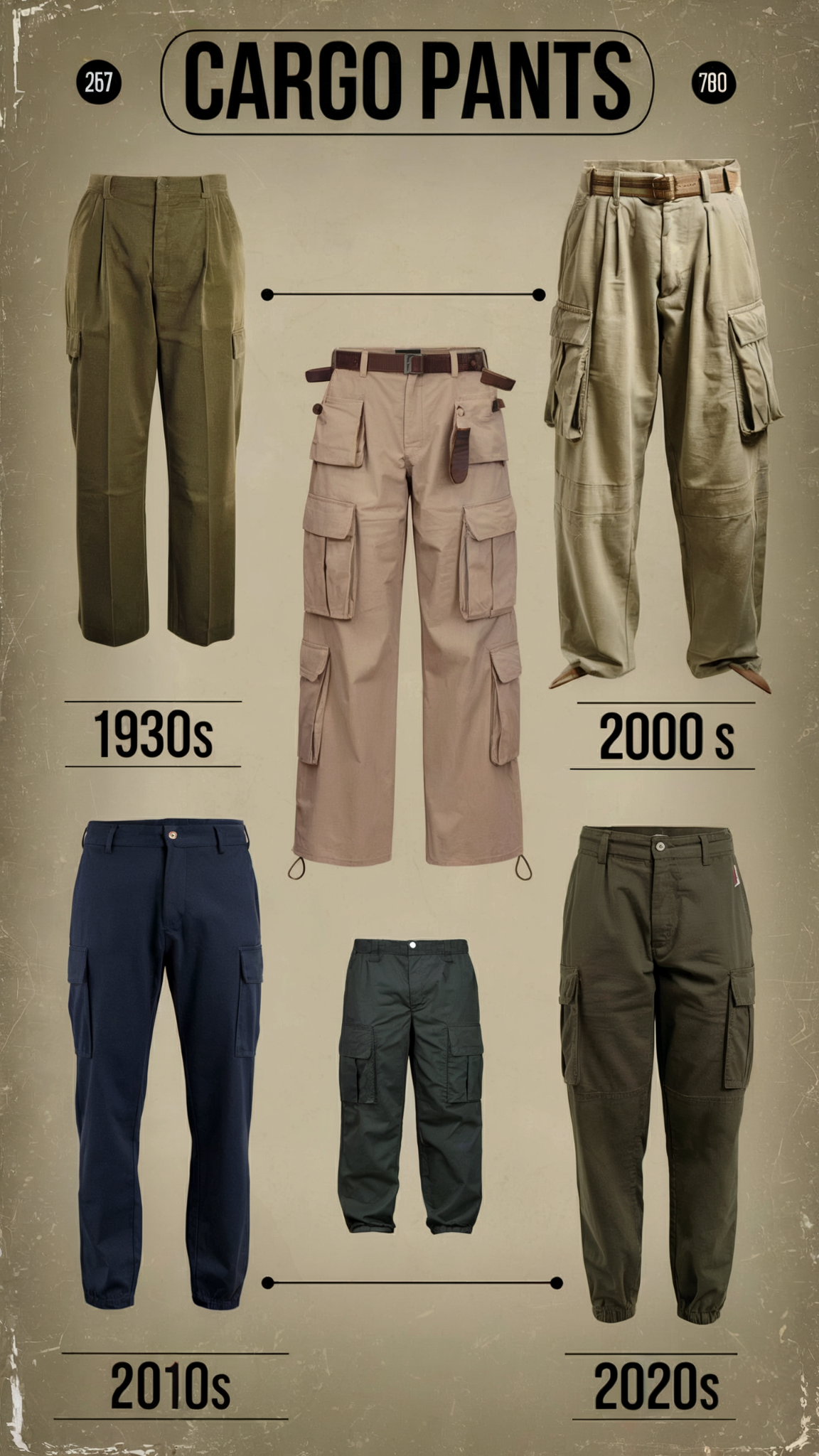
Soldiers and outdoor explorers relied on early utility trousers long before these garments became a permanent fixture in modern wardrobes. Initially engineered purely for tactical endurance and functional storage, these utilitarian trousers have undergone a fascinating stylistic transformation. Cargo pants transitioned from strict military provisions into celebrated streetwear statements, proving their staying power through decades of changing tastes.
Field Uniforms to Post-War Workwear
Utility trousers emerged in the 1930s as practical equipment designed to fulfill operational field requirements before the onset of World War II. The British military pioneered the design before the United States armed forces adopted similar styles for paratroopers and infantry units needing extra carrying capacity. These early trousers featured roomy, buttoned side pockets specifically intended to secure maps, field tools, and ammunition within easy reach. Heavy canvas and sturdy cotton twill formed the backbone of construction, ensuring the apparel could withstand harsh environments and prolonged physical strain.
Demobilized soldiers brought these durable garments home after the conflict ended, introducing rugged surplus gear into everyday civilian trades. Construction workers, mechanics, and outdoor laborers quickly embraced the practical benefits of reinforced pocketing and heavy-duty fabric blends. As workwear gradually influenced broader casual clothing markets during the late twentieth century, mainstream designers began recognizing the inherent functional appeal of utility pockets.
The Oversized Grunge and Hip-Hop Wave
Hip-hop artists and grunge musicians drove a massive streetwear revival during the 1990s that placed baggy trousers at the center of youth culture. Influential performers like Tupac Shakur and members of the Wu-Tang Clan championed an exaggerated, relaxed silhouette that embraced maximum physical comfort. At the same time, skate culture adopted the style because durable fabrics could withstand rough concrete friction during technical street tricks. Film stars and pop icons further cemented the trend by wearing voluminous utility trousers in music videos and high-profile public appearances.
This era defined utility trousers by their exceptionally loose cuts, deep side pouches, and casual pairing with oversized hoodies or chunky footwear. Young dressers favored a laid-back urban aesthetic where trousers pooled loosely over sneakers. This rebellious look broke away sharply from the tailored office dress codes of preceding decades.
Retail Overexposure and the Tailored Comeback
Mass-market mall brands flooded the early 2000s retail landscape with oversized variations of utility pants, transforming a subcultural statement into an everyday mall staple. Familiar high-street names like Old Navy, Gap, and Abercrombie & Fitch produced endless iterations featuring stiff fabrics and bulky compartments. This rapid commercial saturation ultimately triggered a sharp aesthetic backlash. Style critics began dismissing the silhouette as overdone dad fashion, leading trend-conscious consumers to abandon utility wear entirely in favor of slim-cut denim and narrow trousers.
A surprising resurgence occurred during the 2010s when luxury streetwear labels re-engineered the silhouette for a more refined audience. High-end houses such as Stone Island, Fear of God, and Off-White stripped away the clumsy excess of the previous decade. Designers introduced tapered legs, stretchy cotton blends, and sleek hardware that honored the garment’s functional heritage without looking sloppy. Celebrities adopted these streamlined updates, proving that utility trousers could look polished when styled with intention.
Technical Gorpcore and Sustainable Fabric Innovations
Contemporary menswear treats utility wear as a canvas for technical fabric engineering and eco-conscious production methods. The modern gorpcore movement merges outdoor survival gear with high fashion, introducing weather-resistant nylon weaves, articulated knee panels, and magnetic Fidlock closures. These innovations satisfy urban commuters and outdoor enthusiasts alike.
At the same time, environmental accountability has reshaped production across the apparel industry. Contemporary brands frequently craft utility trousers using certified organic cotton, recycled polyester blends, and raw hemp fibers. These sustainable materials lower environmental impact while maintaining the rugged longevity that consumers expect from heavy-duty trousers. To explore related aesthetic shifts across contemporary closets, readers can review our guide on broad trends in men’s fashion for deeper wardrobe insights.
Mastering Proportions in Modern Styling
Balancing clothing proportions remains the most important rule when putting together an outfit featuring utility trousers today. Pairing a relaxed, wide-leg cut with a fitted crewneck or structured knit prevents the overall look from feeling overwhelmingly bulky. Conversely, wearing a slim-tapered silhouette allows room for layering with an oversized chore coat or unstructured blazer.
Footwear choices significantly alter the final mood of the ensemble. Clean leather sneakers or minimalist tennis shoes keep the aesthetic grounded for everyday city wear. Meanwhile, swapping sneakers for rugged lug-sole boots or leather derbies elevates the trousers into a smart-casual domain suitable for creative workplaces or evening outings.
Frequently Asked Questions
Are utility trousers still relevant in modern wardrobes?
Yes, contemporary tailoring, elevated fabric choices, and ongoing streetwear influences keep utility trousers highly relevant for everyday dressing.
What shoes pair best with pocket trousers?
Low-profile leather sneakers complement casual outfits, while chunky trail runners or service boots work well depending on the pant’s cut.
How should a modern utility pant fit?
Current styles typically offer a straight leg or a gentle taper that rests comfortably near the shoe without excessive fabric bunching.
Can utility trousers be worn to smart-casual events?
Yes, provided you choose slim-fit, neutral-colored options crafted from refined fabrics and style them with a sharp shirt and clean footwear.
Why were side pockets originally added to military trousers?
Military designers added expandable side pouches so soldiers could easily carry tactical gear, field maps, and ammunition while moving.
What fabrics are commonly used in current designs?
Manufacturers frequently utilize stretch cotton twill, durable ripstop nylon, organic cotton, and eco-friendly hemp blends.
Disclaimer: Apparel trends and fit specifications shift over time. Readers should always check official brand sizing charts and product details before making purchasing decisions.
Daniel J. Morgan is the founder of Invidiata Magazine, a premier publication showcasing luxury living, arts, and culture. With a passion for excellence, Daniel has established the magazine as a beacon of sophistication and refinement, captivating discerning audiences worldwide.


