
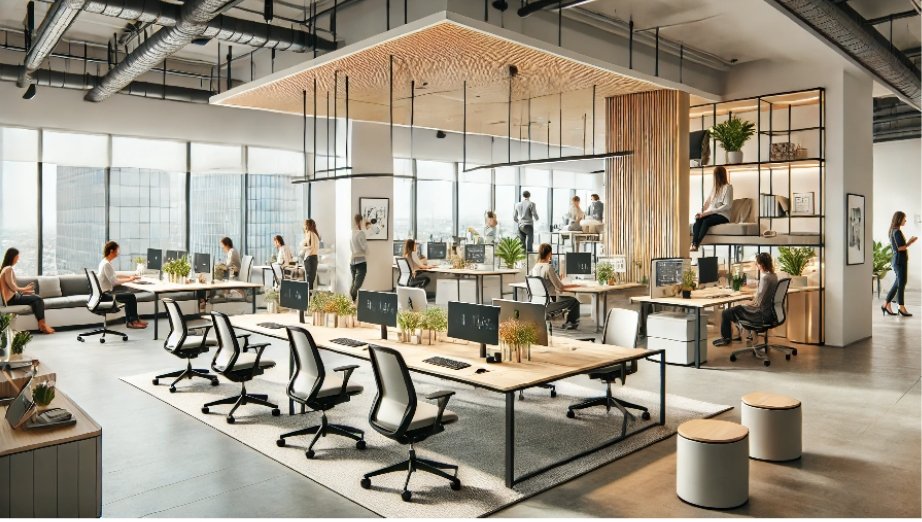
Navigating today’s fast-paced business world means startup founders and growing company owners must carefully evaluate how physical workspaces support daily operations. Traditional multi-year commercial leases often lock enterprises into rigid square footage that fails to match fluctuating staff counts and variable revenue streams. Adopting flexible office solutions allows entrepreneurs to maintain a professional physical presence while retaining the agility needed to weather economic shifts. These adaptable setups remove administrative burdens and let business leaders direct their attention toward core revenue generation and team development.
Escaping the Financial Traps of Rigid Commercial Leases
Traditional commercial real estate agreements demand heavy upfront security deposits, multi-year commitments, and complex tenant improvement costs that can quickly drain early-stage capital.
Standard leases leave business owners entirely responsible for independent utility contracts, high-speed fiber installation, janitorial services, and office equipment maintenance. When market demands shift unexpectedly, breaking these binding contracts triggers severe legal and financial penalties. Flexible office memberships eliminate these liabilities by bundling essential services into a single predictable monthly fee, protecting essential cash reserves.
Optimizing Operating Capital Through Predictable Cash Flow
Predictable cash flow management becomes vastly simpler when facility expenses scale directly with actual usage rather than idle square footage.
Coworking spaces and virtual office packages let entrepreneurs pay only for the exact desks, private suites, or meeting room hours consumed each month. This transparent pricing structure prevents capital from sitting idle in empty rooms during slow quarters or remote work sprints. By transforming fixed real estate liabilities into flexible operational expenses, founders free up liquid capital to invest directly in marketing campaigns, software infrastructure, and product innovation.
Accommodating Rapid Team Growth Without Relocation Stress
Scaling a team from three people to fifteen often forces companies into chaotic office moves under traditional real estate models.
Flexible office solutions provide frictionless scalability, allowing growing businesses to add private team suites or secure extra hot desks within the same facility in a matter of days. Conversely, if a project concludes or seasonal downsizing becomes necessary, scaling back physical workspace requires zero property subleasing headaches or broker fees. This elasticity ensures that the physical work environment expands and contracts smoothly alongside the business.
Leveraging Premium Business Addresses and Plug-and-Play Infrastructure
Establishing credibility with enterprise clients and investors is significantly easier when operating from a prestigious metropolitan business address rather than a residential garage.
Flexible office providers place high-end commercial real estate within reach of early-stage ventures, instantly elevating brand perception on contracts and marketing materials. Beyond prestigious mailing locations, these spaces deliver fully configured technical infrastructure, including secure enterprise Wi-Fi networks, cloud printing arrays, and professional reception staff to greet visiting guests. For organizations evaluating larger structural expansions, exploring modular workspace options for business operations offers another practical path to achieving customized physical layouts.
Facility amenities also extend to app-based meeting room booking portals that streamline client presentations and collaborative team workshops. Professional front-desk handling ensures mail and package deliveries are managed securely without requiring full-time administrative staff on the company payroll. This plug-and-play operational model allows new ventures to function like established enterprises from day one.
Enhancing Daily Focus and Ergonomic Wellbeing
Modern workspace design prioritizes human wellbeing by integrating acoustic privacy pods, natural lighting, and ergonomic furniture that directly supports sustained daily focus.
Coworking environments blend collaborative common zones with quiet focus booths, giving workers the freedom to choose an environment tailored to their immediate task. Adjustable standing desks and supportive seating reduce physical fatigue during long administrative hours, helping prevent burnout among hardworking founders and staff members. Separating the home environment from a structured professional workspace also reinforces healthy daily routines and clearer boundaries between work and personal life.
Frequently Asked Questions About Flexible Offices
What distinguishes a virtual office from a physical coworking membership?
A virtual office provides a prestigious business address and mail handling services without dedicated physical desks, whereas a coworking membership grants access to physical workspaces and shared amenities.
Are flexible office contracts usually tied to long-term commitments?
Most flexible office agreements operate on month-to-month terms or short-term licenses, giving entrepreneurs the freedom to modify their arrangements with minimal notice.
Can distributed or remote teams utilize flexible office spaces effectively?
Yes, remote-first teams frequently use drop-in passes and on-demand meeting room credits to collaborate in person periodically while avoiding the overhead of permanent headquarters.
Do flexible office memberships include meeting room access in the base fee?
Many flexible workspace providers include a set allowance of monthly meeting room hours, with additional booking time available at reasonable hourly rates.
How secure is the internet connection in shared workspaces?
Reputable flexible workspace operators maintain enterprise-grade, password-protected fiber Wi-Fi networks and secure keycard entry systems to safeguard member data and equipment.
How do flexible office addresses impact startup branding?
Displaying a recognized metropolitan business address on websites and proposals helps early-stage ventures project an established, reliable image to prospective clients.
Disclaimer: Flexible office availability, amenity packages, and contract terms vary significantly by provider and geographic location. Entrepreneurs should verify specific pricing and service agreements directly with facility operators before making financial commitments.

Daniel J. Morgan is the founder of Invidiata Magazine, a premier publication showcasing luxury living, arts, and culture. With a passion for excellence, Daniel has established the magazine as a beacon of sophistication and refinement, captivating discerning audiences worldwide.


