

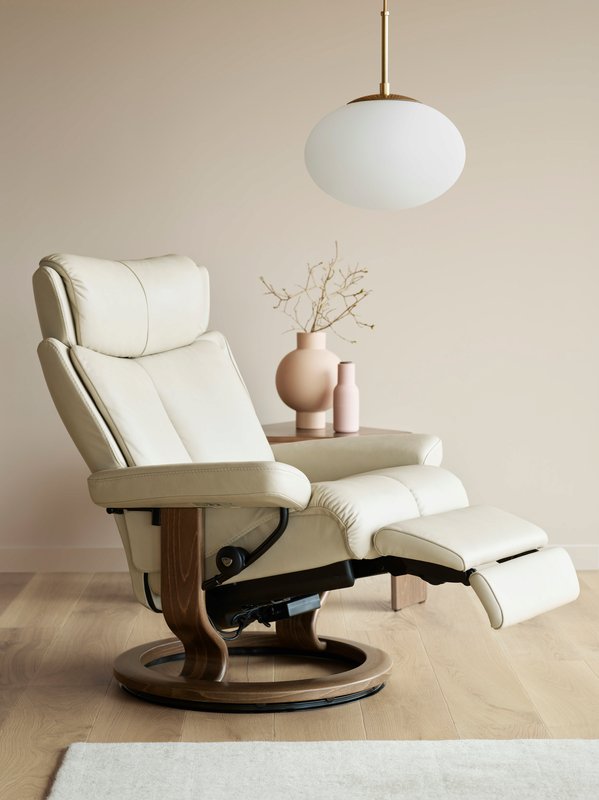
A statement reclining chair bridges the gap between high-end interior design and deep physical relaxation. Modern furniture engineering has replaced bulky manual levers with discreet mechanisms, allowing a reclining chair to act as the visual centerpiece of a living room without overwhelming the floor plan. Homeowners can successfully blend everyday comfort with sophisticated style by carefully evaluating mechanical options, upholstery durability, and spatial requirements.
Why Contemporary Recliners Have Shed Their Clunky Reputations
Contemporary reclining chairs maintain a streamlined visual profile by utilizing hidden power buttons and slim motorized hinges instead of protruding exterior handles.
Traditional recliners earned a reputation for dominating room layouts because manufacturers prioritized raw cushioning over aesthetic proportion. Today’s design-forward market offers tailored silhouettes, tapered wooden legs, and slim armrests that look identical to luxury stationary armchairs. Selecting a sophisticated reclining chair anchors an open-concept living area just as effectively as a sculptural accent sofa or a piece of modern art.
Evaluating Power Mechanisms Versus Wall-Hugger Engineering
Choosing the correct mechanical framework ensures the reclining chair functions smoothly within your specific room dimensions and daily routine.
Wall-hugger recliners utilize forward-sliding tracks that tilt the seat back while pushing the entire base forward, requiring only a few inches of clearance behind the headrest. This engineering marvel allows homeowners to float furniture away from perimeter walls without worrying about scuffed drywall. Power recliners offer infinite adjustment angles for footrests and headrests via invisible side-panel controls, while manual push-back models rely solely on body weight to achieve a clean, cordless aesthetic.
Strategic Placement and Spatial Flow in Open-Concept Rooms
Proper room positioning prevents a heavy seating piece from blocking natural light pathways or disrupting walking traffic.
Angling the reclining chair toward a focal point like a fireplace or anchoring it diagonally across from the main entryway creates a welcoming conversational zone. Avoid pushing large seating pieces flat against every wall, as floating furniture layouts make living rooms feel significantly larger and more breathable. Homeowners must always measure full extension clearance to guarantee that household members can walk past safely when the footrest is fully deployed.
Balancing Upholstery Aesthetics with Everyday Durability
Selecting the right fabric or leather grade protects your investment against pet claws, liquid spills, and heavy daily usage.
Top-grain leather offers luxurious texture and wipes clean effortlessly, making it an excellent choice for busy family rooms. High-performance woven fabrics provide cozy tactile warmth while resisting snags and heavy wear in households with pets or children. For individuals seeking broader design strategies on how personal spaces adapt to changing lifestyle needs over time, reviewing how aging individuals navigate independent living environments offers valuable perspective on accessible home layouts.
Ergonomic Support for Reading and Posture Health
A premium reclining chair must support the natural curve of the spine during extended reading or relaxation sessions.
Slouching in an overly soft seat for hours can lead to lower back fatigue and muscle strain. Look for models featuring independent lumbar support motors and adjustable headrest pillows to keep your neck aligned properly. Pairing the chair with dedicated task lighting transforms the corner into an ergonomic reading haven without requiring awkward body positioning.
Styling Accessories and Integrated Power Management
Thoughtfully selected accent pieces tie the reclining chair into the broader color scheme while maintaining a clean environment.
Draping a textured knit throw blanket over one arm softens leather finishes and introduces tactile depth. A compact side table placed within arm’s reach provides a sturdy surface for coffee mugs or reading glasses without crowding the floor. For motorized chairs, routing power cords neatly beneath area rugs or utilizing rechargeable battery packs prevents unsightly wire clutter.
Frequently Asked Questions
Can a reclining chair look modern and sleek?
Yes, modern manufacturing features hidden buttons, slim armrests, and tailored silhouettes that look indistinguishable from luxury stationary armchairs.
What is a wall-hugger reclining chair?
A wall-hugger recliner slides forward on a track as it tilts back, requiring only a few inches of clearance from the wall behind it.
How do I clean fabric upholstery on a recliner?
Vacuum the surface regularly to remove loose debris, and check the manufacturer’s cleaning code before applying water-based or solvent cleaners for spot stains.
Are power recliners difficult to install?
No, most power recliners require only a simple plug-in connection for the power supply transformer, with some models offering rechargeable battery packs for cordless placement.
How much space do I need around a reclining chair?
You need enough room for the chair to extend fully without hitting walls or coffee tables, plus enough clearance for safe walking paths.
Is leather or fabric better for a family living room?
Performance fabrics resist pet scratches and feel cozy, while genuine leather handles liquid spills easily and cleans up quickly with a damp cloth.
Can I use a reclining chair for work from home tasks?
While good for casual reading, reclining chairs generally lack the upright ergonomic adjustments needed for all-day desk work and computer typing.
Disclaimer: Furniture specifications, mechanism types, and material care instructions can vary by manufacturer. Always review official product documentation and warranty guidelines before making a purchase or applying cleaning products.


