

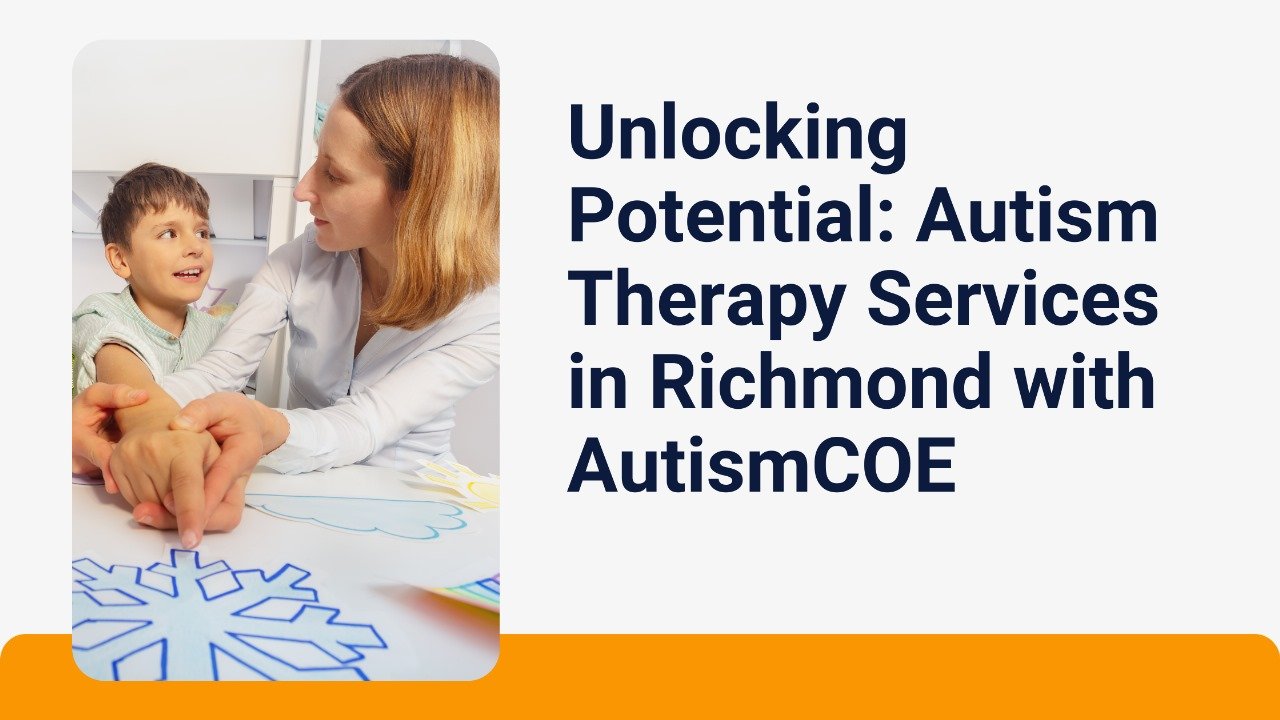
Navigating Autism Spectrum Disorder (ASD) can feel overwhelming for individuals and their families as they try to balance complex developmental needs. The symptoms of ASD often affect communication, behavior, social interaction, and sensory processing all at once. Many families on this journey struggle to find comprehensive and accessible support for their child, which usually means coordinating multiple different service providers to build a functional therapy plan. AutismCOE (Autism Center of Excellence) aims to relieve that logistical burden for families in Richmond by offering complete autism therapy services under one roof.
By providing whole-of-child care through a collaborative team of specialists, AutismCOE gives families direct access to the support and resources necessary to help children thrive in everyday life. This guide explores the various clinical programs, individualized approaches, and structured pathways available for parents seeking professional intervention in the Richmond area.
Richmond Families Benefit From Centralized Multi-Disciplinary Care
Richmond families benefit from centralized multi-disciplinary care because bringing various specialists together under one roof eliminates the stress of coordinating multiple disjointed appointments across different providers. AutismCOE utilizes an integrated and holistic multi-disciplinary model that addresses each child’s developmental, social, behavioral, and emotional needs simultaneously. At AutismCOE, clinicians recognize that no two children with autism are alike, meaning their therapy plans should be equally unique. Families no longer have to navigate the frustrating logistics of scheduling separate appointments across town with unrelated clinics. Instead, the entire care team works in the same physical space, ensuring everyone stays completely aligned on therapeutic goals and treatment progress.
This centralized environment fosters better communication among specialists, resulting in a more streamlined and effective treatment plan. Children receive coordinated care that supports every aspect of their growth, reducing the friction and burnout that parents often experience when managing fragmented care networks.
Specialized Clinical Programs and Tailored Interventions
Specialized clinical programs and tailored interventions at AutismCOE target specific developmental hurdles to help children build lasting independence. Each program is carefully customized to match the individual strengths, challenges, and learning style of every participant.
- Applied Behavior Analysis (ABA) Therapy: Applied behavior analysis serves as a foundational treatment approach, focusing on increasing positive behaviors while reducing challenging actions through structured reinforcement. Therapists break down complex daily tasks into smaller, manageable steps so children can acquire new life skills at a comfortable pace.
- Early Intervention Programs: Tailored for very young children starting around two to three years of age, these early intervention programs use play-based therapy and structured activities to build early language, motor coordination, and social engagement skills. Families looking into broader developmental support can also review our guide on comprehensive developmental disability management services for additional context on early childhood milestones.
- Speech and Communication Therapy: Many children with autism face hurdles with verbal and non-verbal communication, which is why targeted speech therapy provides essential tools like spoken language coaching and augmentative and alternative communication (AAC) devices.
- Occupational Therapy: Occupational therapy sessions focus on refining fine motor skills, managing sensory processing sensitivities, and teaching essential self-care routines like dressing, eating, and personal hygiene.
- School Readiness Programs: Transitioning into a traditional classroom setting can create anxiety for children with autism, but dedicated school readiness programs prepare students for classroom routines, peer interaction, and instruction-following.
Comparing Center-Based Clinic Settings Versus In-Home Delivery
Comparing center-based clinic settings versus in-home delivery reveals that combining both approaches ensures therapy is reinforced across every environment the child encounters. Center-based care provides a structured social setting where children can practice peer interaction, self-regulation, and focused group activities under the direct supervision of trained therapists. This structured routine works exceptionally well for children who thrive in predictable clinic spaces.
Conversely, in-home therapy brings professional expertise directly into the child’s living space, allowing therapists to address real-time household challenges as they naturally occur. Integrating therapeutic strategies into daily home routines helps children apply newly learned skills directly to their everyday surroundings, ensuring consistency and long-term retention.
The Clinical Onboarding and Assessment Roadmap
The clinical onboarding and assessment roadmap begins with comprehensive diagnostic evaluations to identify specific autism-related challenges early in life. These professional evaluations form the baseline for crafting personalized intervention roadmaps that target communication, social interaction, and behavioral milestones from day one. Furthermore, parents play an active role in maintaining progress, which is why AutismCOE offers specialized parent training sessions. These instructional meetings equip caregivers with practical, everyday strategies to reinforce therapy goals outside of formal clinic hours, bridging the gap between professional sessions and home life.
Frequently Asked Questions About Richmond Autism Services
What age should a child start early intervention for autism?
Early intervention can begin as early as two to three years of age, as research shows that starting therapy promptly yields significantly better long-term developmental outcomes.
What is the main benefit of center-based ABA therapy?
Center-based ABA provides a structured, distraction-controlled environment that encourages positive peer interaction and intensive focus on social communication skills.
Does AutismCOE offer support for non-verbal children?
Yes, speech therapists utilize various augmentative and alternative communication (AAC) tools and gestures to help non-verbal children express their needs effectively.
How are parents involved in the therapy process?
Parents participate through specialized training sessions designed to teach practical strategies that reinforce developmental progress at home.
Are in-home therapy options available in Richmond?
Yes, AutismCOE offers flexible in-home therapy options so specialists can work directly within the child’s daily household environment.
How do I schedule an initial diagnostic assessment?
Families can contact AutismCOE directly through their official intake channels to discuss referral requirements, insurance compatibility, and scheduling availability.
Disclaimer
The information provided in this article is for general informational purposes only and should not be construed as formal medical, diagnostic, or clinical advice. Therapy options, program availability, and insurance coverages are subject to change. Readers and caregivers are strongly encouraged to verify all current service details and enrollment requirements directly with AutismCOE or qualified healthcare professionals.


