

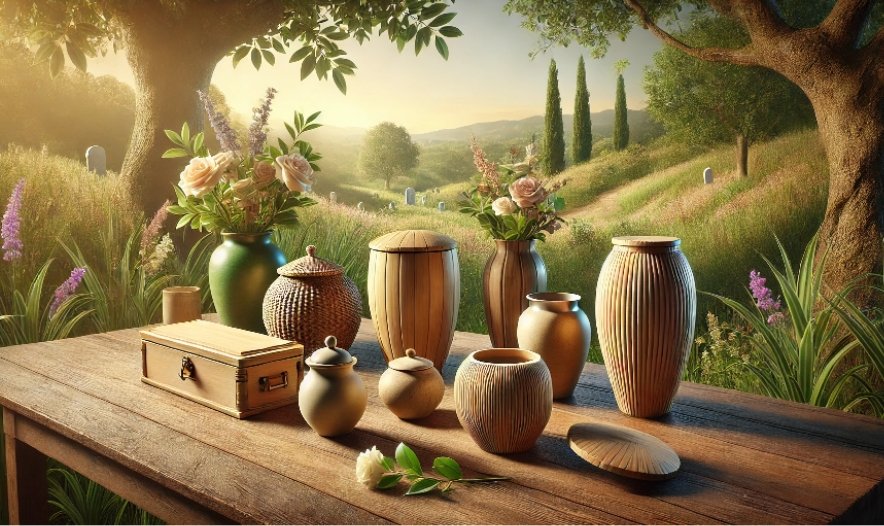
Green burials are gaining popularity as more families seek eco-friendly alternatives for honoring their loved ones. Choosing the perfect biodegradable urn for a green burial is a crucial part of this process. Not only does it ensure that cremated remains are returned to nature in an environmentally conscious way, but it also provides a meaningful and respectful farewell.
Why Natural Soil and Water Restoration Drives Eco-Friendly Memorial Choices
Natural burials focus entirely on low-impact land conservation, which means every physical element introduced to the earth must decompose safely without leaving behind synthetic toxins or non-organic residues. Traditional resting containers built from heavy metallic alloys, polished stone, or petrochemical plastics remain physically intact in the soil for centuries, which directly contradicts the core philosophy of ecological preservation. Biodegradable vessels are intentionally engineered to break down organically when placed into damp earth or submerged in open water. Understanding how these earth-friendly containers interact with active microbiome environments helps families select an option that honors both personal memories and strict local conservation guidelines.
Evaluating Natural Materials: Salt, Paper, Cornstarch, and Compressed Plant Fibers
Selecting the right substance depends heavily on whether the final resting place is an open aquatic ecosystem or a terrestrial woodland conservation ground. Different manufacturing materials possess distinct physical characteristics, moisture resistance levels, and natural breakdown speeds that dictate their ideal real-world applications.
| Container Material | Primary Application | Average Breakdown Speed | Ecosystem Suitability |
|---|---|---|---|
| Salt and Gelatin Blends | Marine and lake water services | Minutes to several hours | Aquatic environments only |
| Recycled Paper and Cardboard | Shallow earth burial or scattering | Weeks to a few months | Terrestrial soil environments |
| Cornstarch and Biopolymers | Woodland conservation cemeteries | Three to six months | Terrestrial soil environments |
| Plant Cellulose and Raw Clay | Tree-planting and deep graves | Six to twelve months | Terrestrial soil environments |
Matching Vessel Integrity to Land Versus Aquatic Burial Sites
The chosen burial environment ultimately dictates which container category will perform correctly during the actual memorial service. Water-soluble units crafted from solid sea salt or natural gelatin dissolve rapidly upon touching oceans or rivers, releasing the ashes smoothly beneath the surface without leaving floating debris behind. Conversely, land-based urns constructed from plant cellulose, sand, or unglazed earthenware require constant ground moisture to initiate the natural breakdown process. Families must also evaluate temporary storage logistics if the ash placement ceremony occurs months after cremation, as certain moisture-sensitive materials must be housed in dry indoor areas prior to the service.
Navigating Woodland Cemetery Regulations and Third-Party Certifications
Local cemetery bylaws and dedicated green burial ground rules frequently dictate whether a specific container composition or protective outer vault is permitted on site. Conservation burial grounds typically forbid chemical adhesives, synthetic glues, and metallic hardware to maintain pristine, uncompromised soil chemistry. Looking for independent third-party validations, such as formal Green Burial Council standards, gives grieving families verified assurance that a manufactured container adheres strictly to recognized ecological protocols.
Integrating Custom Artwork, Laser Carvings, and Living Memorial Saplings
Adding a thoughtful personal touch to a memorial vessel helps create a comforting tribute for surviving relatives and friends. Many modern earth-friendly containers support gentle laser etching on organic wood panels, water-based non-toxic inks for hand-painted motifs, or integrated seed pods designed to nurture a commemorative tree. When choosing tree-planting urn mechanisms, families should pay close attention to local soil pH levels and recommended planting depths to guarantee healthy botanical growth over the coming decades.
For individuals looking to coordinate meaningful family get-togethers and collaborative memorial gatherings around milestone events, reviewing helpful ideas for planning social gatherings can provide wonderful inspiration for honoring loved ones with warmth and care.
Frequently Asked Questions
Can a biodegradable urn be buried in a standard municipal cemetery?
Many traditional municipal cemeteries maintain rigid bylaws regarding container types, and some mandate outer burial vaults that block natural decomposition. Always consult cemetery management beforehand to confirm their specific green burial policies.
How long do paper or plant fiber urns last in storage before burial?
When stored inside a dry, climate-controlled indoor space away from humidity, biodegradable urns remain structurally sound for many years until the memorial service takes place.
Are salt urns completely safe for marine life during water burials?
Yes, salt urns are specifically formulated to dissolve entirely and quickly in aquatic habitats, leaving zero artificial residue and posing no risk to fish or marine ecosystems.
Do tree-planting urns come with the tree seeds included?
Certain urn designs include compatible regional seeds or young saplings, while others let families select and insert their own preferred plant species based on local climate restrictions.
Can cremated remains be split into multiple smaller biodegradable urns?
Cremated remains can easily be divided among relatives using miniature keepsake biodegradable urns, allowing multiple family members to participate in separate scattering or planting services.
What certification label should I look for when buying an eco-friendly urn?
Look for verification from reputable groups such as the Green Burial Council, which independently evaluates and certifies products to guarantee they meet rigorous ecological standards.
Disclaimer: Environmental regulations, cemetery bylaws, and product specifications vary widely by region and manufacturer. Readers should independently verify all local guidelines and official product details before purchasing memorial items or arranging burial services.

Daniel J. Morgan is the founder of Invidiata Magazine, a premier publication showcasing luxury living, arts, and culture. With a passion for excellence, Daniel has established the magazine as a beacon of sophistication and refinement, captivating discerning audiences worldwide.


