

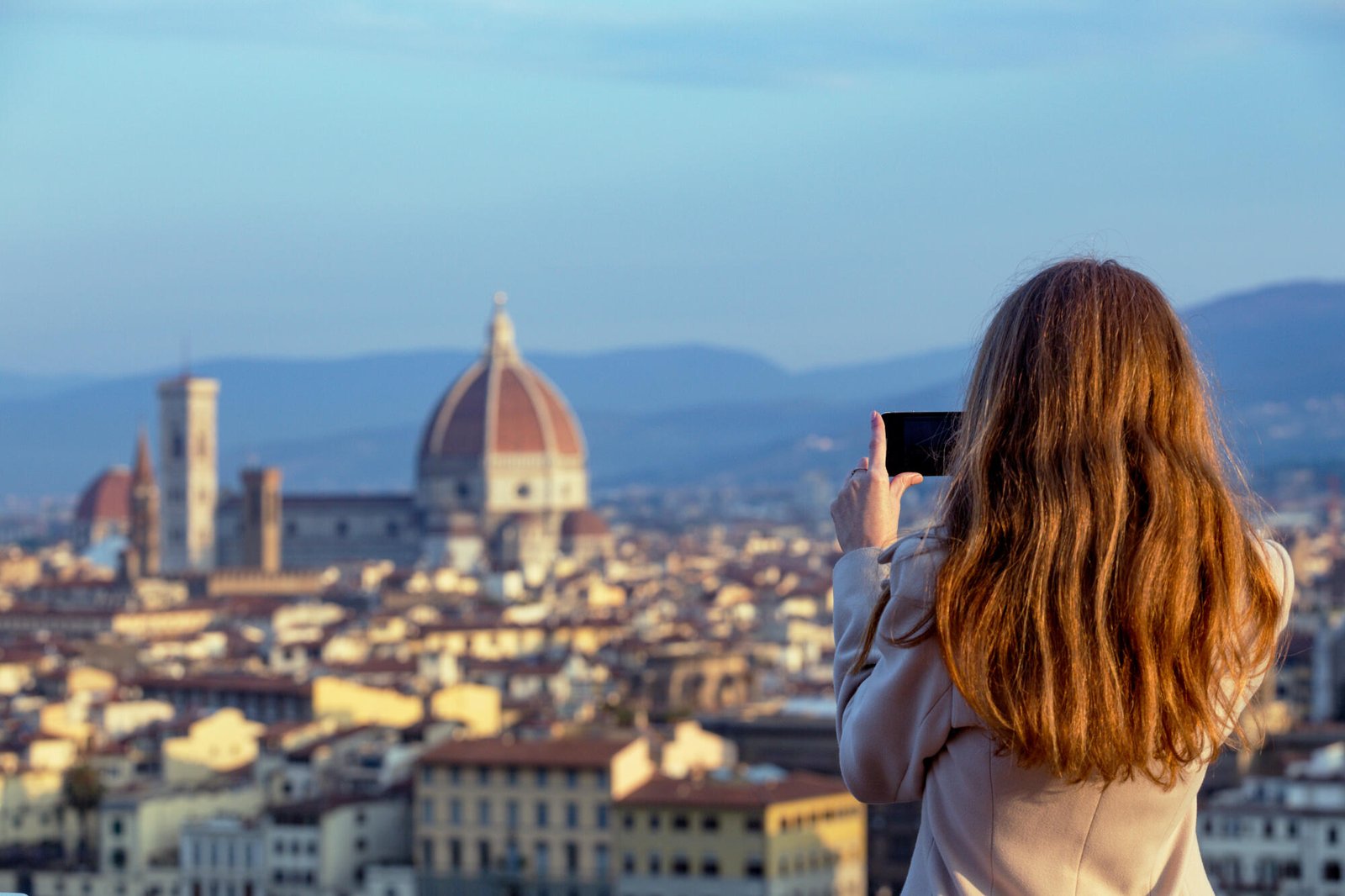
Florence concentrates centuries of artistic genius into a dense historic quarter that rewards deliberate, on-the-ground exploration. When designing your itinerary for a Florence city tour, arranging your daily movements around architectural clusters prevents wasted steps across ancient cobblestone lanes. Pairing major gallery visits with open-air piazzas and hillside viewpoints ensures a well-rounded encounter with Tuscan culture.
Many independent travelers also enjoy carving out an afternoon to escape the urban stone walls for nearby terraced vineyards producing regional Chianti. Balancing structured museum reservations with unhurried wandering creates an authentic cadence for your Mediterranean holiday.
Let us examine the foundational monuments and practical navigation strategies required to experience this Renaissance capital smoothly.
1. The Duomo: Cathedral Complex and Dome Architecture
The Cathedral of Santa Maria del Fiore serves as the defining architectural anchor of Florence, rising above the urban skyline with its famous terra-cotta shell.
Filippo Brunelleschi engineered this soaring masonry dome during the early fifteenth century without relying on traditional timber centering. Visitors wanting to ascend the interior staircase paths to the lantern must secure timed reservation slots well in advance due to strict daily capacity limits. Adjacent to the main sanctuary, Giotto’s freestanding bell tower and the ancient Baptistery of San Giovanni complete a monumental piazza that demands at least two hours of careful observation.
2. Uffizi Gallery and Renaissance Masterworks
The Uffizi Gallery houses an incomparable collection of Italian Renaissance paintings that requires a dedicated morning or afternoon allocation.
Walking through the historic vaulted corridors reveals foundational works by master painters like Sandro Botticelli, Leonardo da Vinci, and Caravaggio. Because security screenings and ticketing lines generate severe bottlenecks during peak morning hours, purchasing advance digital tickets with a designated entry timestamp is strictly mandatory. Allowing three to four hours inside the exhibition halls prevents rushing past premier canvases.
3. Ponte Vecchio and the Historic Merchant Spans
The Ponte Vecchio is a medieval segmental arch bridge spanning the Arno River that remains famous for its continuous line of historic goldsmith shops.
Unlike typical river crossings, this ancient stone structure has supported jewelers and merchants along its pedestrian corridor since the medieval era. Strolling across the central opening offers classic photographic angles of the water below and the multi-story residences cantilevered over the banks. Visiting during the early morning hours provides a peaceful atmosphere before tourist groups crowd the narrow pathway.
4. Palazzo Pitti and the Boboli Hillside Gardens
Palazzo Pitti is a sprawling Renaissance palace situated across the river in the Oltrarno district that once served as the primary seat of the Medici rulers.
The heavy stone palace now functions as an expansive museum complex containing the Palatine Gallery, royal residential quarters, and dedicated costume exhibits. Directly behind the palace structure lie the Boboli Gardens, an expansive hillside park filled with classical statuary, secluded grottoes, and manicured hedges. Exploring both the grand interior staterooms and the sprawling garden paths easily occupies a major portion of your afternoon schedule.
5. Piazzale Michelangelo Skyline Views
Piazzale Michelangelo is an elevated terrace situated on a hill in the southern district that provides the most famous panoramic viewpoint of Florence.
This open square offers unobstructed vistas across the historic center, framing major monuments like the Duomo, the Palazzo Vecchio, and the bridges crossing the Arno. It functions as a popular gathering spot for travelers looking to watch the sun set behind the Tuscan hills. Walking up from the river level takes about fifteen to twenty minutes along winding hillside paths, though local city buses offer a convenient alternative for those wanting to avoid the steep incline.
6. Galleria dell’Accademia and Michelangelo’s David
The Galleria dell’Accademia is a vital destination for sculpture enthusiasts primarily because it houses Michelangelo’s original marble masterpiece, David.
Beyond the towering statue of David, the museum preserves unfinished slave sculptures by Michelangelo that offer a fascinating glimpse into his carving techniques. The facility also exhibits a collection of historical musical instruments and early Florentine paintings. Securing advance reservations here follows the same strict rules as the Uffizi Gallery, making pre-planning essential for any successful itinerary.
Navigating Florence Streetscapes and Local Transport
Navigating the historical center efficiently requires understanding local transportation rules, ticketing norms, and foot traffic patterns.
Because most of the historic core is restricted to pedestrians, comfortable footwear is essential for walking on uneven cobblestones and ancient stone paving. While state-run museums occasionally grant free admission on the first Sunday of every month, these dates attract overwhelming crowds and long queues that test your patience. For budget-conscious travelers seeking historical context, tip-based walking tours provide an accessible introduction to local architecture and legends. Furthermore, travelers who appreciate structured city navigation and seamless transitions can also find inspiration in guides like making the transition to a new city smooth when exploring complex urban layouts and settling into new destinations.
Frequently Asked Questions About Visiting Florence
How many days should I allocate for a complete Florence city tour?
Most travelers find that spending two to three full days provides enough time to explore the major museums and walk through the historic quarters at a comfortable pace.
Is it truly necessary to buy museum tickets months in advance?
Yes, advance reservations for premier sites like the Uffizi Gallery and the Galleria dell’Accademia are strongly advised to avoid sold-out time slots and hours-long queues.
Can you walk between all major attractions on foot?
Nearly all primary historical monuments within the central district sit within easy walking distance of one another, eliminating the need for public transit inside the core.
What physical fitness level is required for the Duomo dome climb?
Climbing the Duomo dome involves ascending over four hundred narrow steps in an enclosed space without an elevator, requiring a moderate level of physical endurance.
What are the best months of the year to visit Florence?
Spring and autumn offer pleasant daytime temperatures and manageable crowds, avoiding the intense heat and heavy tourism peaks of July and August.
Are there dress codes enforced at religious sites in Florence?
Active churches such as the Duomo require both men and women to cover their shoulders and knees out of respect for holy spaces.
Disclaimer: Travel regulations, museum operating hours, and ticket reservation policies are subject to change. Visitors should always verify final details and booking procedures directly through official local tourism and ticketing websites before departure.


